
本文为 【Java多数据源实现教程】 相关知识,由于自己最近在做导师的项目的时候需要使用这种技术,于是自学了相关技术原理与实现,并将其整理如下,具体包含:多数据源的典型使用场景(包含业务复杂场景、读写分离场景),多数据源实现原理及实现方法(包含通过AbstractRoutingDataSource实现动态数据源、多数据源切换方式、Spring集成多个MyBatis框架实现多数据源),多数据源事务控制(包含只使用主库TransactionManger、一个方法开启2个事务),dynamic-datasource多数源组件等~
📌博主主页:小新要变强 的主页
👉Java全栈学习路线可参考:【Java全栈学习路线】最全的Java学习路线及知识清单,Java自学方向指引,内含最全Java全栈学习技术清单~
👉算法刷题路线可参考:算法刷题路线总结与相关资料分享,内含最详尽的算法刷题路线指南及相关资料分享~
👉Java微服务开源项目可参考:企业级Java微服务开源项目(开源框架,用于学习、毕设、公司项目、私活等,减少开发工作,让您只关注业务!)
文章标题

在实际开发中,经常可能遇到在一个应用中可能需要访问多个数据库的情况。以下是两种典型场景:
数据分布在不同的数据库中,数据库拆了, 应用没拆。 一个公司多个子项目,各用各的数据库,涉及数据共享…
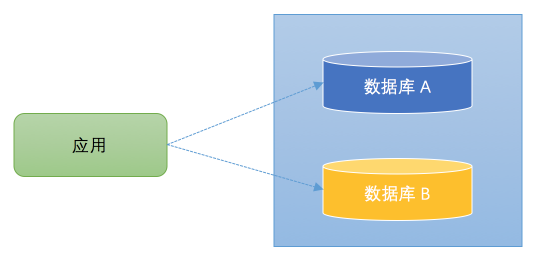
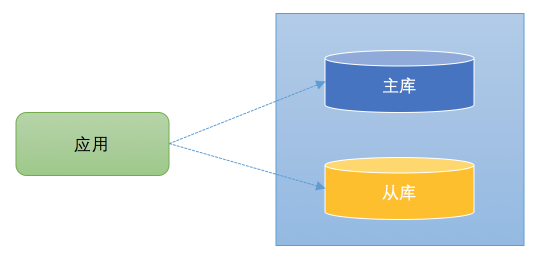
这里的架构与上图类似。不同的是,在读写分离中,主库和从库的数据库是一致的(不考虑主从延迟)。数据更新操作(insert、update、delete)都是在主库上进行,主库将数据变更信息同步给从库。在查询时,可以在从库上进行,从而分担主库的压力。
原理:
对于大多数的java应用,都使用了spring框架,spring-jdbc模块提供AbstractRoutingDataSource,其内部可以包含了多个DataSource,然后在运行时来动态的访问哪个数据库。这种方式访问数据库的架构图如下所示:
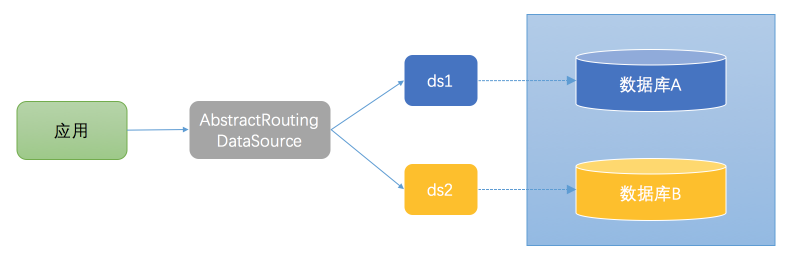
应用直接操作的是AbstractRoutingDataSource的实现类,告诉AbstractRoutingDataSource访问哪个数据库,然后由AbstractRoutingDataSource从事先配置好的数据源(ds1、ds2)选择一个,来访问对应的数据库。
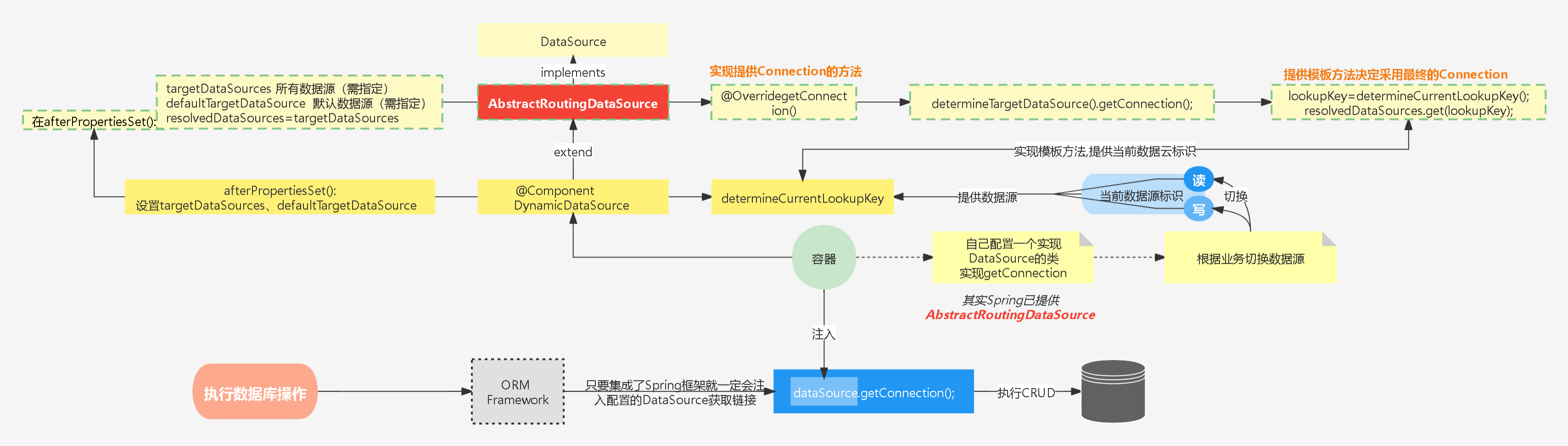
通过这个类可以实现动态数据源切换。如下是这个类的成员变量:
private Map<Object, Object> targetDataSources;
private Object defaultTargetDataSource;
private Map<Object, DataSource> resolvedDataSources;
而AbstractRoutingDataSource实现了InitializingBean接口,并实现了afterPropertiesSet方法。afterPropertiesSet方法是初始化bean的时候执行,通常用作数据初始化。(resolvedDataSources就是在这里赋值)
@Override
public void afterPropertiesSet() {
...
this.resolvedDataSources = new HashMap<Object, DataSource(this.targetDataSources.size());//初始化resolvedDataSources
//循环targetDataSources,并添加到resolvedDataSources中
for (Map.Entry<Object, Object> entry : this.targetDataSources.entrySet()) {
Object lookupKey = resolveSpecifiedLookupKey(entry.getKey());
DataSource dataSource = resolveSpecifiedDataSource(entry.getValue());
this.resolvedDataSources.put(lookupKey, dataSource);
}
...
}
AbstractRoutingDataSource实现类DynamicDataSource然后初始化targetDataSources和key为数据源标识(可以是字符串、枚举、都行,因为标识是Object)、defaultTargetDataSource即可AbstractRoutingDataSource.getConnection 会接着调用提供的模板方法:determineTargetDataSourcedetermineTargetDataSource该方法返回的数据库标识从resolvedDataSources中拿到对应的数据源DynamicDataSource中实现determineTargetDataSource为其提供一个数据库标识总结,在整个代码中我们只需做4件大事:
AbstractRoutingDataSource实现类DynamicDataSourcetargetDataSources设置不同数据源的DataSource和标识、及defaultTargetDataSourcedetermineTargetDataSource中提供对应的数据源标识即可什么到这还不会? 附上代码:
🍀(1)配置多数据源和 AbstractRoutingDataSource的自定义实现类:DynamicDataSource
配置多数据:
application.yml:
spring:
  datasource:
    type: com.alibaba.druid.pool.DruidDataSource
    datasource1:
      url: jdbc:mysql://127.0.0.1:3306/datasource1?serverTimezone=UTC&useUnicode=true&characterEncoding=UTF8&useSSL=false
      username: root
      password: 123456
      initial-size: 1
      min-idle: 1
      max-active: 20
      test-on-borrow: true
      driver-class-name: com.mysql.cj.jdbc.Driver
    datasource2:
      url: jdbc:mysql://127.0.0.1:3306/datasource2?serverTimezone=UTC&useUnicode=true&characterEncoding=UTF8&useSSL=false
      username: root
      password: 123456
      initial-size: 1
      min-idle: 1
      max-active: 20
      test-on-borrow: true
      driver-class-name: com.mysql.cj.jdbc.Driver
DynamicDataSourceConfig.java:
@Configuration
public class DynamicDataSourceConfig {

    @Bean
    @ConfigurationProperties("spring.datasource.datasource1")
    public DataSource firstDataSource(){
        return DruidDataSourceBuilder.create().build();
    }

    @Bean
    @ConfigurationProperties("spring.datasource.datasource2")
    public DataSource secondDataSource(){
        return DruidDataSourceBuilder.create().build();
    }

    @Bean
    @Primary
    public DynamicDataSource dataSource(DataSource firstDataSource, DataSource secondDataSource) {
        Map<Object, Object> targetDataSources = new HashMap<>(5);
        targetDataSources.put(DataSourceNames.FIRST, firstDataSource);
        targetDataSources.put(DataSourceNames.SECOND, secondDataSource);
        return new DynamicDataSource(firstDataSource, targetDataSources);
    }

}
DynamicDataSource.java:
public class DynamicDataSource extends AbstractRoutingDataSource {

    /**
    * ThreadLocal 用于提供线程局部变量,在多线程环境可以保证各个线程里的变量独立于其它线程里的变量。
    * 也就是说 ThreadLocal 可以为每个线程创建一个【单独的变量副本】,相当于线程的 private static 类型变量。
    */
    private static final ThreadLocal<String> CONTEXT_HOLDER = new ThreadLocal<>();

    /**
    * 决定使用哪个数据源之前需要把多个数据源的信息以及默认数据源信息配置好
    *
    * @param defaultTargetDataSource 默认数据源
    * @param targetDataSources 目标数据源
    */
    public DynamicDataSource(DataSource defaultTargetDataSource, Map<Object, Object>
targetDataSources) {
        super.setDefaultTargetDataSource(defaultTargetDataSource);
        super.setTargetDataSources(targetDataSources);
        super.afterPropertiesSet();
    }

    @Override
    protected Object determineCurrentLookupKey() {
        return getDataSource();
    }

    public static void setDataSource(String dataSource) {
        CONTEXT_HOLDER.set(dataSource);
    }

    public static String getDataSource() {
        return CONTEXT_HOLDER.get();
    }

    public static void clearDataSource() {
        CONTEXT_HOLDER.remove();
    }

}
多数据源切换方式需要根据我们的具体需求进行选择:
🍀(1)AOP+自定义注解
用于不同业务的数据源: 一般利用AOP,结合自定义注解动态切换数据源
@Target({ElementType.METHOD,ElementType.TYPE})
@Retention(RetentionPolicy.RUNTIME)
public @interface WR {
    String value() default "W";
}
@Component
@Aspect
public class DynamicDataSourceAspect {
    // 前置通知
    @Before("within(com.tuling.dynamic.datasource.service.impl.*) && @annotation(wr)")
    public void before(JoinPoint joinPoint, WR wr){
        System.out.println(wr.value());
    }
}
@Service
public class FrendImplService implements FrendService {
    @Autowired
    FrendMapper frendMapper;

    @Override
    @WR("R") // 库2
    public List<Frend> list() {
        return frendMapper.list();
    }

    @Override
    @WR("W") // 库1
    public void save(Frend frend) {
        frendMapper.save(frend);
    }
}
🍀(2)MyBatis插件
用于读写分离的数据源:如果是MyBatis可以结合插件实现读写分离动态切换数据源
@Intercepts(
        {@Signature(type = Executor.class, method = "update", args = {MappedStatement.class, Object.class}),
        @Signature(type = Executor.class, method = "query", args = {MappedStatement.class, Object.class, RowBounds.class,ResultHandler.class})})
public class DynamicDataSourcePlugin implements Interceptor {

    @Override
    public Object intercept(Invocation invocation) throws Throwable {

        Object[] objects = invocation.getArgs();
        MappedStatement ms = (MappedStatement) objects[0];
        // 读方法
        if (ms.getSqlCommandType().equals(SqlCommandType.SELECT)) {
            DynamicDataSource.name.set("R");
        } else {
            // 写方法
            DynamicDataSource.name.set("W");
        }
        // 修改当前线程要选择的数据源的key
        return invocation.proceed();
    }

    @Override
    public Object plugin(Object target) {
        if (target instanceof Executor) {
            return Plugin.wrap(target, this);
        } else {
            return target;
        }
    }

    @Override
    public void setProperties(Properties properties) {

    }
}

WDataSourceConfig.java:
@MapperScan(basePackages = "com.tuling.dynamic.datasource.mapper.w", sqlSessionFactoryRef = "wSqlSessionFactory")
public class WDataSourceConfig {
    @Bean
    @Primary
    public SqlSessionFactory wSqlSessionFactory(@Qualifier("dataSource1") DataSource dataSource1) throws Exception {
        final SqlSessionFactoryBean sessionFactory = new SqlSessionFactoryBean();
        sessionFactory.setDataSource(dataSource1);
        sessionFactory.setMapperLocations(new PathMatchingResourcePatternResolver().getResources("classpath:mapper/w/*.xml"));
        /*主库设置sql控制台打印*/
        org.apache.ibatis.session.Configuration configuration = new org.apache.ibatis.session.Configuration();
        configuration.setLogImpl(StdOutImpl.class);
        sessionFactory.setConfiguration(configuration);
        return sessionFactory.getObject();
    }
}
RDataSourceConfig.java:
@MapperScan(basePackages = "com.tuling.dynamic.datasource.mapper.r", sqlSessionFactoryRef = "rSqlSessionFactory")
public class RMyBatisConfig {
    @Bean
    public SqlSessionFactory rSqlSessionFactory(@Qualifier("dataSource2") DataSource dataSource2) throws Exception {
        final SqlSessionFactoryBean sessionFactory = new SqlSessionFactoryBean();
        sessionFactory.setDataSource(dataSource2);
        sessionFactory.setMapperLocations(new PathMatchingResourcePatternResolver().getResources("classpath:mapper/r/*.xml"));
        /*从库设置sql控制台打印*/
        org.apache.ibatis.session.Configuration configuration = new org.apache.ibatis.session.Configuration();
        configuration.setLogImpl(StdOutImpl.class);
        sessionFactory.setConfiguration(configuration);
        return sessionFactory.getObject();
    }
}
在多数据源下,由于涉及到数据库的多个读写。一旦发生异常就可能会导致数据不一致的情况, 在这种情况希望使用事务进行回退。
Spring的声明式事务在一次请求线程中只能使用一个数据源进行控制。
但是是对于多源数据库:
TransactionManager)无法切换数据源,需要配置多个TransactionManager。@Transactionnal是无法管理多个数据源的。 如果想真正实现多源数据库事务控制,肯定是需要分布式事务。这里讲解多源数据库事务控制的一种变通方式。@Bean
public DataSourceTransactionManager transactionManager1(DynamicDataSource dataSource){
DataSourceTransactionManager dataSourceTransactionManager = new DataSourceTransactionManager();
dataSourceTransactionManager.setDataSource(dataSource);
return dataSourceTransactionManager;
}
@Bean
public DataSourceTransactionManager transactionManager2(DynamicDataSource dataSource){
DataSourceTransactionManager dataSourceTransactionManager = new DataSourceTransactionManager();
dataSourceTransactionManager.setDataSource(dataSource);
return dataSourceTransactionManager;
}
使用主库事务管理器,也就是说事务中产生异常时,只能回滚主库数据。但是因为数据操作顺序是先主后从,所以分一下三种情况:
@Override
@WR("W")
public void save(Frend frend) {
    frendMapper.save(frend);
    //int a=1/0; 1.主库插入时异常,主库未插成功,这时候从库还没来及插入,主从数据是还是一致的
}

@Override
@WR("R")
@Transactional(transactionManager = "transactionManager2",propagation= Propagation.REQUIRES_NEW)
public void saveRead(Frend frend) {
    frend.setName("xushu");
    frendMapper.save(frend);
   // int a=1/0; 2.主库插入成功,从库插入时异常,这时候在主库事务管理器监测到事务中存在异常,将之前插入的主库数据插入,主从数据还是一致的
}

@Override
@Transactional(transactionManager = "transactionManager1")
public void saveAll(Frend frend) {
// 3. 无异常情况:主库插入成功,从库插入成功,事务结束,主从数据一致。
FrendService self= (FrendService)AopContext.currentProxy();
self.save(frend);
self.saveRead(frend);
//int a=1/0; 从库插入之后出现异常, 只能回滚主库数据 ,从库数据是无法回滚的 , 数据将不一致
}
当然这只是理想情况,例外情况:
spring编程式事务 :
// 读‐‐ 写库
@Override
public void saveAll(Frend frend) {
    wtransactionTemplate.execute(wstatus ‐> {
        rtransactionTemplate.execute(rstatus ‐> {
            try{
                saveW(frend);
                saveR(frend);
                int a=1/0;
                return true;
            }catch (Exception e){
                wstatus.setRollbackOnly();
                rstatus.setRollbackOnly();
                return false;
            }
        });
        return true;
    });
}
spring声明式事务:
@Transactional(transactionManager = "wTransactionManager")
public void saveAll(Frend frend) throws Exception {
    FrendService frendService = (FrendService) AopContext.currentProxy();
    frendService.saveAllR(frend);
}

@Transactional(transactionManager = "rTransactionManager",propagation = Propagation.REQUIRES_NEW )
public void saveAllR(Frend frend) {
    saveW(frend);
    saveR(frend);
    int a = 1 / 0;
}
两三个数据源、事务场景比较少,基于 SpringBoot 的多数据源组件,功能强悍,支持 Seata 分布式事务。
🍀(1)约定
spring.datasource.dynamic.primary 修改。🍀(2)使用方法
(1)引入dynamicdatasourcespringbootstarter。
<dependency>
    <groupId>com.baomidou</groupId>
    <artifactId>dynamic‐datasource‐spring‐boot‐starter</artifactId>
    <version>${version}</version>
</dependency>
(2)配置数据源。
spring:
  datasource:
    dynamic:
      #设置默认的数据源或者数据源组,默认值即为master
      primary: master
      #严格匹配数据源,默认false. true未匹配到指定数据源时抛异常,false使用默认数据源
      strict: false
      datasource:
        master:
          url: jdbc:mysql://xx.xx.xx.xx:3306/dynamic
          username: root
          password: 123456
          driver-class-name: com.mysql.jdbc.Driver  # 3.2.0开始支持SPI可省略此配置
        slave_1:
          url: jdbc:mysql://xx.xx.xx.xx:3307/dynamic
          username: root
          password: 123456
          driver-class-name: com.mysql.jdbc.Driver
          slave_2:
          url: ENC(xxxxx) # 内置加密,使用请查看详细文档
          username: ENC(xxxxx)
          password: ENC(xxxxx)
          driver‐class‐name: com.mysql.jdbc.Driver

          #......省略
          #以上会配置一个默认库master,一个组slave下有两个子库slave_1,slave_2
# 多主多从 纯粹多库(记得设置primary) 混合配置
spring: spring: spring:
  datasource: datasource: datasource:
  dynamic: dynamic: dynamic:
  datasource: datasource: datasource:
  master_1: mysql: master:
  master_2: oracle: slave_1:
  slave_1: sqlserver: slave_2:
  slave_2: postgresql: oracle_1:
  slave_3: h2: oracle_2:
(3)使用@DS切换数据源。
@DS可以注解在方法上或类上,同时存在就近原则方法上注解优先于类上注解。
| 注解 | 结果 |
|---|---|
| 没有@DS | 默认数据源 |
| @DS(“dsName”) | dsName可以为组名也可以为具体某个库的名称 |
@Service
@DS("slave")
public class UserServiceImpl implements UserService {

    @Autowired
    private JdbcTemplate jdbcTemplate;

    public List selectAll() {
        return jdbcTemplate.queryForList("select * from user");
    }

    @Override
    @DS("slave_1")
    public List selectByCondition() {
        return jdbcTemplate.queryForList("select * from user where age >10");
    }
}
本地事务:
使用@DSTransactional即可, 不能和Spring@Transactional混用!
//在最外层的方法添加 @DSTransactional,底下调用的各个类该切数据源就正常使用DS切换数据源即可。 就是这么简单。~
//如AService调用BService和CService的方法,A,B,C分别对应不同数据源。

public class AService {
    @DS("a")//如果a是默认数据源则不需要DS注解。
    @DSTransactional
    public void dosomething(){
        BService.dosomething();
        CService.dosomething();
    }
}

public class BService {
    @DS("b")
    public void dosomething(){
    //dosomething
    }
}

public class CService {
    @DS("c")
    public void dosomething(){
    //dosomething
    }
}
只要@DSTransactional注解下任一环节发生异常,则全局多数据源事务回滚。
如果BC上也有@DSTransactional会有影响吗?答:没有影响的。
动态添加删除数据源:
通过DynamicRoutingDataSource 类即可,它就相当于我们之前自定义的那个DynamicDataSource。
@RestController
@RequestMapping("/datasources")
@Api(tags = "添加删除数据源")
public class DataSourceController {
    @Autowired
    private DataSource dataSource;
    // private final DataSourceCreator dataSourceCreator; //3.3.1及以下版本使用这个通用
    @Autowired
    private DefaultDataSourceCreator dataSourceCreator;
    @Autowired
    private BasicDataSourceCreator basicDataSourceCreator;
    @Autowired
    private JndiDataSourceCreator jndiDataSourceCreator;
    @Autowired
    private DruidDataSourceCreator druidDataSourceCreator;
    @Autowired
    private HikariDataSourceCreator hikariDataSourceCreator;
    @Autowired
    private BeeCpDataSourceCreator beeCpDataSourceCreator;
    @Autowired
    private Dbcp2DataSourceCreator dbcp2DataSourceCreator;

    @GetMapping
    @ApiOperation("获取当前所有数据源")
    public Set<String> now() {
        DynamicRoutingDataSource ds = (DynamicRoutingDataSource) dataSource;
        return ds.getCurrentDataSources().keySet();
    }

    //通用数据源会根据maven中配置的连接池根据顺序依次选择。
    //默认的顺序为druid>hikaricp>beecp>dbcp>spring basic
    @PostMapping("/add")
    @ApiOperation("通用添加数据源(推荐)")
    public Set<String> add(@Validated @RequestBody DataSourceDTO dto) {
        DataSourceProperty dataSourceProperty = new DataSourceProperty();
        BeanUtils.copyProperties(dto, dataSourceProperty);
        DynamicRoutingDataSource ds = (DynamicRoutingDataSource) dataSource;
        DataSource dataSource = dataSourceCreator.createDataSource(dataSourceProperty);
        ds.addDataSource(dto.getPollName(), dataSource);
        return ds.getCurrentDataSources().keySet();
    }

    @PostMapping("/addBasic(强烈不推荐,除了用了马上移除)")
    @ApiOperation(value = "添加基础数据源", notes = "调用Springboot内置方法创建数据源,兼容1,2")
    public Set<String> addBasic(@Validated @RequestBody DataSourceDTO dto) {
        DataSourceProperty dataSourceProperty = new DataSourceProperty();
        BeanUtils.copyProperties(dto, dataSourceProperty);
        DynamicRoutingDataSource ds = (DynamicRoutingDataSource) dataSource;
        DataSource dataSource = basicDataSourceCreator.createDataSource(dataSourceProperty);
        ds.addDataSource(dto.getPollName(), dataSource);
        return ds.getCurrentDataSources().keySet();
    }

    @PostMapping("/addJndi")
    @ApiOperation("添加JNDI数据源")
    public Set<String> addJndi(String pollName, String jndiName) {
        DynamicRoutingDataSource ds = (DynamicRoutingDataSource) dataSource;
        DataSource dataSource = jndiDataSourceCreator.createDataSource(jndiName);
        ds.addDataSource(pollName, dataSource);
        return ds.getCurrentDataSources().keySet();
    }

    @PostMapping("/addDruid")
    @ApiOperation("基础Druid数据源")
    public Set<String> addDruid(@Validated @RequestBody DataSourceDTO dto) {
        DataSourceProperty dataSourceProperty = new DataSourceProperty();
        BeanUtils.copyProperties(dto, dataSourceProperty);
        dataSourceProperty.setLazy(true);
        DynamicRoutingDataSource ds = (DynamicRoutingDataSource) dataSource;
        DataSource dataSource = druidDataSourceCreator.createDataSource(dataSourceProperty);
        ds.addDataSource(dto.getPollName(), dataSource);
        return ds.getCurrentDataSources().keySet();
    }

    @PostMapping("/addHikariCP")
    @ApiOperation("基础HikariCP数据源")
    public Set<String> addHikariCP(@Validated @RequestBody DataSourceDTO dto) {
        DataSourceProperty dataSourceProperty = new DataSourceProperty();
        BeanUtils.copyProperties(dto, dataSourceProperty);
        dataSourceProperty.setLazy(true);//3.4.0版本以下如果有此属性,需手动设置,不然会空指针。
        DynamicRoutingDataSource ds = (DynamicRoutingDataSource) dataSource;
        DataSource dataSource = hikariDataSourceCreator.createDataSource(dataSourceProperty);
        ds.addDataSource(dto.getPollName(), dataSource);
        return ds.getCurrentDataSources().keySet();
    }

    @PostMapping("/addBeeCp")
    @ApiOperation("基础BeeCp数据源")
    public Set<String> addBeeCp(@Validated @RequestBody DataSourceDTO dto) {
        DataSourceProperty dataSourceProperty = new DataSourceProperty();
        BeanUtils.copyProperties(dto, dataSourceProperty);
        dataSourceProperty.setLazy(true);//3.4.0版本以下如果有此属性,需手动设置,不然会空指针。
        DynamicRoutingDataSource ds = (DynamicRoutingDataSource) dataSource;
        DataSource dataSource = beeCpDataSourceCreator.createDataSource(dataSourceProperty);
        ds.addDataSource(dto.getPollName(), dataSource);
        return ds.getCurrentDataSources().keySet();
    }

    @PostMapping("/addDbcp")
    @ApiOperation("基础Dbcp数据源")
    public Set<String> addDbcp(@Validated @RequestBody DataSourceDTO dto) {
        DataSourceProperty dataSourceProperty = new DataSourceProperty();
        BeanUtils.copyProperties(dto, dataSourceProperty);
        dataSourceProperty.setLazy(true);//3.4.0版本以下如果有此属性,需手动设置,不然会空指针。
        DynamicRoutingDataSource ds = (DynamicRoutingDataSource) dataSource;
        DataSource dataSource = dbcp2DataSourceCreator.createDataSource(dataSourceProperty);
        ds.addDataSource(dto.getPollName(), dataSource);
        return ds.getCurrentDataSources().keySet();
    }

    @DeleteMapping
    @ApiOperation("删除数据源")
    public String remove(String name) {
        DynamicRoutingDataSource ds = (DynamicRoutingDataSource) dataSource;
        ds.removeDataSource(name);
        return "删除成功";
    }
}
原理:
DynamicDataSourceAutoConfiguration自动配置类DynamicRoutingDataSource 它就相当于我们之前自定义的那个DynamicDataSource,用来动态提供数据源DynamicDataSourceAnnotationAdvisor 就相当于之前自定义的一个切面类DynamicDataSourceAnnotationInterceptor 当前advisor的拦截器,把它理解成之前环绕通知DynamicDataSourceAnnotationInterceptor#invoke 来进行增强:// 获取当前方法的DS注解的value值
String dsKey = determineDatasourceKey(invocation);
// 设置当当前数据源的标识TheardLocal中
DynamicDataSourceContextHolder.push(dsKey);
try {
// 执行目标方法
return invocation.proceed();
} finally {
DynamicDataSourceContextHolder.poll();
}
DataSource.getConnection,此时的DataSource指的就是DynamicRoutingDataSource@Override
public DataSource determineDataSource() {
// 拿到之前切换的数据源标识
String dsKey = DynamicDataSourceContextHolder.peek();
// 通过该标识获取对应的数据源
return getDataSource(dsKey);
}

👉Java全栈学习路线可参考:【Java全栈学习路线】最全的Java学习路线及知识清单,Java自学方向指引,内含最全Java全栈学习技术清单~
👉算法刷题路线可参考:算法刷题路线总结与相关资料分享,内含最详尽的算法刷题路线指南及相关资料分享~
我主要使用Ruby来执行此操作,但到目前为止我的攻击计划如下:使用gemsrdf、rdf-rdfa和rdf-microdata或mida来解析给定任何URI的数据。我认为最好映射到像schema.org这样的统一模式,例如使用这个yaml文件,它试图描述数据词汇表和opengraph到schema.org之间的转换:#SchemaXtoschema.orgconversion#data-vocabularyDV:name:namestreet-address:streetAddressregion:addressRegionlocality:addressLocalityphoto:i
我正在从erb文件切换到HAML。我将hamlgem添加到我的系统中。我创建了app/views/layouts/application.html.haml文件。我应该只删除application.html.erb文件吗?此外,仍然有/public/index.html文件被呈现为默认页面。我想创建自己的默认index.html.haml页面。我应该把它放在哪里以及如何使系统呈现该文件而不是默认索引文件?谢谢! 最佳答案 是的,您可以删除任何已转换为HAML的View的ERB版本。至于你的另一个问题,删除public/index/h
我真的很习惯使用Ruby编写以下代码:my_hash={}my_hash['test']=1Java中对应的数据结构是什么? 最佳答案 HashMapmap=newHashMap();map.put("test",1);我假设? 关于java-等价于Java中的RubyHash,我们在StackOverflow上找到一个类似的问题: https://stackoverflow.com/questions/22737685/
我有一个用户工厂。我希望默认情况下确认用户。但是鉴于unconfirmed特征,我不希望它们被确认。虽然我有一个基于实现细节而不是抽象的工作实现,但我想知道如何正确地做到这一点。factory:userdoafter(:create)do|user,evaluator|#unwantedimplementationdetailshereunlessFactoryGirl.factories[:user].defined_traits.map(&:name).include?(:unconfirmed)user.confirm!endendtrait:unconfirmeddoenden
有时我需要处理键/值数据。我不喜欢使用数组,因为它们在大小上没有限制(很容易不小心添加超过2个项目,而且您最终需要稍后验证大小)。此外,0和1的索引变成了魔数(MagicNumber),并且在传达含义方面做得很差(“当我说0时,我的意思是head...”)。散列也不合适,因为可能会不小心添加额外的条目。我写了下面的类来解决这个问题:classPairattr_accessor:head,:taildefinitialize(h,t)@head,@tail=h,tendend它工作得很好并且解决了问题,但我很想知道:Ruby标准库是否已经带有这样一个类? 最佳
我正在尝试使用boilerpipe来自JRuby。我看过guide从JRuby调用Java,并成功地将它与另一个Java包一起使用,但无法弄清楚为什么同样的东西不能用于boilerpipe。我正在尝试基本上从JRuby中执行与此Java等效的操作:URLurl=newURL("http://www.example.com/some-location/index.html");Stringtext=ArticleExtractor.INSTANCE.getText(url);在JRuby中试过这个:require'java'url=java.net.URL.new("http://www
我只想对我一直在思考的这个问题有其他意见,例如我有classuser_controller和classuserclassUserattr_accessor:name,:usernameendclassUserController//dosomethingaboutanythingaboutusersend问题是我的User类中是否应该有逻辑user=User.newuser.do_something(user1)oritshouldbeuser_controller=UserController.newuser_controller.do_something(user1,user2)我
什么是ruby的rack或python的Java的wsgi?还有一个路由库。 最佳答案 来自Python标准PEP333:Bycontrast,althoughJavahasjustasmanywebapplicationframeworksavailable,Java's"servlet"APImakesitpossibleforapplicationswrittenwithanyJavawebapplicationframeworktoruninanywebserverthatsupportstheservletAPI.ht
我正在尝试使用Curbgem执行以下POST以解析云curl-XPOST\-H"X-Parse-Application-Id:PARSE_APP_ID"\-H"X-Parse-REST-API-Key:PARSE_API_KEY"\-H"Content-Type:image/jpeg"\--data-binary'@myPicture.jpg'\https://api.parse.com/1/files/pic.jpg用这个:curl=Curl::Easy.new("https://api.parse.com/1/files/lion.jpg")curl.multipart_form_
无论您是想搭建桌面端、WEB端或者移动端APP应用,HOOPSPlatform组件都可以为您提供弹性的3D集成架构,同时,由工业领域3D技术专家组成的HOOPS技术团队也能为您提供技术支持服务。如果您的客户期望有一种在多个平台(桌面/WEB/APP,而且某些客户端是“瘦”客户端)快速、方便地将数据接入到3D应用系统的解决方案,并且当访问数据时,在各个平台上的性能和用户体验保持一致,HOOPSPlatform将帮助您完成。利用HOOPSPlatform,您可以开发在任何环境下的3D基础应用架构。HOOPSPlatform可以帮您打造3D创新型产品,HOOPSSDK包含的技术有:快速且准确的CAD
