参考资料:
《Spring Microservices in Action》
《Spring Cloud Alibaba 微服务原理与实战》
《B站 尚硅谷 SpringCloud 框架开发教程 周阳》
SpringCloud Config 为微服务架构中的微服务提供集中化的外部配置支持,配置服务器为各个不同微服务应用的所有环境提供了一个中心化的外部配置;
特点:
<!--配置中心服务-->
<dependency>
    <groupId>org.springframework.cloud</groupId>
    <artifactId>spring-cloud-config-server</artifactId>
</dependency>
resources 包下的 boostrap.yaml,为配置服务器自己的配置文件;
profile 属性指定。没有指定该属性则默认加载 application.yml 文件中的配置数据;server:
port: 8888 #Spring Cloud 配置服务器将要监听的端口
spring:
application:
name: xxx-config-server #服务的名称
profiles:
active: native #用于存储配置的后端存储库(文件系统)
cloud:
config:
server:
native:
search-locations: classpath:/config/ #【重要参数】配置文件的存储位置路径
server:
  port: 8888 #Spring Cloud 配置服务器将要监听的端口
spring:
  application:
    name: xxx-config-server #服务的名称
  cloud:
     config:
        server:
          #使用 git 作为后端存储库
          git:
            uri: https://gitee.com/dlhjw/config-demo #配置文件所在仓库
            username: git 账号
            password: git 密码
            default-label: master #配置文件分支
            search-paths: config  #配置文件所在根目录
            force-pull: true #配置文件目录
@EnableConfigServer:表明该服务是个 config 配置服务器;
@SpringBootApplication:表明是一个 Spring Boot 应用;
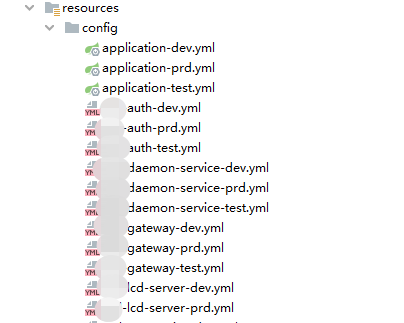
在本地 src/main/resources 资源目录下新建一个名为 config 的包,包下的配置文件为客户端的配置文件;
这里可以新建这些配置文件:
如下图所示:
<!--配置中心-->
<dependency>
    <groupId>org.springframework.cloud</groupId>
    <artifactId>spring-cloud-starter-config</artifactId>
</dependency>
spring.application.name:指定了客户端的名称(xxx-client);spring.profiles.active:指定了所需配置的环境(dev);spring:
application:
name: xxx-client #客户端,使用服务器里的配置
profiles:
active: dev #指定当前环境为开发环境
cloud:
config:
fail-fast: true
#通过 uri 方式获取 config 配置服务器的位置
#uri: http://localhost:8888
discovery:
service-id: xxx-config-server #通过服务发现的方式获取 config 配置服务器
enabled: true
profile: ${spring.profiles.active} #用于定位配置信息,使用上面 spring.profiles.active 属性的值 dev
label: ${spring.profiles.active} #本地存储,该参数无用
---
spring:
profiles: dev
eureka:
instance:
prefer-ip-address: true
lease-renewal-interval-in-seconds: 5
lease-expiration-duration-in-seconds: 20
metadata-map:
version: v1.0
client:
serviceUrl:
defaultZone: http://localhost:1025/eureka
registry-fetch-interval-seconds: 10
---
spring:
profiles: prd
eureka:
instance:
prefer-ip-address: true
metadata-map:
version: v1.0
client:
serviceUrl:
defaultZone: http://{实际环境地址}:1025/eureka
spring:
  application:
    name: xxx-client #客户端,使用服务器里的配置
  profiles:
    active: dev #指定当前环境为 dev 开发环境
  cloud:
    config:
      fail-fast: true
      #通过 uri 方式获取 config 配置服务器的位置
      uri: http://localhost:8888 #这里也可以使用服务发现机制
      profile: ${spring.profiles.active}  #用于定位配置信息,使用上面 spring.profiles.active 属性的值 dev
      label: master #对应 git 的分支
---
# 下同上 3.2.1 点里的下半部分,这里省略
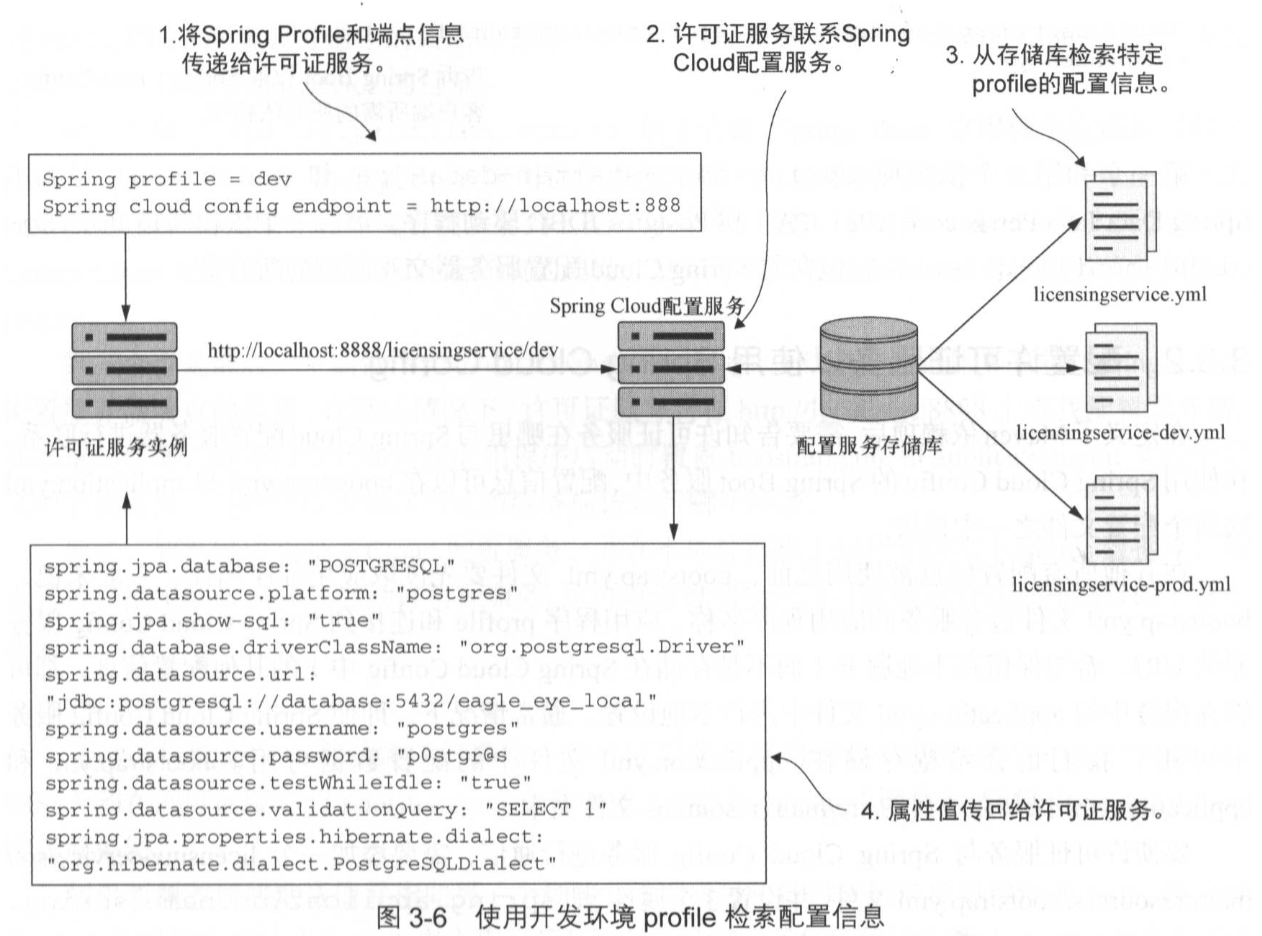
spring.application.name 与 spring.profiles.active 找到配置服务器的 config 包下的配置文件的 xxx-client-dev.yml;/refresh 端点,强制 Spring Boot 应用程序重新读取应用程序配置;@SpringBootApplication
@RefreshScope
public class Application {
public static void main(String[] args) {
SpringApplication.run(Application.class, args);
}
}
$JAVA_HOME/jre/lib/security 文件夹;$JAVA_HOME/jre/lib/security 目录中的 local_policy.jar 和 US_export_policy.jar 文件备份到其他位置;$JAVA_HOME/jre/lib/security 目录中;export ENCRYPT_KEY=IMSYMMETRIC;encrypt:
decrypt :
spring.database.password:"{cipher}result";配置 Spring Cloud Config 不要在服务器端解密属性;
spring.cloud.config.server.encrypt.enabled=falsespring-security-rsa JAR 添加到客户端服务的 pom.xml 文件中;<dependency>
<groupld>org.springframework.security</groupld>
<artifactld>spring-security-rsa</artifactld>
</dependency>
这样,调用配置服务器的 controller 中定义获取配置文件的接口时,返回的数据是加密的;

我正在学习如何使用Nokogiri,根据这段代码我遇到了一些问题:require'rubygems'require'mechanize'post_agent=WWW::Mechanize.newpost_page=post_agent.get('http://www.vbulletin.org/forum/showthread.php?t=230708')puts"\nabsolutepathwithtbodygivesnil"putspost_page.parser.xpath('/html/body/div/div/div/div/div/table/tbody/tr/td/div
我有一个Ruby程序,它使用rubyzip压缩XML文件的目录树。gem。我的问题是文件开始变得很重,我想提高压缩级别,因为压缩时间不是问题。我在rubyzipdocumentation中找不到一种为创建的ZIP文件指定压缩级别的方法。有人知道如何更改此设置吗?是否有另一个允许指定压缩级别的Ruby库? 最佳答案 这是我通过查看rubyzip内部创建的代码。level=Zlib::BEST_COMPRESSIONZip::ZipOutputStream.open(zip_file)do|zip|Dir.glob("**/*")d
类classAprivatedeffooputs:fooendpublicdefbarputs:barendprivatedefzimputs:zimendprotecteddefdibputs:dibendendA的实例a=A.new测试a.foorescueputs:faila.barrescueputs:faila.zimrescueputs:faila.dibrescueputs:faila.gazrescueputs:fail测试输出failbarfailfailfail.发送测试[:foo,:bar,:zim,:dib,:gaz].each{|m|a.send(m)resc
很好奇,就使用rubyonrails自动化单元测试而言,你们正在做什么?您是否创建了一个脚本来在cron中运行rake作业并将结果邮寄给您?git中的预提交Hook?只是手动调用?我完全理解测试,但想知道在错误发生之前捕获错误的最佳实践是什么。让我们理所当然地认为测试本身是完美无缺的,并且可以正常工作。下一步是什么以确保他们在正确的时间将可能有害的结果传达给您? 最佳答案 不确定您到底想听什么,但是有几个级别的自动代码库控制:在处理某项功能时,您可以使用类似autotest的内容获得关于哪些有效,哪些无效的即时反馈。要确保您的提
假设我做了一个模块如下:m=Module.newdoclassCendend三个问题:除了对m的引用之外,还有什么方法可以访问C和m中的其他内容?我可以在创建匿名模块后为其命名吗(就像我输入“module...”一样)?如何在使用完匿名模块后将其删除,使其定义的常量不再存在? 最佳答案 三个答案:是的,使用ObjectSpace.此代码使c引用你的类(class)C不引用m:c=nilObjectSpace.each_object{|obj|c=objif(Class===objandobj.name=~/::C$/)}当然这取决于
我正在尝试使用ruby和Savon来使用网络服务。测试服务为http://www.webservicex.net/WS/WSDetails.aspx?WSID=9&CATID=2require'rubygems'require'savon'client=Savon::Client.new"http://www.webservicex.net/stockquote.asmx?WSDL"client.get_quotedo|soap|soap.body={:symbol=>"AAPL"}end返回SOAP异常。检查soap信封,在我看来soap请求没有正确的命名空间。任何人都可以建议我
我正在使用i18n从头开始构建一个多语言网络应用程序,虽然我自己可以处理一大堆yml文件,但我说的语言(非常)有限,最终我想寻求外部帮助帮助。我想知道这里是否有人在使用UI插件/gem(与django上的django-rosetta不同)来处理多个翻译器,其中一些翻译器不愿意或无法处理存储库中的100多个文件,处理语言数据。谢谢&问候,安德拉斯(如果您已经在rubyonrails-talk上遇到了这个问题,我们深表歉意) 最佳答案 有一个rails3branchofthetolkgem在github上。您可以通过在Gemfi
关闭。这个问题是opinion-based.它目前不接受答案。想要改进这个问题?更新问题,以便editingthispost可以用事实和引用来回答它.关闭4年前。Improvethisquestion我想在固定时间创建一系列低音和高音调的哔哔声。例如:在150毫秒时发出高音调的蜂鸣声在151毫秒时发出低音调的蜂鸣声200毫秒时发出低音调的蜂鸣声250毫秒的高音调蜂鸣声有没有办法在Ruby或Python中做到这一点?我真的不在乎输出编码是什么(.wav、.mp3、.ogg等等),但我确实想创建一个输出文件。
我在我的项目目录中完成了compasscreate.和compassinitrails。几个问题:我已将我的.sass文件放在public/stylesheets中。这是放置它们的正确位置吗?当我运行compasswatch时,它不会自动编译这些.sass文件。我必须手动指定文件:compasswatchpublic/stylesheets/myfile.sass等。如何让它自动运行?文件ie.css、print.css和screen.css已放在stylesheets/compiled。如何在编译后不让它们重新出现的情况下删除它们?我自己编译的.sass文件编译成compiled/t
我想安装一个带有一些身份验证的私有(private)Rubygem服务器。我希望能够使用公共(public)Ubuntu服务器托管内部gem。我读到了http://docs.rubygems.org/read/chapter/18.但是那个没有身份验证-如我所见。然后我读到了https://github.com/cwninja/geminabox.但是当我使用基本身份验证(他们在他们的Wiki中有)时,它会提示从我的服务器获取源。所以。如何制作带有身份验证的私有(private)Rubygem服务器?这是不可能的吗?谢谢。编辑:Geminabox问题。我尝试“捆绑”以安装新的gem..
