作者:你呀不牛
链接:https://juejin.cn/post/7114669787870920734
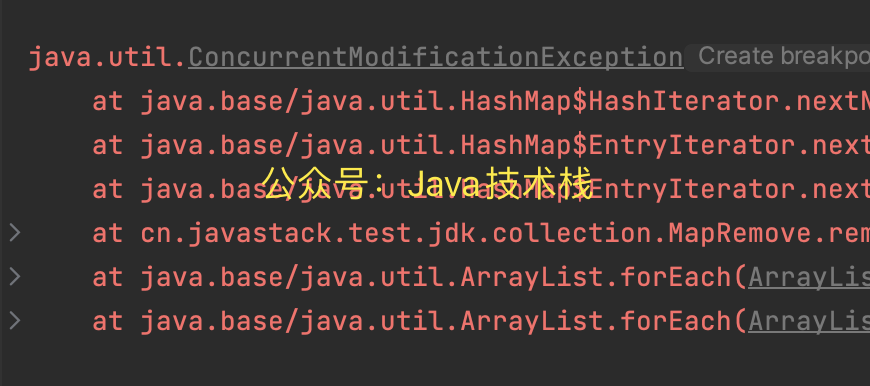
前段时间,同事在代码中KW扫描的时候出现这样一条:
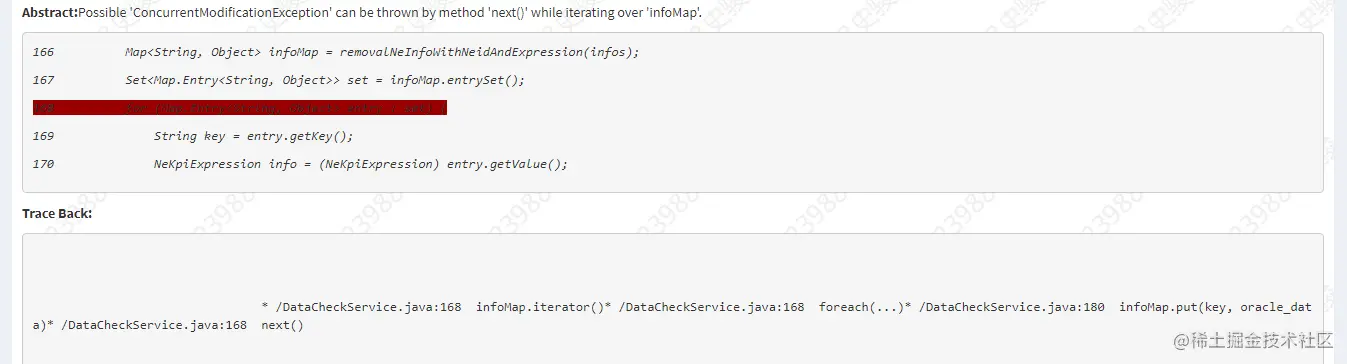
上面出现这样的原因是在使用foreach对HashMap进行遍历时,同时进行put赋值操作会有问题,异常ConcurrentModificationException。
于是帮同简单的看了一下,印象中集合类在进行遍历时同时进行删除或者添加操作时需要谨慎,一般使用迭代器进行操作。
于是告诉同事,应该使用迭代器Iterator来对集合元素进行操作。同事问我为什么?这一下子把我问蒙了?对啊,只是记得这样用不可以,但是好像自己从来没有细究过为什么?
于是今天决定把这个HashMap遍历操作好好地研究一番,防止采坑!
java foreach 语法是在jdk1.5时加入的新特性,主要是当作for语法的一个增强,那么它的底层到底是怎么实现的呢?下面我们来好好研究一下:
foreach 语法内部,对collection是用iterator迭代器来实现的,对数组是用下标遍历来实现。Java 5 及以上的编译器隐藏了基于iteration和数组下标遍历的内部实现。
(注意,这里说的是“Java编译器”或Java语言对其实现做了隐藏,而不是某段Java代码对其实现做了隐藏,也就是说,我们在任何一段JDK的Java代码中都找不到这里被隐藏的实现。这里的实现,隐藏在了Java 编译器中,查看一段foreach的Java代码编译成的字节码,从中揣测它到底是怎么实现的了)
我们写一个例子来研究一下:
public class HashMapIteratorDemo {

	String[] arr = {"aa", "bb", "cc"};

	public void test1() {
		for(String str : arr) {
		}
	}
}
将上面的例子转为字节码反编译一下(主函数部分):
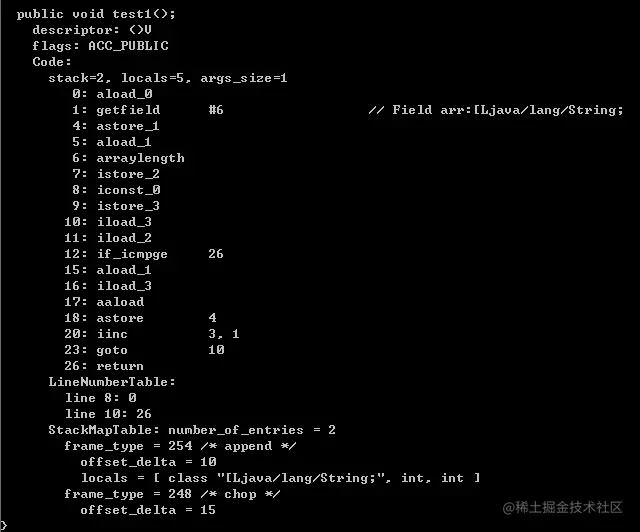
也许我们不能很清楚这些指令到底有什么作用,但是我们可以对比一下下面段代码产生的字节码指令:
public class HashMapIteratorDemo2 {

	String[] arr = {"aa", "bb", "cc"};

	public void test1() {
		for(int i = 0; i < arr.length; i++) {
			String str = arr[i];
		}
	}
}

看看两个字节码文件,有木有发现指令几乎相同,如果还有疑问我们再看看对集合的foreach操作:
通过foreach遍历集合:
public class HashMapIteratorDemo3 {

	List<Integer> list = new ArrayList<>();

	public void test1() {
		list.add(1);
		list.add(2);
		list.add(3);

		for(Integer var : list) {
		}
	}
}
通过Iterator遍历集合:
public class HashMapIteratorDemo4 {

	List<Integer> list = new ArrayList<>();

	public void test1() {
		list.add(1);
		list.add(2);
		list.add(3);

		Iterator<Integer> it = list.iterator();
		while(it.hasNext()) {
			Integer var = it.next();
		}
	}
}
将两个方法的字节码对比如下:
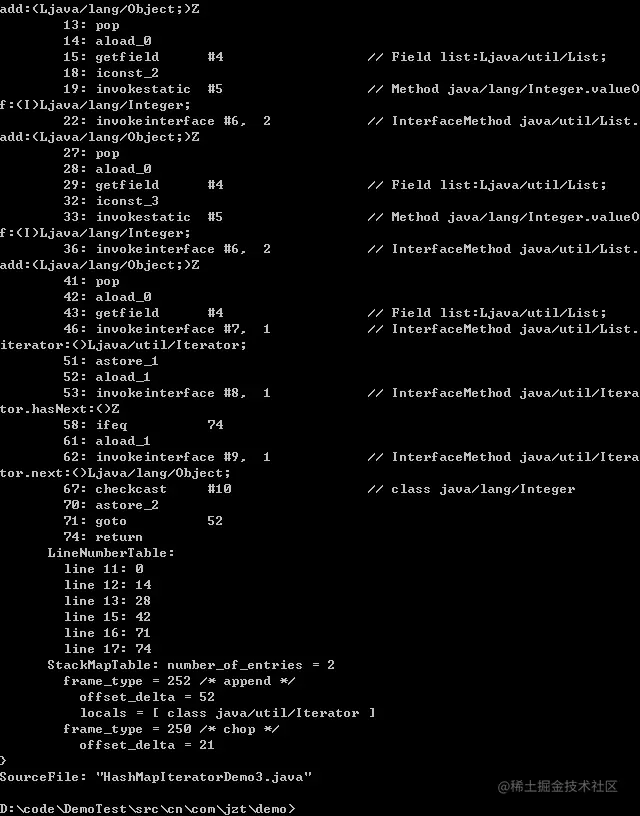
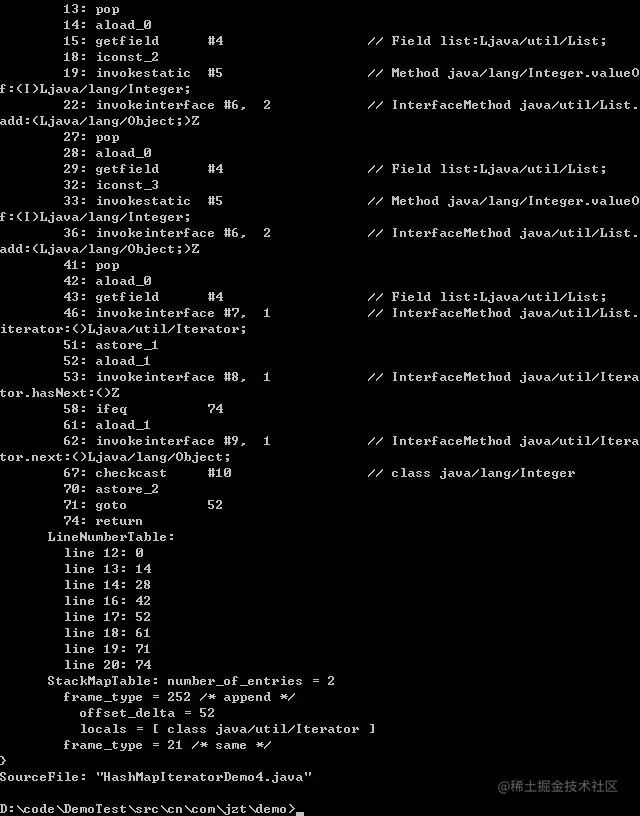
我们发现两个方法字节码指令操作几乎一模一样;
这样我们可以得出以下结论:
对集合来说,由于集合都实现了Iterator迭代器,foreach语法最终被编译器转为了对Iterator.next()的调用;
对于数组来说,就是转化为对数组中的每一个元素的循环引用。
根据以上分析,我们知道HashMap底层是实现了Iterator迭代器的 ,那么理论上我们也是可以使用迭代器进行遍历的,这倒是不假,例如下面:
public class HashMapIteratorDemo5 {

	public static void main(String[] args) {
		Map<Integer, String> map = new HashMap<>();
		map.put(1, "aa");
		map.put(2, "bb");
		map.put(3, "cc");

		for(Map.Entry<Integer, String> entry : map.entrySet()){
		    int k=entry.getKey();
		    String v=entry.getValue();
		    System.out.println(k+" = "+v);
		}
	}
}
输出:

ok,遍历没有问题,那么操作集合元素remove、put、add呢?
public class HashMapIteratorDemo5 {

	public static void main(String[] args) {
		Map<Integer, String> map = new HashMap<>();
		map.put(1, "aa");
		map.put(2, "bb");
		map.put(3, "cc");

		for(Map.Entry<Integer, String> entry : map.entrySet()){
		    int k=entry.getKey();
		    if(k == 1) {
		    	map.put(1, "AA");
		    }
		    String v=entry.getValue();
		    System.out.println(k+" = "+v);
		}
	}
}
执行结果:

执行没有问题,put操作也成功了。
但是!但是!但是!问题来了!!!
我们知道HashMap是一个线程不安全的集合类,如果使用foreach遍历时,进行add,remove操作会java.util.ConcurrentModificationException异常。put操作可能会抛出该异常。(为什么说可能,这个我们后面解释)
为什么会抛出这个异常呢?
我们先去看一下java api文档对HasMap操作的解释吧。

翻译过来大致的意思就是该方法是返回此映射中包含的键的集合视图。集合由映射支持,如果在对集合进行迭代时修改了映射(通过迭代器自己的移除操作除外),则迭代的结果是未定义的。集合支持元素移除,通过Iterator.remove、set.remove、removeAll、retainal和clear操作从映射中移除相应的映射。简单说,就是通过map.entrySet()这种方式遍历集合时,不能对集合本身进行remove、add等操作,需要使用迭代器进行操作。
对于put操作,如果这个操作时替换操作如上例中将第一个元素进行修改,就没有抛出异常,但是如果是使用put添加元素的操作,则肯定会抛出异常了。我们把上面的例子修改一下:
public class HashMapIteratorDemo5 {

	public static void main(String[] args) {
		Map<Integer, String> map = new HashMap<>();
		map.put(1, "aa");
		map.put(2, "bb");
		map.put(3, "cc");

		for(Map.Entry<Integer, String> entry : map.entrySet()){
		    int k=entry.getKey();
		    if(k == 1) {
		    	map.put(4, "AA");
		    }
		    String v=entry.getValue();
		    System.out.println(k+" = "+v);
		}

	}
}
执行出现异常:

这就是验证了上面说的put操作可能会抛出java.util.ConcurrentModificationException异常。
但是有疑问了,我们上面说过foreach循环就是通过迭代器进行的遍历啊?为什么到这里是不可以了呢?
这里其实很简单,原因是我们的遍历操作底层确实是通过迭代器进行的,但是我们的remove等操作是通过直接操作map进行的,如上例子:map.put(4, "AA");//这里实际还是直接对集合进行的操作,而不是通过迭代器进行操作。所以依然会存在ConcurrentModificationException异常问题。
我们再去看看HashMap的源码,通过源代码,我们发现集合在使用Iterator进行遍历时都会用到这个方法:
final Node<K,V> nextNode() {
            Node<K,V>[] t;
            Node<K,V> e = next;
            if (modCount != expectedModCount)
                throw new ConcurrentModificationException();
            if (e == null)
                throw new NoSuchElementException();
            if ((next = (current = e).next) == null && (t = table) != null) {
                do {} while (index < t.length && (next = t[index++]) == null);
            }
            return e;
        }
这里modCount是表示map中的元素被修改了几次(在移除,新加元素时此值都会自增),而expectedModCount是表示期望的修改次数,在迭代器构造的时候这两个值是相等,如果在遍历过程中这两个值出现了不同步就会抛出ConcurrentModificationException异常。
现在我们来看看集合remove操作:
(1)HashMap本身的remove实现:

public V remove(Object key) {
    Node<K,V> e;
    return (e = removeNode(hash(key), key, null, false, true)) == null ?
        null : e.value;
}
(2)HashMap.KeySet的remove实现
public final boolean remove(Object key) {
    return removeNode(hash(key), key, null, false, true) != null;
}
(3)HashMap.EntrySet的remove实现
public final boolean remove(Object o) {
    if (o instanceof Map.Entry) {
        Map.Entry<?,?> e = (Map.Entry<?,?>) o;
        Object key = e.getKey();
        Object value = e.getValue();
        return removeNode(hash(key), key, value, true, true) != null;
    }
    return false;
}
(4)HashMap.HashIterator的remove方法实现
public final void remove() {
    Node<K,V> p = current;
    if (p == null)
        throw new IllegalStateException();
    if (modCount != expectedModCount)
        throw new ConcurrentModificationException();
    current = null;
    K key = p.key;
    removeNode(hash(key), key, null, false, false);
    expectedModCount = modCount; //----------------这里将expectedModCount 与modCount进行同步
}
以上四种方式都通过调用HashMap.removeNode方法来实现删除key的操作。在removeNode方法内只要移除了key, modCount就会执行一次自增操作,此时modCount就与expectedModCount不一致了;
final Node<K,V> removeNode(int hash, Object key, Object value,
                           boolean matchValue, boolean movable) {
    Node<K,V>[] tab; Node<K,V> p; int n, index;
    if ((tab = table) != null && (n = tab.length) > 0 &&
        ...
        if (node != null && (!matchValue || (v = node.value) == value ||
                             (value != null && value.equals(v)))) {
            if (node instanceof TreeNode)
                ((TreeNode<K,V>)node).removeTreeNode(this, tab, movable);
            else if (node == p)
                tab[index] = node.next;
            else
                p.next = node.next;
            ++modCount;   //------------------------这里对modCount进行了自增,可能会导致后面与expectedModCount不一致
            --size;
            afterNodeRemoval(node);
            return node;
        }
        }
        return null;
   }
上面三种remove实现中,只有第三种iterator的remove方法在调用完removeNode方法后同步了expectedModCount值与modCount相同,所以在遍历下个元素调用nextNode方法时,iterator方式不会抛异常。
到这里是不是有一种恍然大明白的感觉呢!
所以,如果需要对集合遍历时进行元素操作需要借助Iterator迭代器进行,如下:
public class HashMapIteratorDemo5 {

	public static void main(String[] args) {
		Map<Integer, String> map = new HashMap<>();
		map.put(1, "aa");
		map.put(2, "bb");
		map.put(3, "cc");
		//		for(Map.Entry<Integer, String> entry : map.entrySet()){  //		    int k=entry.getKey();  //		    //		    if(k == 1) {//		    	map.put(1, "AA");//		    }//		    String v=entry.getValue();  //		    System.out.println(k+" = "+v);  //		}

		Iterator<Map.Entry<Integer, String>> it = map.entrySet().iterator();
		while(it.hasNext()){
			Map.Entry<Integer, String> entry = it.next();
			int key=entry.getKey();
	        if(key == 1){
	            it.remove();
	        }
		}
	}
}

近期热文推荐:
1.1,000+ 道 Java面试题及答案整理(2022最新版)
4.别再写满屏的爆爆爆炸类了,试试装饰器模式,这才是优雅的方式!!
觉得不错,别忘了随手点赞+转发哦!
类classAprivatedeffooputs:fooendpublicdefbarputs:barendprivatedefzimputs:zimendprotecteddefdibputs:dibendendA的实例a=A.new测试a.foorescueputs:faila.barrescueputs:faila.zimrescueputs:faila.dibrescueputs:faila.gazrescueputs:fail测试输出failbarfailfailfail.发送测试[:foo,:bar,:zim,:dib,:gaz].each{|m|a.send(m)resc
我有一个模型:classItem项目有一个属性“商店”基于存储的值,我希望Item对象对特定方法具有不同的行为。Rails中是否有针对此的通用设计模式?如果方法中没有大的if-else语句,这是如何干净利落地完成的? 最佳答案 通常通过Single-TableInheritance. 关于ruby-on-rails-Rails-子类化模型的设计模式是什么?,我们在StackOverflow上找到一个类似的问题: https://stackoverflow.co
我有多个ActiveRecord子类Item的实例数组,我需要根据最早的事件循环打印。在这种情况下,我需要打印付款和维护日期,如下所示:ItemAmaintenancerequiredin5daysItemBpaymentrequiredin6daysItemApaymentrequiredin7daysItemBmaintenancerequiredin8days我目前有两个查询,用于查找maintenance和payment项目(非排他性查询),并输出如下内容:paymentrequiredin...maintenancerequiredin...有什么方法可以改善上述(丑陋的)代
我正在使用的第三方API的文档状态:"[O]urAPIonlyacceptspaddedBase64encodedstrings."什么是“填充的Base64编码字符串”以及如何在Ruby中生成它们。下面的代码是我第一次尝试创建转换为Base64的JSON格式数据。xa=Base64.encode64(a.to_json) 最佳答案 他们说的padding其实就是Base64本身的一部分。它是末尾的“=”和“==”。Base64将3个字节的数据包编码为4个编码字符。所以如果你的输入数据有长度n和n%3=1=>"=="末尾用于填充n%
我主要使用Ruby来执行此操作,但到目前为止我的攻击计划如下:使用gemsrdf、rdf-rdfa和rdf-microdata或mida来解析给定任何URI的数据。我认为最好映射到像schema.org这样的统一模式,例如使用这个yaml文件,它试图描述数据词汇表和opengraph到schema.org之间的转换:#SchemaXtoschema.orgconversion#data-vocabularyDV:name:namestreet-address:streetAddressregion:addressRegionlocality:addressLocalityphoto:i
使用带有Rails插件的vim,您可以创建一个迁移文件,然后一次性打开该文件吗?textmate也可以这样吗? 最佳答案 你可以使用rails.vim然后做类似的事情::Rgeneratemigratonadd_foo_to_bar插件将打开迁移生成的文件,这正是您想要的。我不能代表textmate。 关于ruby-使用VimRails,您可以创建一个新的迁移文件并一次性打开它吗?,我们在StackOverflow上找到一个类似的问题: https://sta
我需要从一个View访问多个模型。以前,我的links_controller仅用于提供以不同方式排序的链接资源。现在我想包括一个部分(我假设)显示按分数排序的顶级用户(@users=User.all.sort_by(&:score))我知道我可以将此代码插入每个链接操作并从View访问它,但这似乎不是“ruby方式”,我将需要在不久的将来访问更多模型。这可能会变得很脏,是否有针对这种情况的任何技术?注意事项:我认为我的应用程序正朝着单一格式和动态页面内容的方向发展,本质上是一个典型的网络应用程序。我知道before_filter但考虑到我希望应用程序进入的方向,这似乎很麻烦。最终从任何
我想要做的是有2个不同的Controller,client和test_client。客户端Controller已经构建,我想创建一个test_clientController,我可以使用它来玩弄客户端的UI并根据需要进行调整。我主要是想绕过我在客户端中内置的验证及其对加载数据的管理Controller的依赖。所以我希望test_clientController加载示例数据集,然后呈现客户端Controller的索引View,以便我可以调整客户端UI。就是这样。我在test_clients索引方法中试过这个:classTestClientdefindexrender:template=>
为什么4.1%2返回0.0999999999999996?但是4.2%2==0.2。 最佳答案 参见此处:WhatEveryProgrammerShouldKnowAboutFloating-PointArithmetic实数是无限的。计算机使用的位数有限(今天是32位、64位)。因此计算机进行的浮点运算不能代表所有的实数。0.1是这些数字之一。请注意,这不是与Ruby相关的问题,而是与所有编程语言相关的问题,因为它来自计算机表示实数的方式。 关于ruby-为什么4.1%2使用Ruby返
它不等于主线程的binding,这个toplevel作用域是什么?此作用域与主线程中的binding有何不同?>ruby-e'putsTOPLEVEL_BINDING===binding'false 最佳答案 事实是,TOPLEVEL_BINDING始终引用Binding的预定义全局实例,而Kernel#binding创建的新实例>Binding每次封装当前执行上下文。在顶层,它们都包含相同的绑定(bind),但它们不是同一个对象,您无法使用==或===测试它们的绑定(bind)相等性。putsTOPLEVEL_BINDINGput
