上一篇我们学习了多对一的处理,这次我们来学习一对多的处理。
一对多的处理与多对一的处理差别不大,只是有一些细微的地方需要注意。
我们还是先做准备工作,其他部分与多对一的准备工作相同,仅实体类构建需要做出改变。
一、修改实体类
Student类:
package com.jms.pojo;

public class Student {
    private int id;
    private String name;
    private int tid;

    public Student() {
    }

    public Student(int id, String name, int tid) {
        this.id = id;
        this.name = name;
        this.tid = tid;
    }

    public int getId() {
        return id;
    }

    public void setId(int id) {
        this.id = id;
    }

    public String getName() {
        return name;
    }

    public void setName(String name) {
        this.name = name;
    }

    public int getTid() {
        return tid;
    }

    public void setTid(int tid) {
        this.tid = tid;
    }

    @Override
    public String toString() {
        return "Student{" +
                "id=" + id +
                ", name='" + name + '\'' +
                ", tid=" + tid +
                '}';
    }
}
Teacher类:
package com.jms.pojo;

import java.util.List;

public class Teacher {
    private int id;
    private String name;
    private List<Student> students;

    public Teacher() {
    }

    public Teacher(int id, String name, List<Student> students) {
        this.id = id;
        this.name = name;
        this.students = students;
    }

    public int getId() {
        return id;
    }

    public void setId(int id) {
        this.id = id;
    }

    public String getName() {
        return name;
    }

    public void setName(String name) {
        this.name = name;
    }

    public List<Student> getStudents() {
        return students;
    }

    public void setStudents(List<Student> students) {
        this.students = students;
    }

    @Override
    public String toString() {
        return "Teacher{" +
                "id=" + id +
                ", name='" + name + '\'' +
                ", students=" + students +
                '}';
    }
}
二、一对多的实现
1.按结果嵌套处理
(1)在TeacherMapper接口中声明方法
Teacher getTeacher(int id);(2)在TeacherMapper.xml中实现接口的方法
 <resultMap id="TeacherAndStudent" type="Teacher">
        <result property="id" column="tid"/>
        <result property="name" column="tname"/>
        <!--集合用这个collection,ofType表示集合泛型的类型-->
        <collection property="students" ofType="Student">
            <result property="id" column="sid"/>
            <result property="name" column="sname"/>
            <result property="tid" column="tid"/>
        </collection>
    </resultMap>
    <select id="getTeacher" parameterType="_int" resultMap="TeacherAndStudent">
        select t.id as tid,t.name as tname,s.id as sid,s.name as sname
        from mybaties.student as s,mybaties.teacher as t
        where t.id=s.tid and t.id=#{id}
    </select>
可以看到多对一与一对多的实现大同小异,不同的地方就是多对一中的association标签变成了collection,我们还是看官方文档对coolection的说明:
collection – 一个复杂类型的集合
嵌套结果映射 – 集合可以是 resultMap 元素,或是对其它结果映射的引用
所以collection用于集合,ofType表示集合中泛型的类型。在官方文档中,多对一代表关联,一对多代表集合。
(3)junit测试
 @Test
    public void getTeacherTest() {
        SqlSession sqlSession = MyBatisUtil.getSqlSession();
        TeacherMapper teacherMapper = sqlSession.getMapper(TeacherMapper.class);
        Teacher teacher = teacherMapper.getTeacher(1);
        System.out.println(teacher);
     sqlSession.close();
    }
测试结果:
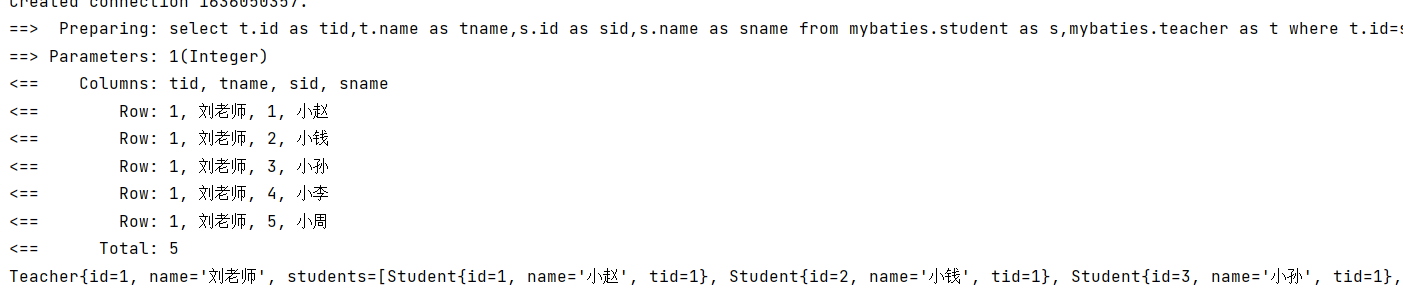
没有问题。
2.按查询嵌套处理
(1)在TeacherMapper接口中声明方法
Teacher getTeacher2(int id);(2)在TeacherMapper.xml中实现接口的方法
    <resultMap id="TeacherAndStudent2" type="Teacher">
        <result property="id" column="id"/>
        <collection property="students" column="id" javaType="List" ofType="Student" select="getStudent"/>
    </resultMap>

    <select id="getTeacher2" parameterType="_int" resultMap="TeacherAndStudent2">
        select * from mybaties.teacher where id=#{id}
    </select>

    <select id="getStudent" resultType="Student">
        select * from mybaties.student where tid=#{id}
    </select>
大同小异。
需要注意的是,这里<result property="id" column="id"/>这句映射是必要的,因为查询到的id列还被映射到了students集合,如果不进行映射,会出现Teacher的id为0的情况。
(3)junit测试
@Test
    public void getTeacherTest2() {
        SqlSession sqlSession = MyBatisUtil.getSqlSession();
        TeacherMapper teacherMapper = sqlSession.getMapper(TeacherMapper.class);
        Teacher teacher = teacherMapper.getTeacher2(1);
        System.out.println(teacher);
     sqlSession.close();
    }
测试结果:
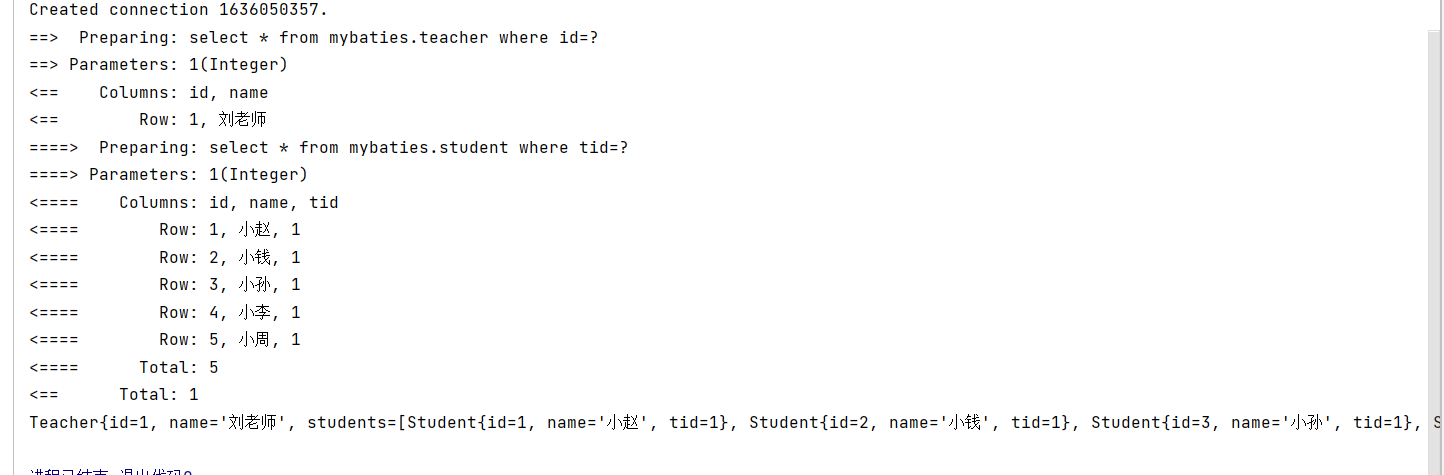
没有问题。
(本文仅作个人学习用,如有纰漏敬请指正)
Rackup通过Rack的默认处理程序成功运行任何Rack应用程序。例如:classRackAppdefcall(environment)['200',{'Content-Type'=>'text/html'},["Helloworld"]]endendrunRackApp.new但是当最后一行更改为使用Rack的内置CGI处理程序时,rackup给出“NoMethodErrorat/undefinedmethod`call'fornil:NilClass”:Rack::Handler::CGI.runRackApp.newRack的其他内置处理程序也提出了同样的反对意见。例如Rack
我对图像处理完全陌生。我对JPEG内部是什么以及它是如何工作一无所知。我想知道,是否可以在某处找到执行以下简单操作的ruby代码:打开jpeg文件。遍历每个像素并将其颜色设置为fx绿色。将结果写入另一个文件。我对如何使用ruby-vips库实现这一点特别感兴趣https://github.com/ender672/ruby-vips我的目标-学习如何使用ruby-vips执行基本的图像处理操作(Gamma校正、亮度、色调……)任何指向比“helloworld”更复杂的工作示例的链接——比如ruby-vips的github页面上的链接,我们将不胜感激!如果有ruby-
我有一个super简单的脚本,它几乎包含了FayeWebSocketGitHub页面上用于处理关闭连接的内容:ws=Faye::WebSocket::Client.new(url,nil,:headers=>headers)ws.on:opendo|event|p[:open]#sendpingcommand#sendtestcommand#ws.send({command:'test'}.to_json)endws.on:messagedo|event|#hereistheentrypointfordatacomingfromtheserver.pJSON.parse(event.d
我正在尝试解析网页,但有时会收到404错误。这是我用来获取网页的代码:result=Net::HTTP::getURI.parse(URI.escape(url))如何测试result是否为404错误代码? 最佳答案 像这样重写你的代码:uri=URI.parse(url)result=Net::HTTP.start(uri.host,uri.port){|http|http.get(uri.path)}putsresult.codeputsresult.body这将打印状态码和正文。
我查看了Stripedocumentationonerrors,但我仍然无法正确处理/重定向这些错误。基本上无论发生什么,我都希望他们返回到edit操作(通过edit_profile_path)并向他们显示一条消息(无论成功与否)。我在edit操作上有一个表单,它可以POST到update操作。使用有效的信用卡可以正常工作(费用在Stripe仪表板中)。我正在使用Stripe.js。classExtrasController5000,#amountincents:currency=>"usd",:card=>token,:description=>current_user.email)
当profile为nil时,总是让我感到悲伤...我该怎么办? 最佳答案 在View中使用变量之前,始终检查变量是否为nil。我确信这个问题有更优雅的解决方案,但这应该能让您入门。 关于ruby-on-rails-Rails处理.Erb与Nils,我们在StackOverflow上找到一个类似的问题: https://stackoverflow.com/questions/2709605/
我有一个应用程序专门使用Facebook作为身份验证提供程序,并正确设置了生产模式的回调。为了让它工作,您需要为您的Facebook应用程序提供一个站点URL和一个用于回调的站点域,在我的例子中是http://appname.heroku.com和appname。heroku.com分别。问题是我的Controller设置为只允许经过身份验证的session,所以我无法在开发模式下查看我的应用程序,因为Facebook应用程序的域显然没有设置为本地主机。如何在不更改Facebook设置的情况下解决这个问题? 最佳答案 创建另一个域l
在python中,我们可以使用多处理模块。如果Perl和Ruby中有类似的库,你会教它吗?如果您能附上一个简短的示例,我将不胜感激。 最佳答案 ruby:WorkingwithmultipleprocessesinRubyConcurrencyisaMythinRubyPerl:HarnessingthepowerofmulticoreWhyPerlIsaGreatLanguageforConcurrentProgramming此外,Perl的线程是native操作系统线程,因此您可以使用它们来利用多核。
我读过的关于Ruby符号的每一篇文章都在谈论符号相对于字符串的效率。但是,这不是1970年代。我的电脑可以处理一些额外的垃圾收集。我错了吗?我拥有最新最好的奔腾双核处理器和4GBRAM。我认为这应该足以处理一些字符串。 最佳答案 您的计算机可能能够处理“一点点额外的垃圾收集”,但是当“一点点”发生在运行数百万次的内部循环中时呢?如果它在内存有限的嵌入式系统上运行呢?有很多地方你可以随意使用字符串,但在某些地方你不能。这完全取决于上下文。 关于ruby-现代计算机的功能是否不足以处理字符串
我如下询问了我的Rspec测试。Rspec-RuntimeError:Calledidfornil,whichwouldmistakenlybe4在相同的代码上(“items_controller.rb”的Rspec测试),我试图对“PUTupdate”进行测试。但是我收到错误消息“Paperclip::AdapterRegistry::NoHandlerError:找不到“#”的处理程序。我的Rspec测试如下。老实说,我猜这次失败的原因是“let(:valid_attributes)”上的“photo”=>File.new(Rails.root+'app/assets/images
