目录
在本地开发环境中一直使用的是windows+http+websocket,本地测试都是正常的,但是部署到线上时使用的是https,导致websocket一直连接失败
ws://ip.端口/GisqPlatformExplorer/ws/login.do
其中loginWebSocketUrl=ws://192.168.xx.xx:8082
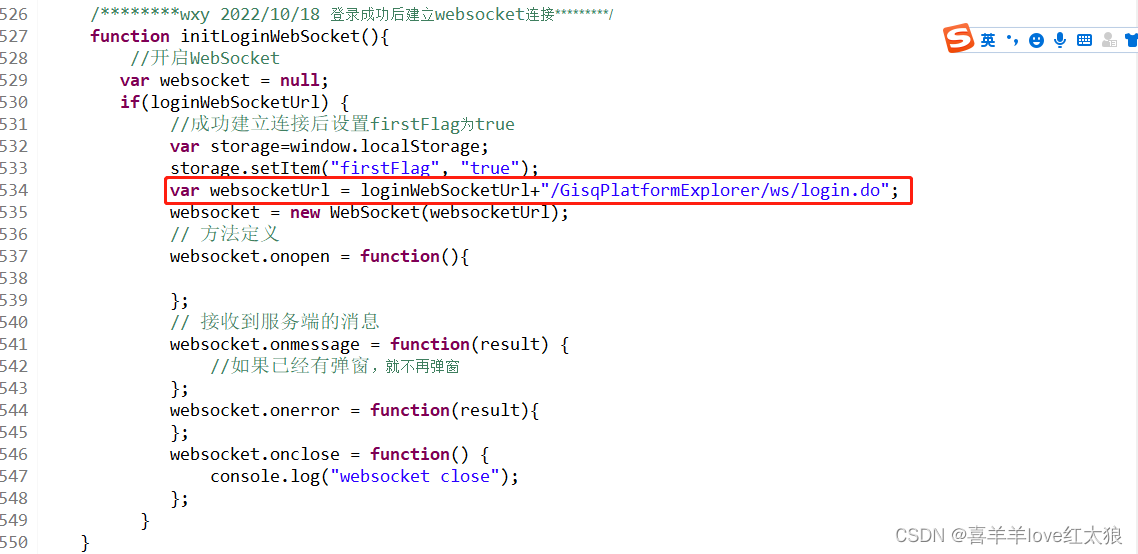
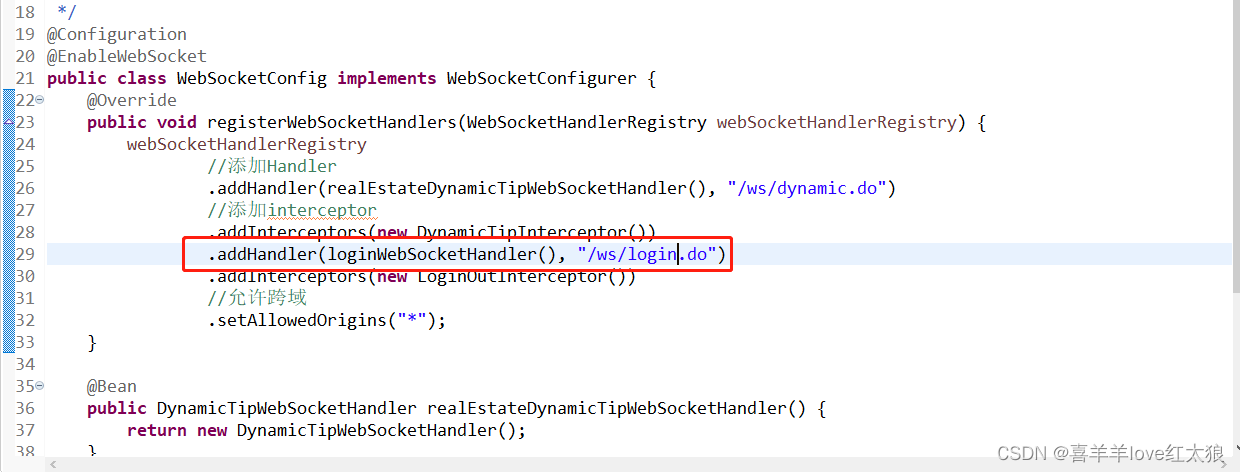
原理就是:当我websocket访问路径含有/ws/login.do时,会对该访问进行loginwebsocketHandler处理。我这里功能主要是访问该路径时,记录用户登录登出日志的功能(前面博客有写过)。
linux+https+nginx+websocket
worker_processes  1;
events {
    worker_connections  1024;
}

http {
    include       mime.types;
    default_type  application/octet-stream;

    #log_format  main  '$remote_addr - $remote_user [$time_local] "$request" '
    #                  '$status $body_bytes_sent "$http_referer" '
    #                  '"$http_user_agent" "$http_x_forwarded_for"';

    #access_log  logs/access.log  main;

    sendfile        on;
    #tcp_nopush     on;

    #keepalive_timeout  0;
    keepalive_timeout  65;
    client_max_body_size   1024M;

    #gzip  on;

    server {
        listen       11921 ssl;
        server_name  localhost;

		ssl_certificate			.\ssl\8872433_xxx.cn.pem;
		ssl_certificate_key		.\ssl\8872433_xxx.cn.key;
		ssl_session_cache    shared:SSL:1m;
        ssl_session_timeout  5m;
        ssl_ciphers  HIGH:!aNULL:!MD5;
        ssl_prefer_server_ciphers  on;

      location /GisqPlatformExplorer/ws/login.do {
        proxy_pass http://xx.xx.xx.xx:8081;
		proxy_http_version 1.1;
		proxy_set_header Upgrade $http_upgrade;
		proxy_set_header Connection "Upgrade";
		proxy_set_header X-Forwarded-For $proxy_add_x_forwarded_for;
		proxy_set_header X-Real-IP $remote_addr;
    }
        error_page   500 502 503 504  /50x.html;
        location = /50x.html {
            root   html;
        }
    }

    # HTTPS server
    server {
        listen       443 ssl;
        server_name  localhost;

        ssl_certificate      ssl/cert.crt;
        ssl_certificate_key  ssl/cert.key;

        ssl_session_cache    shared:SSL:1m;
        ssl_session_timeout  5m;

        ssl_ciphers  HIGH:!aNULL:!MD5;
        ssl_prefer_server_ciphers  on;

        location / {
            root   html;
            index  index.html index.htm;
        }
        location /GisqPlatformExplorer/ {
            proxy_pass http://localhost:8081;
        }
    }
}
Uncaught DOMException: Failed to construct 'WebSocket': An insecure WebSocket connection may not be initiated from a page loaded over HTTPS
解决方案:改成wss://xx.xx.xx.xx:11921/GisqPlatformExplorer/ws/login.do与websocket建立连接
WebSocket connection to 'wss://xx.xx.xx.xxx:11921/GisqPlatformExplorer/ws/login.do' failed
有两个地方要注意:
一个是域名问题:使用wss时必须要使用域名去访问。
一个是nginx配置问题: ‘
错误的配置:
原因主要是加“/”与不加“/”的区别没有搞清楚:nginx中斜杠(/)详解,配置location、proxy_pass时,加“/”与不加“/”的区别
    location /GisqPlatformExplorer/ws/login.do {
        proxy_pass http://xx.xx.xx.xx:8081/;
        proxy_http_version 1.1;
        proxy_set_header Upgrade $http_upgrade;
        proxy_set_header Connection "Upgrade";
        proxy_set_header X-Forwarded-For $proxy_add_x_forwarded_for;
        proxy_set_header X-Real-IP $remote_addr;
}


实际访问代理地址:http://xx.xx.xx.xx7:8081/ location /GisqPlatformExplorer/ws/login.do {
proxy_pass http://127.0.0.1:8081/GisqPlatformExplorer/ws/login.do;
proxy_http_version 1.1;
proxy_set_header Upgrade $http_upgrade;
proxy_set_header Connection "Upgrade";
proxy_set_header X-Forwarded-For $proxy_add_x_forwarded_for;
proxy_set_header X-Real-IP $remote_addr;
}
实际访问代理地址:http://127.0.0.1:8899/GisqPlatformExplorer/ws/login.do
    location /GisqPlatformExplorer/ws/login.do {
        proxy_pass http://127.0.0.1:8081;
        proxy_http_version 1.1;
        proxy_set_header Upgrade $http_upgrade;
        proxy_set_header Connection "Upgrade";
        proxy_set_header X-Forwarded-For $proxy_add_x_forwarded_for;
        proxy_set_header X-Real-IP $remote_addr;
}

实际访问代理地址:http://127.0.0.1:8081/GisqPlatformExplorer/ws/login.do
再次测试访问wss://xx.xx.xx.xxx:11921/GisqPlatformExplorer/ws/login.do路径时建立连接成功。
(不了解必定会踩坑)
1.http情况下用ws,https情况下必须要使用wss
https相当于使用http+ssl认证,使用https时websocket访问(比如建立链接时)必须要使用wss
2. 使用域名
https下一般都是域名去访问的,存在有域名解析的过程,因此wss时也要使用域名
3.使用域名+指定端口
这个之前没有了解过,只是认为域名就包含了端口,其实也是可以指定端口的下面是现场环境访问的路径

nginx斜杠问题:
参考如下写的不错,很容易理解
Nginx中proxy_pass的斜杠(/)问题 - 达摩院的BLOG - 博客园
location /api1/ {
    proxy_pass http://localhost:8080;
}
在访问http://localhost/api1/xxx时,会代理到http://localhost:8080/api1/xxx
location /api2/ {
    proxy_pass http://localhost:8080/;
}
当访问http://localhost/api2/xxx时,http://localhost/api2/(注意最后的/)被替换成了http://localhost:8080/,然后再加上剩下的xxx,于是变成了http://localhost:8080/xxx。
主要看proxy_pass http://localhost:8080,这种方式称为不带URI方式;
proxy_pass http://localhost:8080/xx或http://localhost:8080/,这种方式称为带URI方式;
其中不带URI方式主要是匹配(保留匹配路径及后面的所有),而带URI方式主要是替换(将匹配到的相同部分替换掉,然后保留完全匹配后面的所有)
我想为Heroku构建一个Rails3应用程序。他们使用Postgres作为他们的数据库,所以我通过MacPorts安装了postgres9.0。现在我需要一个postgresgem并且共识是出于性能原因你想要pggem。但是我对我得到的错误感到非常困惑当我尝试在rvm下通过geminstall安装pg时。我已经非常明确地指定了所有postgres目录的位置可以找到但仍然无法完成安装:$envARCHFLAGS='-archx86_64'geminstallpg--\--with-pg-config=/opt/local/var/db/postgresql90/defaultdb/po
尝试通过RVM将RubyGems升级到版本1.8.10并出现此错误:$rvmrubygemslatestRemovingoldRubygemsfiles...Installingrubygems-1.8.10forruby-1.9.2-p180...ERROR:Errorrunning'GEM_PATH="/Users/foo/.rvm/gems/ruby-1.9.2-p180:/Users/foo/.rvm/gems/ruby-1.9.2-p180@global:/Users/foo/.rvm/gems/ruby-1.9.2-p180:/Users/foo/.rvm/gems/rub
我有一个在Linux服务器上运行的ruby脚本。它不使用rails或任何东西。它基本上是一个命令行ruby脚本,可以像这样传递参数:./ruby_script.rbarg1arg2如何将参数抽象到配置文件(例如yaml文件或其他文件)中?您能否举例说明如何做到这一点?提前谢谢你。 最佳答案 首先,您可以运行一个写入YAML配置文件的独立脚本:require"yaml"File.write("path_to_yaml_file",[arg1,arg2].to_yaml)然后,在您的应用中阅读它:require"yaml"arg
我的最终目标是安装当前版本的RubyonRails。我在OSXMountainLion上运行。到目前为止,这是我的过程:已安装的RVM$\curl-Lhttps://get.rvm.io|bash-sstable检查已知(我假设已批准)安装$rvmlistknown我看到当前的稳定版本可用[ruby-]2.0.0[-p247]输入命令安装$rvminstall2.0.0-p247注意:我也试过这些安装命令$rvminstallruby-2.0.0-p247$rvminstallruby=2.0.0-p247我很快就无处可去了。结果:$rvminstall2.0.0-p247Search
由于fast-stemmer的问题,我很难安装我想要的任何rubygem。我把我得到的错误放在下面。Buildingnativeextensions.Thiscouldtakeawhile...ERROR:Errorinstallingfast-stemmer:ERROR:Failedtobuildgemnativeextension./System/Library/Frameworks/Ruby.framework/Versions/2.0/usr/bin/rubyextconf.rbcreatingMakefilemake"DESTDIR="cleanmake"DESTDIR=
我已经在Sinatra上创建了应用程序,它代表了一个简单的API。我想在生产和开发上进行部署。我想在部署时选择,是开发还是生产,一些方法的逻辑应该改变,这取决于部署类型。是否有任何想法,如何完成以及解决此问题的一些示例。例子:我有代码get'/api/test'doreturn"Itisdev"end但是在部署到生产环境之后我想在运行/api/test之后看到ItisPROD如何实现? 最佳答案 根据SinatraDocumentation:EnvironmentscanbesetthroughtheRACK_ENVenvironm
当我尝试安装Ruby时遇到此错误。我试过查看this和this但无济于事➜~brewinstallrubyWarning:YouareusingOSX10.12.Wedonotprovidesupportforthispre-releaseversion.Youmayencounterbuildfailuresorotherbreakages.Pleasecreatepull-requestsinsteadoffilingissues.==>Installingdependenciesforruby:readline,libyaml,makedepend==>Installingrub
我正在尝试使用boilerpipe来自JRuby。我看过guide从JRuby调用Java,并成功地将它与另一个Java包一起使用,但无法弄清楚为什么同样的东西不能用于boilerpipe。我正在尝试基本上从JRuby中执行与此Java等效的操作:URLurl=newURL("http://www.example.com/some-location/index.html");Stringtext=ArticleExtractor.INSTANCE.getText(url);在JRuby中试过这个:require'java'url=java.net.URL.new("http://www
我意识到这可能是一个非常基本的问题,但我现在已经花了几天时间回过头来解决这个问题,但出于某种原因,Google就是没有帮助我。(我认为部分问题在于我是一个初学者,我不知道该问什么......)我也看过O'Reilly的RubyCookbook和RailsAPI,但我仍然停留在这个问题上.我找到了一些关于多态关系的信息,但它似乎不是我需要的(尽管如果我错了请告诉我)。我正在尝试调整MichaelHartl'stutorial创建一个包含用户、文章和评论的博客应用程序(不使用脚手架)。我希望评论既属于用户又属于文章。我的主要问题是:我不知道如何将当前文章的ID放入评论Controller。
首先回顾一下拉格朗日定理的内容:函数f(x)是在闭区间[a,b]上连续、开区间(a,b)上可导的函数,那么至少存在一个,使得:通过这个表达式我们可以知道,f(x)是函数的主体,a和b可以看作是主体函数f(x)中所取的两个值。那么可以有, 也就意味着我们可以用来替换 这种替换可以用在求某些多项式差的极限中。方法: 外层函数f(x)是一致的,并且h(x)和g(x)是等价无穷小。此时,利用拉格朗日定理,将原式替换为 ,再进行求解,往往会省去复合函数求极限的很多麻烦。使用要注意:1.要先找到主体函数f(x),即外层函数必须相同。2.f(x)找到后,复合部分是等价无穷小。3.要满足作差的形式。如果是加
