文章目录
跨域是指从一个域名的网页去请求另一个域名的资源。
例如从百度页面点击超链接请求京东的资源。
我们来测试一下
包括超链接、form表单、JS代码、跨域<script>标签加载JS代码、跨域加载图片、以及AJAX请求
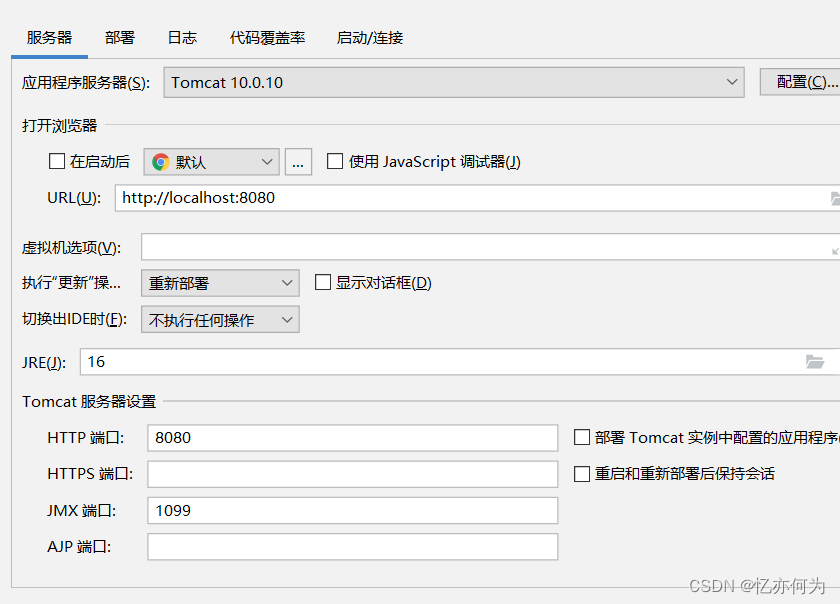
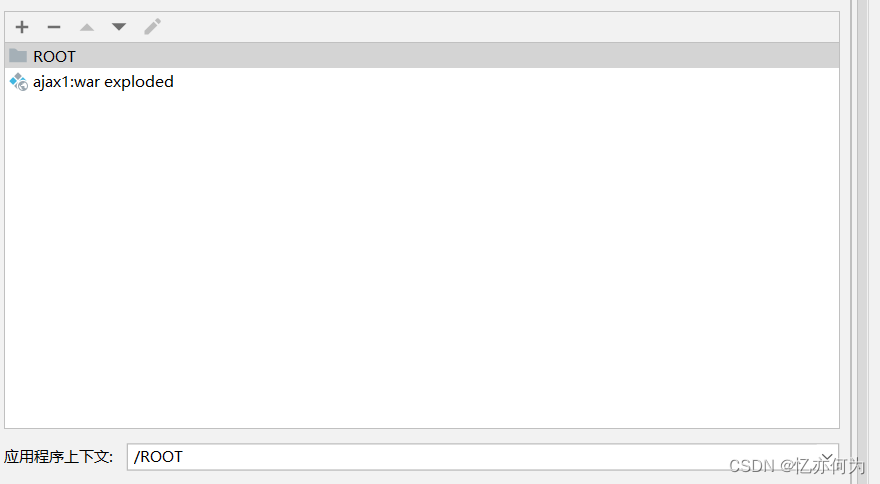
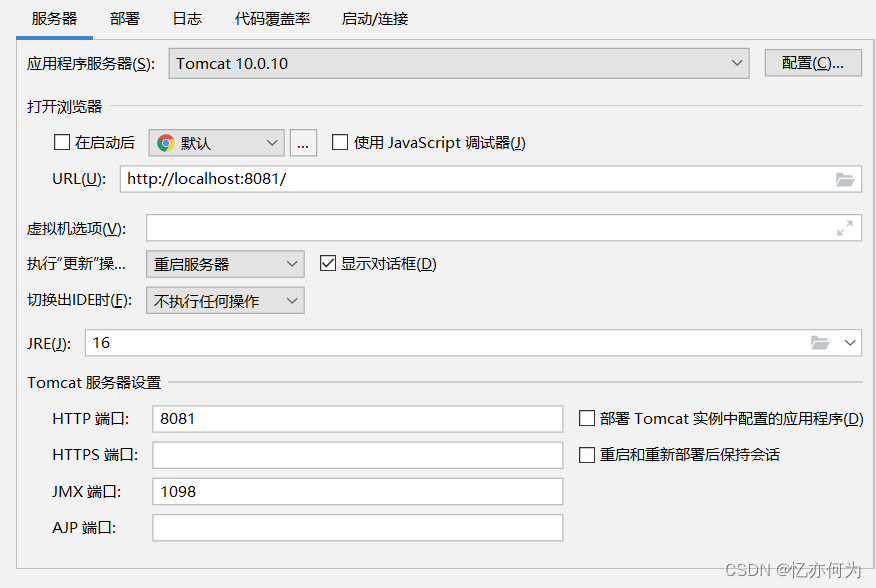
首先建两个服务器,服务器1:HTTP为8080端口,JMX端口为1099,部署ajax1模块,服务器2:HTTP为8081端口,JMX端口为1098,部署ajax2模块
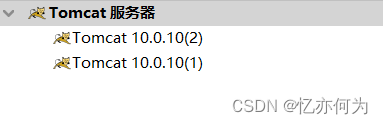
服务器1:
服务器2:
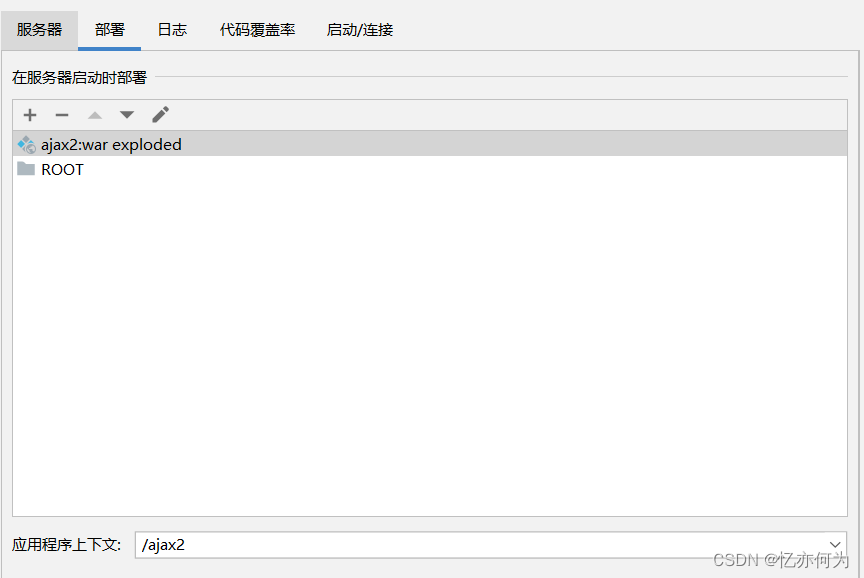
然后ajax1去跨域请求ajax2
ajax1 html
<!DOCTYPE html>
<html lang="en">
<head>
    <meta charset="UTF-8">
    <title>ajax1</title>
</head>
<body>
<!--测试超链接跨域-->
<a href="http://localhost:8081/ajax2">ajax2跨域请求</a><br>
<!--测试form表单跨域-->
<form action="http://localhost:8081/ajax2/user" method="post">
    username:<input type="text" name="username"/><br>
    password:<input type="password" name="password"/><br>
    <input type="submit" value="form跨域"><br>
</form>
<!--测试js代码的跨域-->
<hr>
<button onclick="window.location.href='http://localhost:8081/ajax2'">JS跨域请求</button><br>
<button onclick="document.location.href='http://localhost:8081/ajax2'">JS跨域请求</button><br>
<!--测试使用script跨域加载-->
<script type="text/javascript" src="http://localhost:8081/ajax2/my.js"></script>

<h3>测试跨域加载图片</h3>
<img src="http://localhost:8081/ajax2/img/2.jpg" style="width: 100px">
<hr>
<!--发送AJAX跨域请求,响应到div里面-->
<script type="text/javascript">
    window.onload = function (){
        document.getElementById("btn").onclick = function (){
            var xhr = new XMLHttpRequest();
            xhr.onreadystatechange = function (){
                if (this.readyState == 4) {
                    if (this.status == 200) {
                        document.getElementById("mydiv").innerHTML = this.responseText
                    }
                }
            }
            xhr.open("GET","http://localhost:8081/ajax2/hello",true)
            xhr.send()
        }
    }
</script>
<button id="btn">AJAX跨域请求</button>
<div id="mydiv"></div>
</body>
</html>
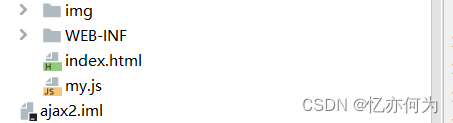
在ajax2模块,导入图片,以及js代码测试
html页面
<!DOCTYPE html>
<html lang="en">
<head>
    <meta charset="UTF-8">
    <title>ajax2</title>
</head>
<body>
<h1>ajax2页面</h1>
</body>
</html>
js代码
alert("js加载了")//页面加载就会弹出
UserServlet用于测试form表单
@WebServlet("/user")
public class UserServlet extends HttpServlet {
    @Override
    protected void doPost(HttpServletRequest request, HttpServletResponse response) throws ServletException, IOException {
        response.setContentType("text/html;charset=UTF-8");
        PrintWriter out = response.getWriter();
        String username = request.getParameter("username");
        String password = request.getParameter("password");
        out.print(username + "," + password);
    }
}
HelloServlet用于测试ajax请求
@WebServlet("/hello")
public class HelloServlet extends HttpServlet {
    @Override
    protected void doGet(HttpServletRequest request, HttpServletResponse response) throws ServletException, IOException {
        response.getWriter().print("Hello!!!!!");//简单响应
    }
}
点击超链接,成功跳转

输入信息,点击提交,发现成功跳转显示


点击两个按钮分别是用window和document,发现都成功

正常应该是页面没出来就加载了,发现确实加载了
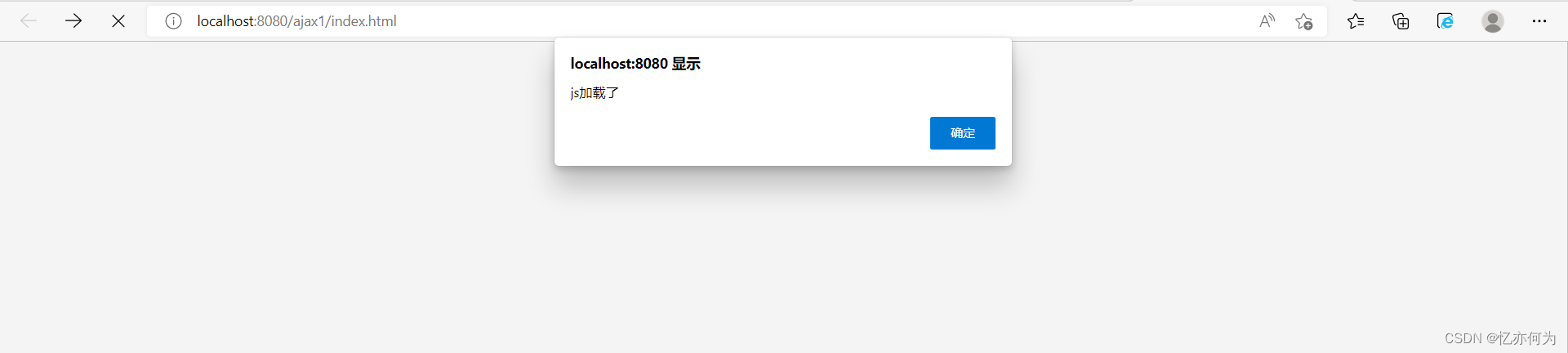
刷新页面,图片加载

6.测试ajax跨域请求
点击ajax请求按钮,发现没动静打开F12,发现请求是发过去了

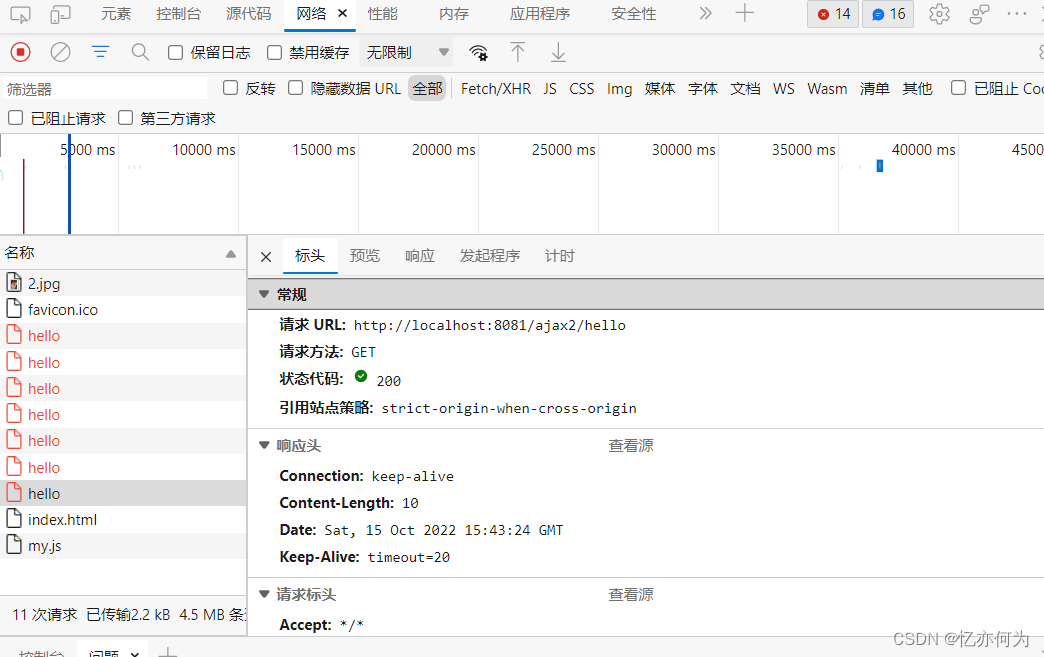
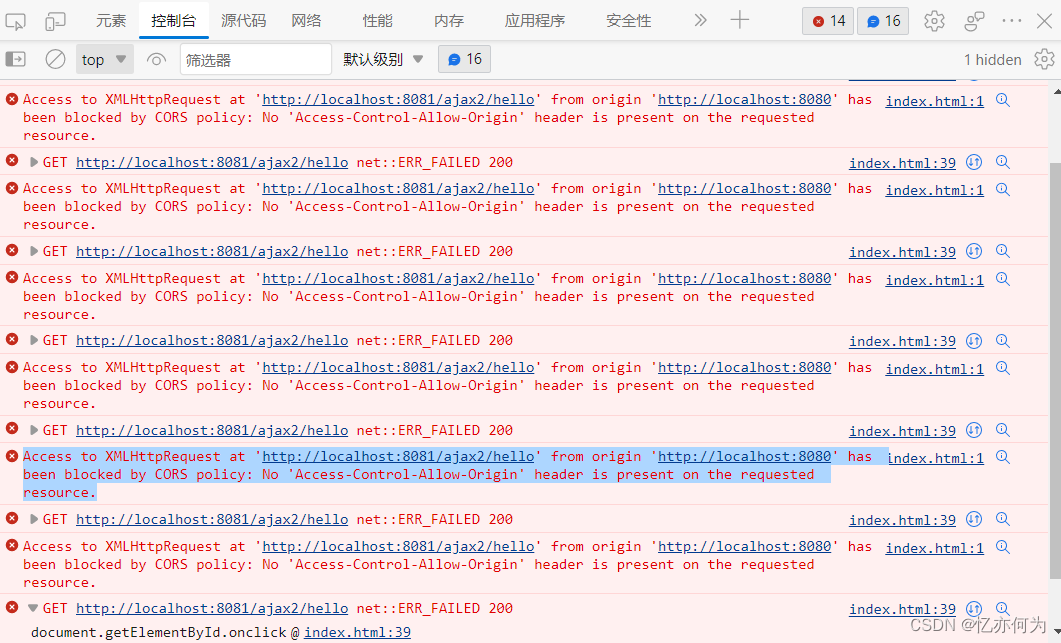
但是报错误:
Access to XMLHttpRequest at 'http://localhost:8081/ajax2/hello' from origin
'http://localhost:8080' has been blocked by CORS policy:
No 'Access-Control-Allow-Origin' header is present on the requested resource.
意思是这个请求被CORS策略阻止,并且请求源上不存在“Access Control Allow Origin”标头。
CORS策略阻止:表示这个ajax请求被同源策略阻止
根本原因:在跨域的时候不允许出现XMLHttpRequest对象,因为共享同一个XMLHttpRequest对象是不安全的
同源策略:是浏览器的一种安全策略,指一段脚本只能读取来自同一来源的窗口和文档的属性,同源就是协议、域名和端口都相同。
例如:如果你刚刚在某网银输入账号密码,查看了自己还有账户金额,紧接着又访问一些不规矩的网站,
这些网站可以访问刚刚的网银站点,并且获取账号密码,那后果可想而知。所以,从安全的角度来讲,同源策略是有利于保护网站信息的。
同源的三要素
只有三个要素同时一致,才是同源,否则为不同源
现在大部分系统都是大型应用,分布式的微服务的,有一些情况我们是需要使用ajax进行跨域访问的,所以就需要解决跨域的问题
来源于报错:请求源上不存在“Access Control Allow Origin”标头。
核心原理:跨域访问里的资源允许你跨域访问。
有两种设置方式
response.setHeader("Access-Control-Allow-Origin", "http://localhost:8080"); // 允许某个,这里允许http://localhost:8080这个源,也就是允许ajax1访问
response.setHeader("Access-Control-Allow-Origin", "*"); // 允许所有
在HelloServlet里设置之后发现响应回来了

来源于<script>能够跨域加载JS代码,那能不能加载Servlet呢
在ajax1模块新建个html页面测试一下
<!DOCTYPE html>
<html lang="en">
<head>
    <meta charset="UTF-8">
    <title>jsonp实现跨域</title>
</head>
<body>
<script type="text/javascript" src="http://localhost:8081/ajax2/jsonp"></script>
</body>
</html>
ajax2新建个Servlet
@WebServlet("/jsonp")
public class JsonpServlet extends HttpServlet {
    @Override
    protected void doGet(HttpServletRequest request, HttpServletResponse response) throws ServletException, IOException {
        PrintWriter out = response.getWriter();
        out.print("alert('111')");//响应一段JS代码
    }
}
结果:

发现<script>是可以加载Servlet的,也就是说到时候响应一段字符串拼接的调用函数,参数是json类型,到时候这个json就是一个业务结果,传过来,让前端调用
例如
html
<!DOCTYPE html>
<html lang="en">
<head>
    <meta charset="UTF-8">
    <title>jsonp实现跨域</title>
</head>

<body>
<script type="text/javascript">
    function sayHello(data){
        alert("hello:" + data.name)
    }
</script>
<script type="text/javascript" src="http://localhost:8081/ajax2/jsonp?fun=sayHello"></script>
</body>
</html>
ajax2响应带json的JS代码
@WebServlet("/jsonp")
public class JsonpServlet extends HttpServlet {
    @Override
    protected void doGet(HttpServletRequest request, HttpServletResponse response) throws ServletException, IOException {
        String fun = request.getParameter("fun");
        PrintWriter out = response.getWriter();
        out.print(fun + "({\"name\":\"zhangsan\"})");
    }
}
结果:

jsonp:json with padding(带填充的json)
我们不希望是页面加载的时候执行,我们需要用户点击按钮的时候刷新局部,怎么办?
我们需要在用户点击按钮的时候把
<script type="text/javascript" src="http://localhost:8081/ajax2/jsonp?fun=sayHello"></script>
这个内容加载到body标签里面
实现
ajax1模块html页面
<!DOCTYPE html>
<html lang="en">
<head>
    <meta charset="UTF-8">
    <title>jsonp点击按钮跨域</title>
</head>
<body>
<script type="text/javascript">
    function sayHello(data){
        document.getElementById("mydiv").innerHTML = data.name
    }
    window.onload = function (){
        document.getElementById("btn").onclick = function (){
            //创建script
            const htmlScriptElement = document.createElement("script");//创建script元素
            //设置属性script
            htmlScriptElement.type = "text/javascript"
            htmlScriptElement.src = "http://localhost:8081/ajax2/jsonp?fun=sayHello"
            document.getElementsByTagName("body")[0].appendChild(htmlScriptElement)//将script设置到body里
        }
    }
</script>
<button id="btn">jsonp局部刷新</button>
<div id="mydiv"></div>
</body>
</html>
ajax2模块后端代码
@WebServlet("/jsonp")
public class JsonpServlet extends HttpServlet {
    @Override
    protected void doGet(HttpServletRequest request, HttpServletResponse response) throws ServletException, IOException {
    	//一般这里要连接数据库,这里就不连接了
        String fun = request.getParameter("fun");
        PrintWriter out = response.getWriter();
        out.print(fun + "({\"name\":\"zhangsan\"})");
    }
}
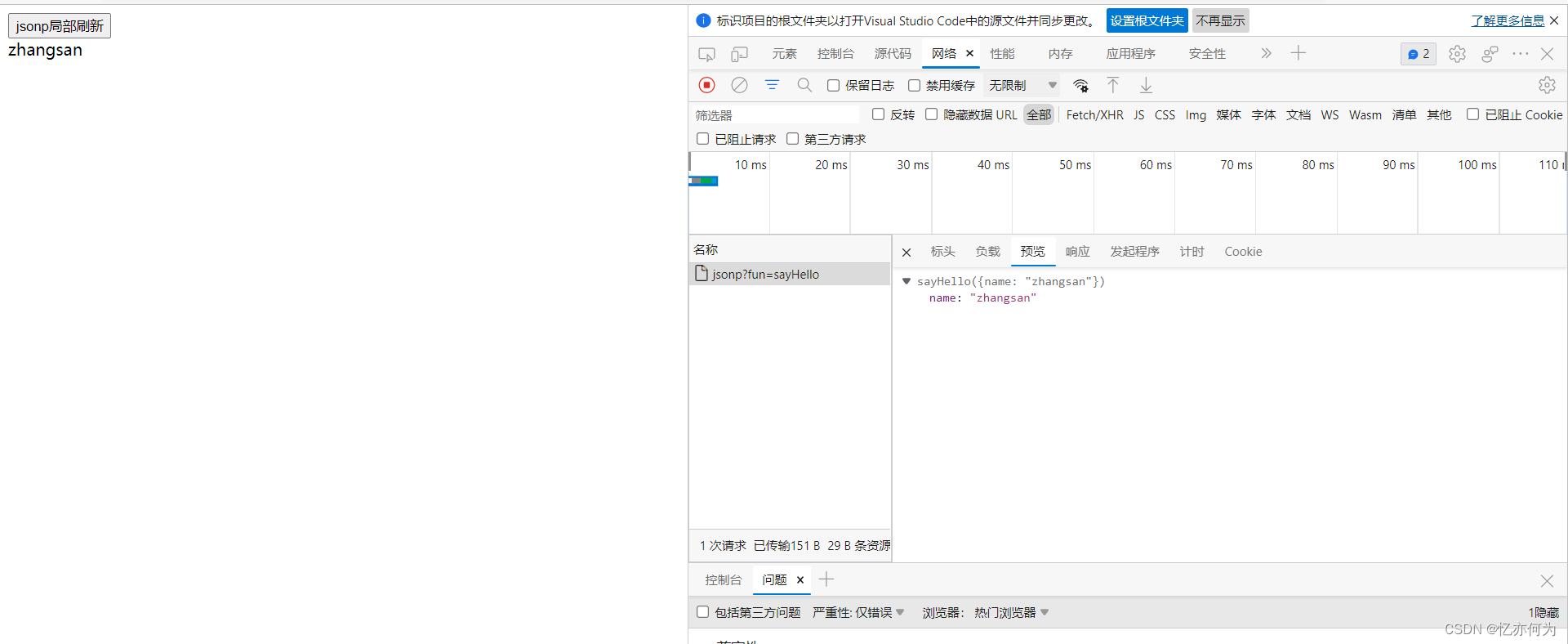
结果:点击按钮,发现ajax2响应了一段JS代码
牛人们写的jQuery库,已经对jsonp进行了封装。大家可以直接拿来用。
用之前需要引入jQuery库的js文件。
jQuery中的jsonp其实就是我们方案2的高度封装,底层原理完全相同。
核心代码
$.ajax({
    type : "GET",
    url : "跨域的url",
    dataType : "jsonp", // 指定数据类型
    jsonp : "fun", // 指定参数名(不设置的时候,默认是:"callback")
    jsonpCallback : "sayHello" // 指定回调函数的名字
							   // (不设置的时候,jQuery会自动生成一个随机的回调函数,
    						   //并且这个回调函数还会自动调用success的回调函数。)
})
代理跨域就是当用户点击按钮的时候,发送不跨域的ajax请求,让后端ProxyServlet代理,使用java代码代理发送跨域请求,然后服务器2TargetServlet响应回来的数据是传输给ProxyServlet,通过ProxyServlet代理转响应到前端,避开了跨域。
ajax请求:服务器1按钮->服务器1后端ProxyServlet代理->服务器2TargetServlet
响应:服务器2TargetServlet->服务器1ProxyServlet代理->服务器1前端
Java程序怎么去发送get/post请求呢?
使用JDK内置的API(java.net.URL…),这些API是可以发送HTTP请求的。
比如:apache的httpclient组件。(httpclient组件是开源免费的,可以直接用)
nginx反向代理中也是使用了这种代理机制来完成AJAX的跨域,实现起来非常简单,只要修改一个nginx的配置即可。
我想为Heroku构建一个Rails3应用程序。他们使用Postgres作为他们的数据库,所以我通过MacPorts安装了postgres9.0。现在我需要一个postgresgem并且共识是出于性能原因你想要pggem。但是我对我得到的错误感到非常困惑当我尝试在rvm下通过geminstall安装pg时。我已经非常明确地指定了所有postgres目录的位置可以找到但仍然无法完成安装:$envARCHFLAGS='-archx86_64'geminstallpg--\--with-pg-config=/opt/local/var/db/postgresql90/defaultdb/po
尝试通过RVM将RubyGems升级到版本1.8.10并出现此错误:$rvmrubygemslatestRemovingoldRubygemsfiles...Installingrubygems-1.8.10forruby-1.9.2-p180...ERROR:Errorrunning'GEM_PATH="/Users/foo/.rvm/gems/ruby-1.9.2-p180:/Users/foo/.rvm/gems/ruby-1.9.2-p180@global:/Users/foo/.rvm/gems/ruby-1.9.2-p180:/Users/foo/.rvm/gems/rub
在MRIRuby中我可以这样做:deftransferinternal_server=self.init_serverpid=forkdointernal_server.runend#Maketheserverprocessrunindependently.Process.detach(pid)internal_client=self.init_client#Dootherstuffwithconnectingtointernal_server...internal_client.post('somedata')ensure#KillserverProcess.kill('KILL',
我的最终目标是安装当前版本的RubyonRails。我在OSXMountainLion上运行。到目前为止,这是我的过程:已安装的RVM$\curl-Lhttps://get.rvm.io|bash-sstable检查已知(我假设已批准)安装$rvmlistknown我看到当前的稳定版本可用[ruby-]2.0.0[-p247]输入命令安装$rvminstall2.0.0-p247注意:我也试过这些安装命令$rvminstallruby-2.0.0-p247$rvminstallruby=2.0.0-p247我很快就无处可去了。结果:$rvminstall2.0.0-p247Search
由于fast-stemmer的问题,我很难安装我想要的任何rubygem。我把我得到的错误放在下面。Buildingnativeextensions.Thiscouldtakeawhile...ERROR:Errorinstallingfast-stemmer:ERROR:Failedtobuildgemnativeextension./System/Library/Frameworks/Ruby.framework/Versions/2.0/usr/bin/rubyextconf.rbcreatingMakefilemake"DESTDIR="cleanmake"DESTDIR=
当我尝试安装Ruby时遇到此错误。我试过查看this和this但无济于事➜~brewinstallrubyWarning:YouareusingOSX10.12.Wedonotprovidesupportforthispre-releaseversion.Youmayencounterbuildfailuresorotherbreakages.Pleasecreatepull-requestsinsteadoffilingissues.==>Installingdependenciesforruby:readline,libyaml,makedepend==>Installingrub
rails中是否有任何规定允许站点的所有AJAXPOST请求在没有authenticity_token的情况下通过?我有一个调用Controller方法的JqueryPOSTajax调用,但我没有在其中放置任何真实性代码,但调用成功。我的ApplicationController确实有'request_forgery_protection'并且我已经改变了config.action_controller.consider_all_requests_local在我的environments/development.rb中为false我还搜索了我的代码以确保我没有重载ajaxSend来发送
我正在尝试使用boilerpipe来自JRuby。我看过guide从JRuby调用Java,并成功地将它与另一个Java包一起使用,但无法弄清楚为什么同样的东西不能用于boilerpipe。我正在尝试基本上从JRuby中执行与此Java等效的操作:URLurl=newURL("http://www.example.com/some-location/index.html");Stringtext=ArticleExtractor.INSTANCE.getText(url);在JRuby中试过这个:require'java'url=java.net.URL.new("http://www
我意识到这可能是一个非常基本的问题,但我现在已经花了几天时间回过头来解决这个问题,但出于某种原因,Google就是没有帮助我。(我认为部分问题在于我是一个初学者,我不知道该问什么......)我也看过O'Reilly的RubyCookbook和RailsAPI,但我仍然停留在这个问题上.我找到了一些关于多态关系的信息,但它似乎不是我需要的(尽管如果我错了请告诉我)。我正在尝试调整MichaelHartl'stutorial创建一个包含用户、文章和评论的博客应用程序(不使用脚手架)。我希望评论既属于用户又属于文章。我的主要问题是:我不知道如何将当前文章的ID放入评论Controller。
相信很多人在录制视频的时候都会遇到各种各样的问题,比如录制的视频没有声音。屏幕录制为什么没声音?今天小编就和大家分享一下如何录制音画同步视频的具体操作方法。如果你有录制的视频没有声音,你可以试试这个方法。 一、检查是否打开电脑系统声音相信很多小伙伴在录制视频后会发现录制的视频没有声音,屏幕录制为什么没声音?如果当时没有打开音频录制,则录制好的视频是没有声音的。因此,建议在录制前进行检查。屏幕上没有声音,很可能是因为你的电脑系统的声音被禁止了。您只需打开电脑系统的声音,即可录制音频和图画同步视频。操作方法:步骤1:点击电脑屏幕右下侧的“小喇叭”图案,在上方的选项中,选择“声音”。 步骤2:在“声
