轮播图有很多种实现方法,这是其中一种最清晰的方法。思路很清晰,代码很简单,欢迎大佬多指教。
先来看下效果图,嫌麻烦就不用具体图片来实现了,主要是理清思路。(自动轮播,左右按钮切换图片,小圆点切换图片,鼠标移入暂停轮播,鼠标移出继续轮播)
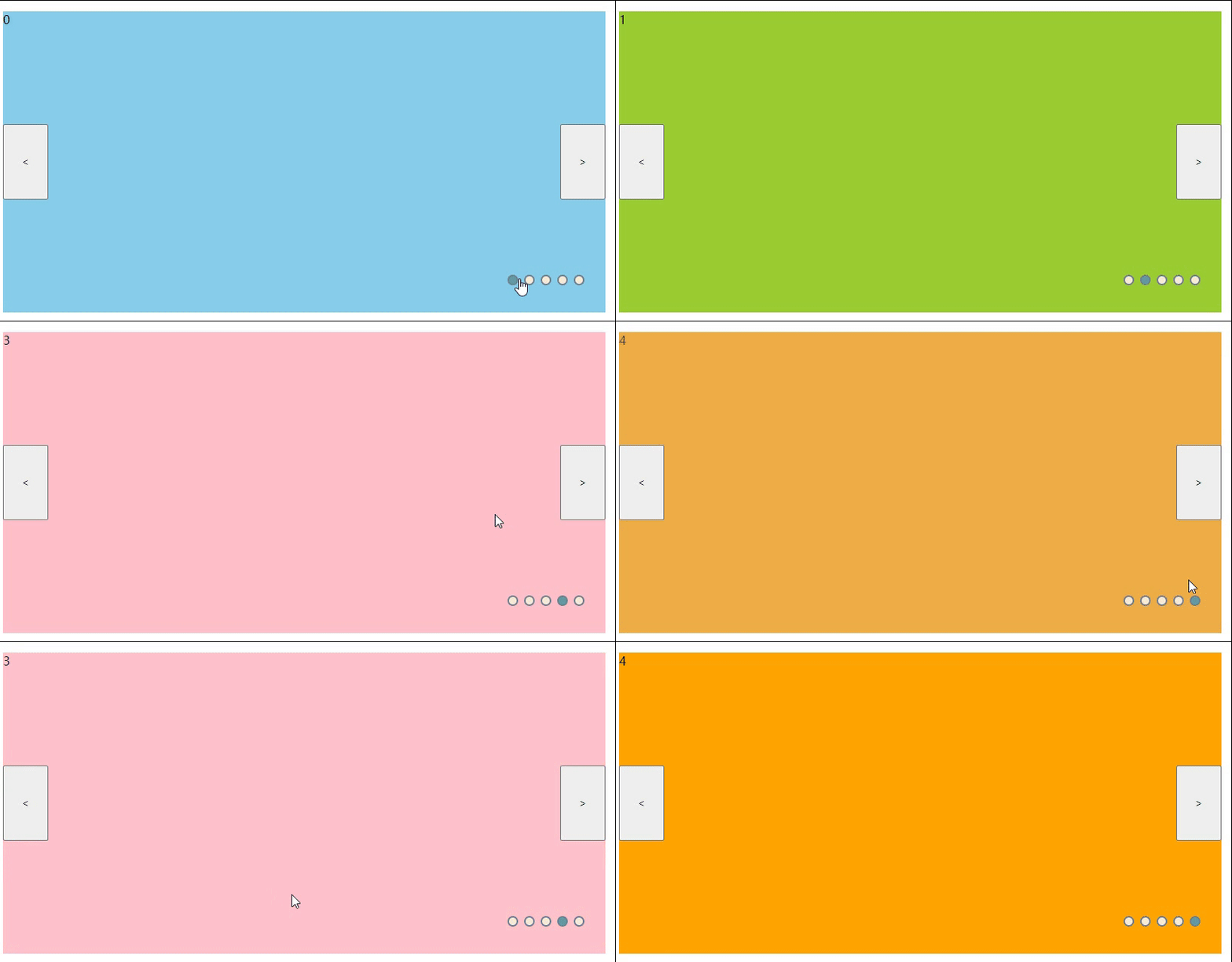
首先是html内容,布局很简单,一个图片列表,一个点列表,两个按钮。注意data-index使用HTML5中的data-xx属性来嵌入自定义数据(下面JS代码会提到)。记得给默认显示的图片和对应的小圆点加上active类哦。
 <div class="wrap">
        <ul class="list">
            <li class="item active">0</li>
            <li class="item">1</li>
            <li class="item">2</li>
            <li class="item">3</li>
            <li class="item">4</li>
        </ul>
        <ul class="pointList">
            <li class="point active" data-index = 0></li>
            <li class="point" data-index = 1></li>
            <li class="point" data-index = 2></li>
            <li class="point" data-index = 3></li>
            <li class="point" data-index = 4></li>
        </ul>
        <button class="btn" id="leftBtn"> < </button>
        <button class="btn" id="rightBtn"> > </button>

</div>思路:父容器list相对定位,item绝对定位,实现让所有图片重叠在父容器内。利用z-index来设置图片高度,图片高度最高会显示在顶层上。那么整个容器中,左右切换按钮和小圆点始终要在最顶层,不能被图片覆盖,所以他们的z-index一定要比图片高。active是一个样式,给某张图片绑定这个样式就能在最上层显示。然后就是图片切换的渐变效果,opacity完全不透明到透明,再加个transition动画效果。最后就是cursor给小圆点添加“小手指”,其他就没什么好说的了。
<style>
        .wrap {
            width: 800px;
            height: 400px;
            position: relative;
        }

        .list {
            width: 800px;
            height: 400px;
            position: relative;
            padding-left: 0px;
        }

        .item {
            width: 100%;
            height: 100%;
            list-style: none;
            position: absolute;
            left: 0;
            opacity: 0;
            transition: all .8s;
        }

        .item:nth-child(1) {
            background-color: skyblue;
        }

        .item:nth-child(2) {
            background-color: yellowgreen;
        }

        .item:nth-child(3) {
            background-color: rebeccapurple;
        }

        .item:nth-child(4) {
            background-color: pink;
        }

        .item:nth-child(5) {
            background-color: orange;
        }

        .item.active {
            z-index: 10;
            opacity: 1;
        }

        .btn {
            width: 60px;
            height: 100px;
            z-index: 100;
            top: 150px;
            position: absolute;
        }

        #leftBtn {
            left: 0px;
        }

        #rightBtn {
            right: 0px;
        }

        .pointList {
            list-style: none;
            padding-left: 0px;
            position: absolute;
            right: 20px;
            bottom: 20px;
            z-index: 200;
        }

        .point {
            width: 10px;
            height: 10px;
            background-color: antiquewhite;
            border-radius: 100%;
            float: left;
            margin-right: 8px;
            border-style: solid;
            border-width: 2px;
            border-color: slategray;
            cursor: pointer;
        }

        .point.active{
            background-color: cadetblue;
        }
</style>Index可以说是整个代码里面的"核心",先封装一个清除active的方法,这里面要清除图片的active(显示在最上层),比如切换到下一张图上张图的active就要清除。还有point的active(图片对应小圆点改变样式)。然后goIndex这个方法就是给图片和对应的小圆点同时加上active,左右按钮绑定的方法就不说了。
用getAttribute拿到刚才给li标签绑定的data-index属性,绑定图片index = pointindex,就能实现点击小圆点图片切换了。由于上面goIndex方法早已经绑定好了给图片添加active样式的时候也给小圆点添加的样式了,就可以实现图片切换小圆点跟随变化的效果。
<script>
        var items = document.querySelectorAll(".item");//图片节点
        var points = document.querySelectorAll(".point")//点
        var left = document.getElementById("leftBtn");
        var right = document.getElementById("rightBtn");
        var all = document.querySelector(".wrap")
        var index = 0;
        var time = 0;//定时器跳转参数初始化


        //封装一个清除active方法
        var clearActive = function () {
            for (i = 0; i < items.length; i++) {
                items[i].className = 'item';
            }
            for (j = 0; j < points.length; j++) {
                points[j].className = 'point';
            }
        }

        //改变active方法
        var goIndex = function () {
            clearActive();
            items[index].className = 'item active';
            points[index].className = 'point active'
        }
        //左按钮事件
        var goLeft = function () {
            if (index == 0) {
                index = 4;
            } else {
                index--;
            }
            goIndex();
        }

        //右按钮事件
        var goRight = function () {
            if (index < 4) {
                index++;
            } else {
                index = 0;
            }
            goIndex();
        }


        //绑定点击事件监听
        left.addEventListener('click', function () {
            goLeft();
            time = 0;//计时器跳转清零
        })

        right.addEventListener('click', function () {
            goRight();
            time = 0;//计时器跳转清零
        })

        for(i = 0;i < points.length;i++){
            points[i].addEventListener('click',function(){
                var pointIndex = this.getAttribute('data-index')
                index = pointIndex;
                goIndex();
                time = 0;//计时器跳转清零
            })
        }
        //计时器轮播效果
        var timer;
        function play(){
         timer = setInterval(() => {
            time ++;
            if(time == 20 ){
                goRight();
                time = 0;
            }
        },100)
    }
        play();
        //移入清除计时器
        all.onmousemove = function(){
            clearInterval(timer)
        }
       //移出启动计时器
        all.onmouseleave = function(){
            play();
        }
    </script>
总结:这个简单的轮播图实现例子是第一次写最容易理解,逻辑最清晰的一种。下面我把完整的代码块放出来,直接复制粘贴就可以运行。
<!DOCTYPE html>
<html>

<head>
    <style>
        .wrap {
            width: 800px;
            height: 400px;
            position: relative;
        }

        .list {
            width: 800px;
            height: 400px;
            position: relative;
            padding-left: 0px;
        }

        .item {
            width: 100%;
            height: 100%;
            list-style: none;
            position: absolute;
            left: 0;
            opacity: 0;
            transition: all .8s;
        }

        .item:nth-child(1) {
            background-color: skyblue;
        }

        .item:nth-child(2) {
            background-color: yellowgreen;
        }

        .item:nth-child(3) {
            background-color: rebeccapurple;
        }

        .item:nth-child(4) {
            background-color: pink;
        }

        .item:nth-child(5) {
            background-color: orange;
        }

        .item.active {
            z-index: 10;
            opacity: 1;
        }

        .btn {
            width: 60px;
            height: 100px;
            z-index: 100;
            top: 150px;
            position: absolute;
        }

        #leftBtn {
            left: 0px;
        }

        #rightBtn {
            right: 0px;
        }

        .pointList {
            list-style: none;
            padding-left: 0px;
            position: absolute;
            right: 20px;
            bottom: 20px;
            z-index: 200;
        }

        .point {
            width: 10px;
            height: 10px;
            background-color: antiquewhite;
            border-radius: 100%;
            float: left;
            margin-right: 8px;
            border-style: solid;
            border-width: 2px;
            border-color: slategray;
            cursor: pointer;
        }

        .point.active{
            background-color: cadetblue;
        }
    </style>
</head>

<body>
    <div class="wrap">
        <ul class="list">
            <li class="item active">0</li>
            <li class="item">1</li>
            <li class="item">2</li>
            <li class="item">3</li>
            <li class="item">4</li>
        </ul>
        <ul class="pointList">
            <li class="point active" data-index = 0></li>
            <li class="point" data-index = 1></li>
            <li class="point" data-index = 2></li>
            <li class="point" data-index = 3></li>
            <li class="point" data-index = 4></li>
        </ul>
        <button class="btn" id="leftBtn"> < </button>
        <button class="btn" id="rightBtn"> > </button>

    </div>
    <script>
        var items = document.querySelectorAll(".item");//图片
        var points = document.querySelectorAll(".point")//点
        var left = document.getElementById("leftBtn");
        var right = document.getElementById("rightBtn");
        var all = document.querySelector(".wrap")
        var index = 0;
        var time = 0;//定时器跳转参数初始化


        //清除active方法
        var clearActive = function () {
            for (i = 0; i < items.length; i++) {
                items[i].className = 'item';
            }
            for (j = 0; j < points.length; j++) {
                points[j].className = 'point';
            }
        }

        //改变active方法
        var goIndex = function () {
            clearActive();
            items[index].className = 'item active';
            points[index].className = 'point active'
        }
        //左按钮事件
        var goLeft = function () {
            if (index == 0) {
                index = 4;
            } else {
                index--;
            }
            goIndex();
        }

        //右按钮事件
        var goRight = function () {
            if (index < 4) {
                index++;
            } else {
                index = 0;
            }
            goIndex();
        }


        //绑定点击事件监听
        left.addEventListener('click', function () {
            goLeft();
            time = 0;//计时器跳转清零
        })

        right.addEventListener('click', function () {
            goRight();
            time = 0;//计时器跳转清零
        })

        for(i = 0;i < points.length;i++){
            points[i].addEventListener('click',function(){
                var pointIndex = this.getAttribute('data-index')
                index = pointIndex;
                goIndex();
                time = 0;//计时器跳转清零
            })
        }
        //计时器
        var timer;
        function play(){
         timer = setInterval(() => {
            time ++;
            if(time == 20 ){
                goRight();
                time = 0;
            }
        },100)
    }
        play();
        //移入清除计时器
        all.onmousemove = function(){
            clearInterval(timer)
        }
       //移出启动计时器
        all.onmouseleave = function(){
            play();
        }
    </script>
</body>

</html>
创作不易,觉得有帮助的话请留下一个赞谢谢~
我有一个用户工厂。我希望默认情况下确认用户。但是鉴于unconfirmed特征,我不希望它们被确认。虽然我有一个基于实现细节而不是抽象的工作实现,但我想知道如何正确地做到这一点。factory:userdoafter(:create)do|user,evaluator|#unwantedimplementationdetailshereunlessFactoryGirl.factories[:user].defined_traits.map(&:name).include?(:unconfirmed)user.confirm!endendtrait:unconfirmeddoenden
我只想对我一直在思考的这个问题有其他意见,例如我有classuser_controller和classuserclassUserattr_accessor:name,:usernameendclassUserController//dosomethingaboutanythingaboutusersend问题是我的User类中是否应该有逻辑user=User.newuser.do_something(user1)oritshouldbeuser_controller=UserController.newuser_controller.do_something(user1,user2)我
华为OD机试题本篇题目:明明的随机数题目输入描述输出描述:示例1输入输出说明代码编写思路最近更新的博客华为od2023|什么是华为od,od薪资待遇,od机试题清单华为OD机试真题大全,用Python解华为机试题|机试宝典【华为OD机试】全流程解析+经验分享,题型分享,防作弊指南华为o
C#实现简易绘图工具一.引言实验目的:通过制作窗体应用程序(C#画图软件),熟悉基本的窗体设计过程以及控件设计,事件处理等,熟悉使用C#的winform窗体进行绘图的基本步骤,对于面向对象编程有更加深刻的体会.Tutorial任务设计一个具有基本功能的画图软件**·包括简单的新建文件,保存,重新绘图等功能**·实现一些基本图形的绘制,包括铅笔和基本形状等,学习橡皮工具的创建**·设计一个合理舒适的UI界面**注明:你可能需要先了解一些关于winform窗体应用程序绘图的基本知识,以及关于GDI+类和结构的知识二.实验环境Windows系统下的visualstudio2017C#窗体应用程序三.
MIMO技术的优缺点优点通过下面三个增益来总体概括:阵列增益。阵列增益是指由于接收机通过对接收信号的相干合并而活得的平均SNR的提高。在发射机不知道信道信息的情况下,MIMO系统可以获得的阵列增益与接收天线数成正比复用增益。在采用空间复用方案的MIMO系统中,可以获得复用增益,即信道容量成倍增加。信道容量的增加与min(Nt,Nr)成正比分集增益。在采用空间分集方案的MIMO系统中,可以获得分集增益,即可靠性性能的改善。分集增益用独立衰落支路数来描述,即分集指数。在使用了空时编码的MIMO系统中,由于接收天线或发射天线之间的间距较远,可认为它们各自的大尺度衰落是相互独立的,因此分布式MIMO
遍历文件夹我们通常是使用递归进行操作,这种方式比较简单,也比较容易理解。本文为大家介绍另一种不使用递归的方式,由于没有使用递归,只用到了循环和集合,所以效率更高一些!一、使用递归遍历文件夹整体思路1、使用File封装初始目录,2、打印这个目录3、获取这个目录下所有的子文件和子目录的数组。4、遍历这个数组,取出每个File对象4-1、如果File是否是一个文件,打印4-2、否则就是一个目录,递归调用代码实现publicclassSearchFile{publicstaticvoidmain(String[]args){//初始目录Filedir=newFile("d:/Dev");Datebeg
通常,数组被实现为内存块,集合被实现为HashMap,有序集合被实现为跳跃列表。在Ruby中也是如此吗?我正在尝试从性能和内存占用方面评估Ruby中不同容器的使用情况 最佳答案 数组是Ruby核心库的一部分。每个Ruby实现都有自己的数组实现。Ruby语言规范只规定了Ruby数组的行为,并没有规定任何特定的实现策略。它甚至没有指定任何会强制或至少建议特定实现策略的性能约束。然而,大多数Rubyist对数组的性能特征有一些期望,这会迫使不符合它们的实现变得默默无闻,因为实际上没有人会使用它:插入、前置或追加以及删除元素的最坏情况步骤复
在ruby中,你可以这样做:classThingpublicdeff1puts"f1"endprivatedeff2puts"f2"endpublicdeff3puts"f3"endprivatedeff4puts"f4"endend现在f1和f3是公共(public)的,f2和f4是私有(private)的。内部发生了什么,允许您调用一个类方法,然后更改方法定义?我怎样才能实现相同的功能(表面上是创建我自己的java之类的注释)例如...classThingfundeff1puts"hey"endnotfundeff2puts"hey"endendfun和notfun将更改以下函数定
我目前有一个reddit克隆类型的网站。我正在尝试根据我的用户之前喜欢的帖子推荐帖子。看起来K最近邻或k均值是执行此操作的最佳方法。我似乎无法理解如何实际实现它。我看过一些数学公式(例如k表示维基百科页面),但它们对我来说并没有真正意义。有人可以推荐一些伪代码,或者可以查看的地方,以便我更好地了解如何执行此操作吗? 最佳答案 K最近邻(又名KNN)是一种分类算法。基本上,您采用包含N个项目的训练组并对它们进行分类。如何对它们进行分类完全取决于您的数据,以及您认为该数据的重要分类特征是什么。在您的示例中,这可能是帖子类别、谁发布了该项
我开始了一个新的Rails3.2.5项目,Assets管道不再工作了。CSS和Javascript文件不再编译。这是尝试生成Assets时日志的输出:StartedGET"/assets/application.css?body=1"for127.0.0.1at2012-06-1623:59:11-0700Servedasset/application.css-200OK(0ms)[2012-06-1623:59:11]ERRORNoMethodError:undefinedmethod`each'fornil:NilClass/Users/greg/.rbenv/versions/1
