主要了解 singleton 和 prototype 就好了,他们分别使用 单例模式 和 原型模式
| 来源 | 说明 |
|---|---|
| singleton | 默认作用域,一个BeanFactory有且仅有一个实例(并不是在JVM进程里是唯一的) |
| prototype | 原型作用域,每次以来查找和依赖注入生成新的Bean对象 |
| request | 将Spring Bean存储在ServletRequest上下文中 |
| session | 将Spring Bean存储在HttpSession中 |
| application | 将Spring Bean 存储在ServletContext中 |
结论: 使用依赖查找时,singleton会拿到相同的对象,prototype 会拿到不同的对象
首先我们将User对象通过 singleton 和prototype 两种方式分别注入到容器中
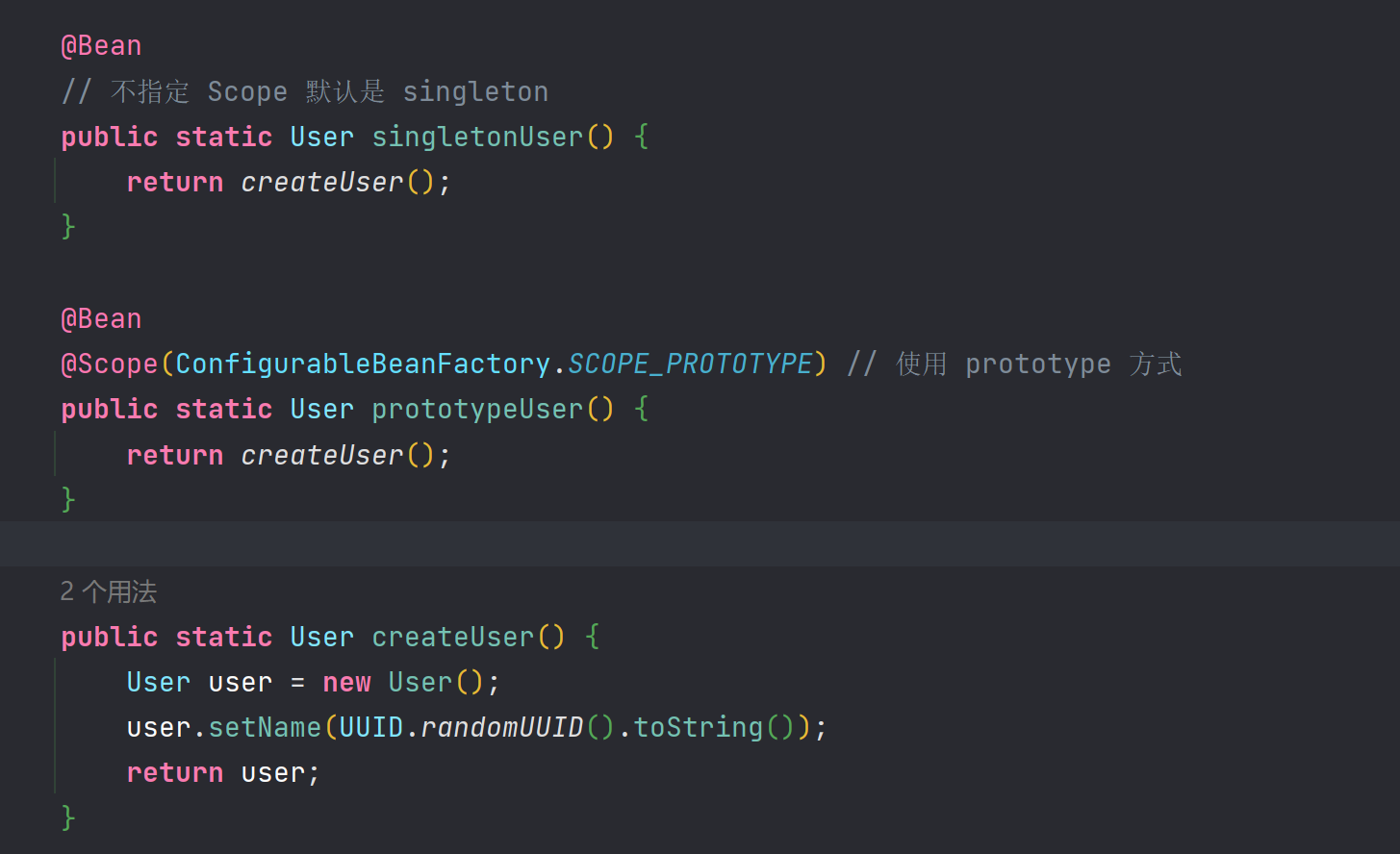
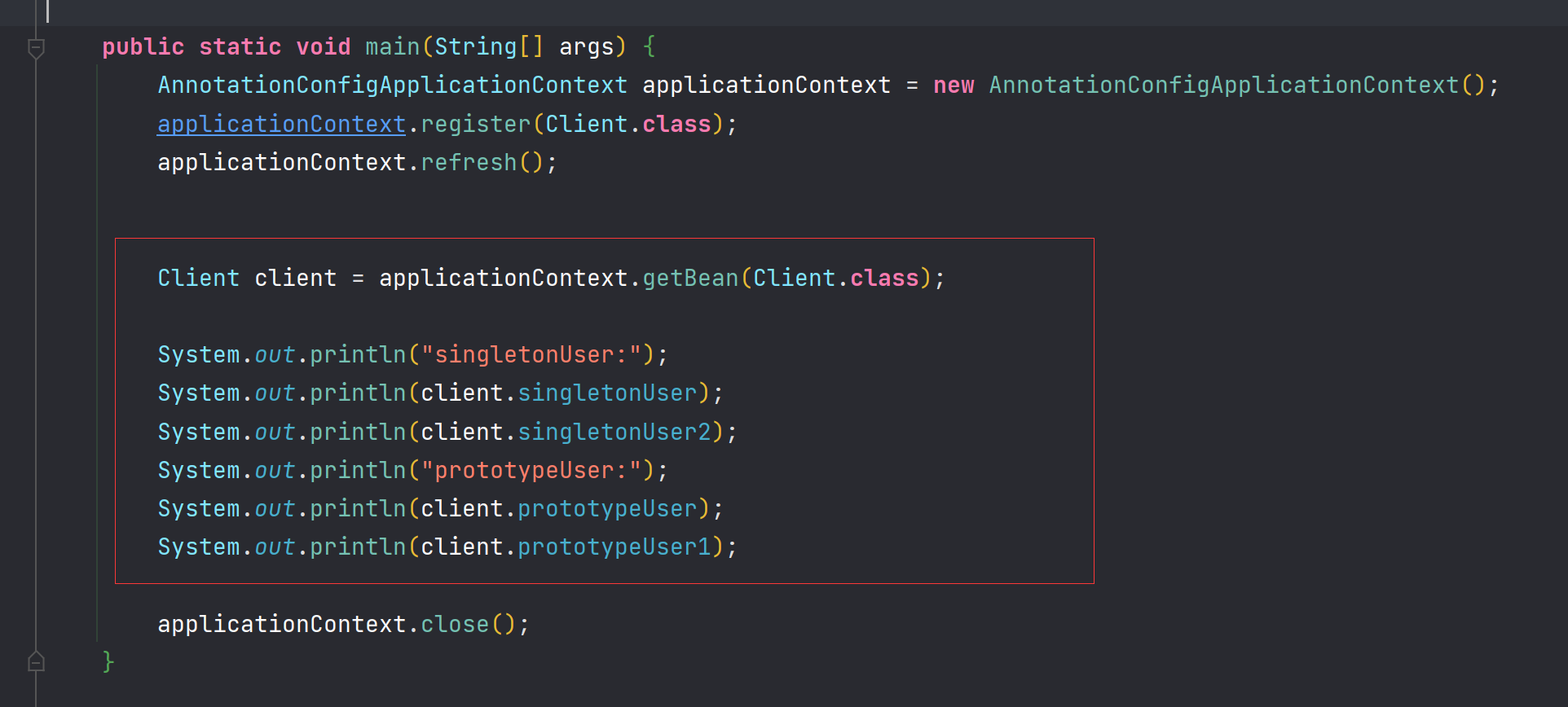
我们三次拿到User对象,比较结果(比较name属性)
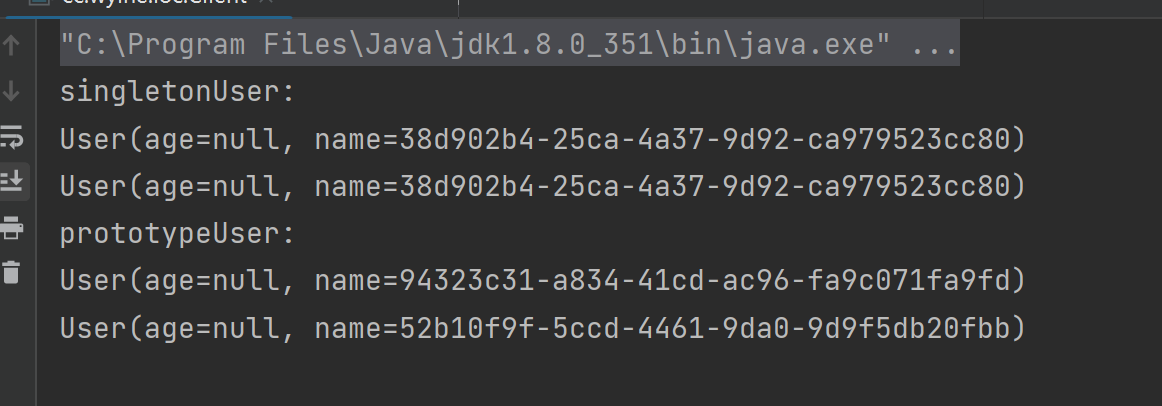
观察可以看到,使用 singleton 作用域拿到的是相同的对象,prototype 作用域拿到的是不同的对象
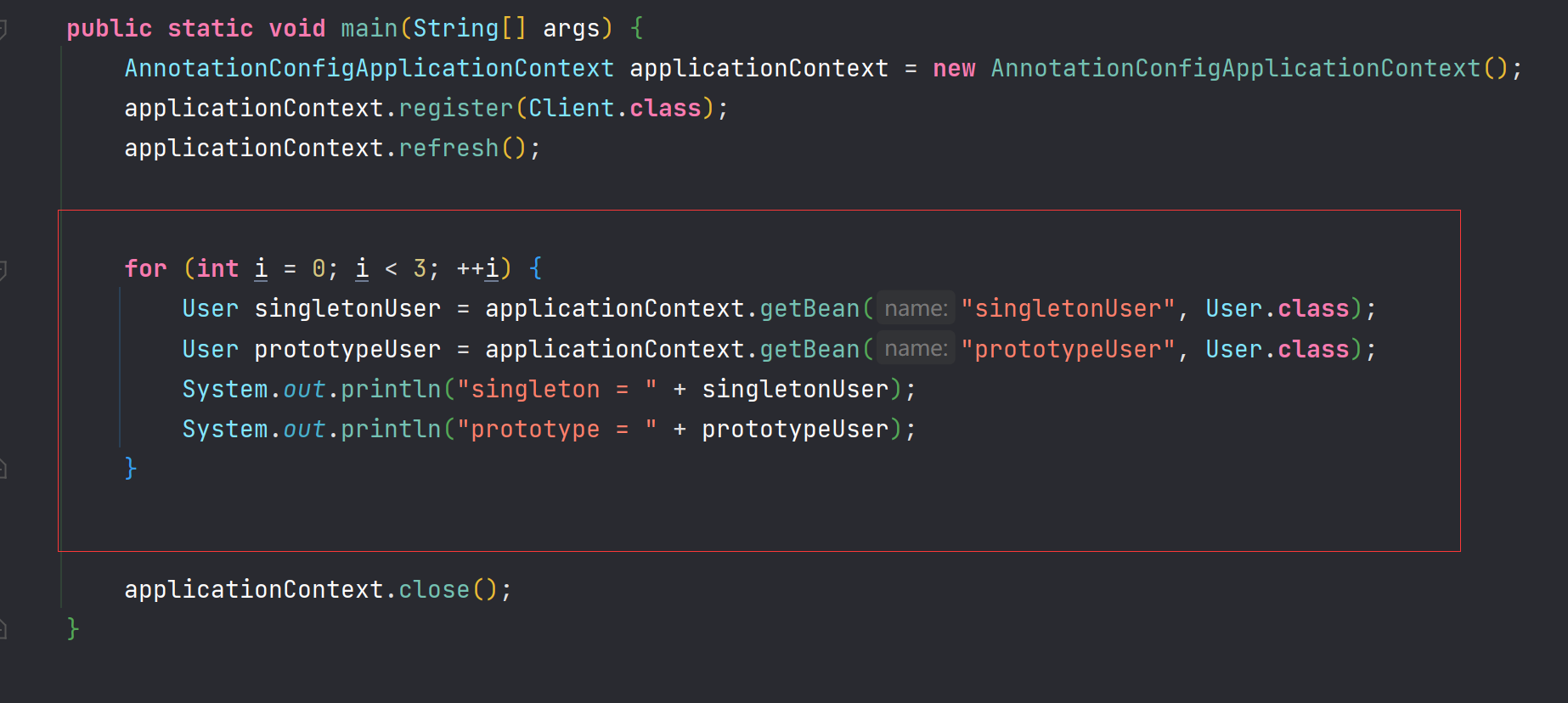
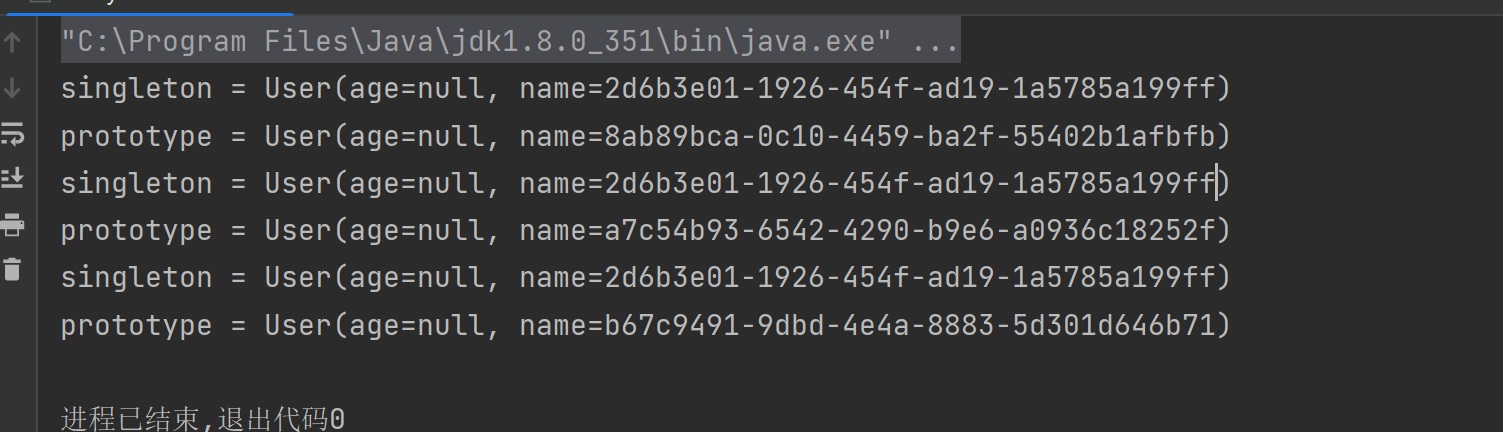
结论:singleton 作用域拿到的是相同的对象,prototype 作用域拿到的仍然是不同的对象
通过@Autowired方式依赖查找对象
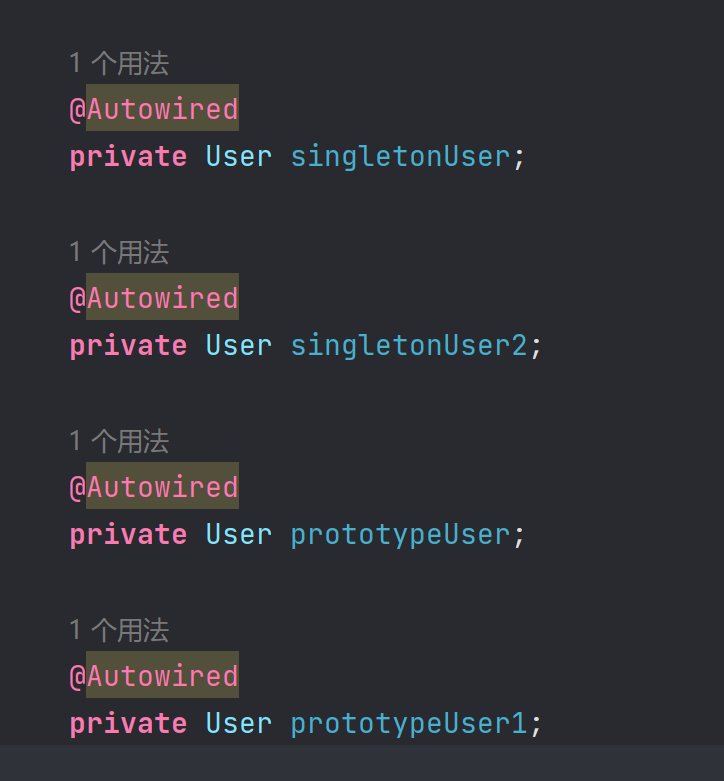
把他们打印出来看看,这样子会报错,因为容器中有重复的对象,而我们没有指定哪个是primary
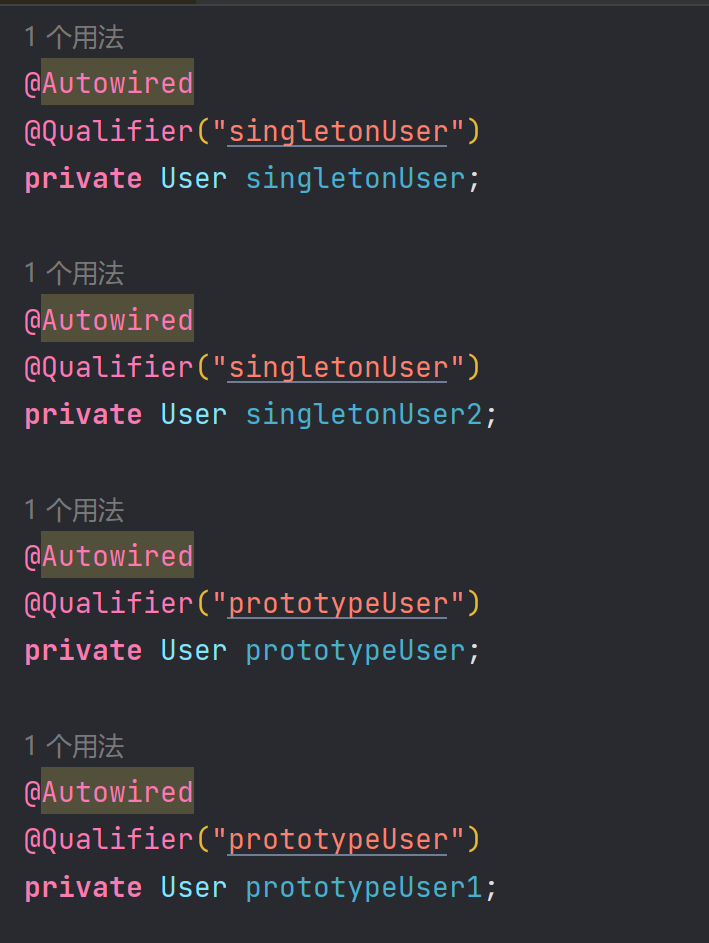
如果我们使用 @Qualifier 注解指定要注入的对象名称,就不会报错了
输出结果如下:可以看到,singleton 作用域拿到的是相同的对象,prototype 作用域拿到的仍然是不同的对象
结论:集合中会同时存在一份 singleton bean 和 prototype bean
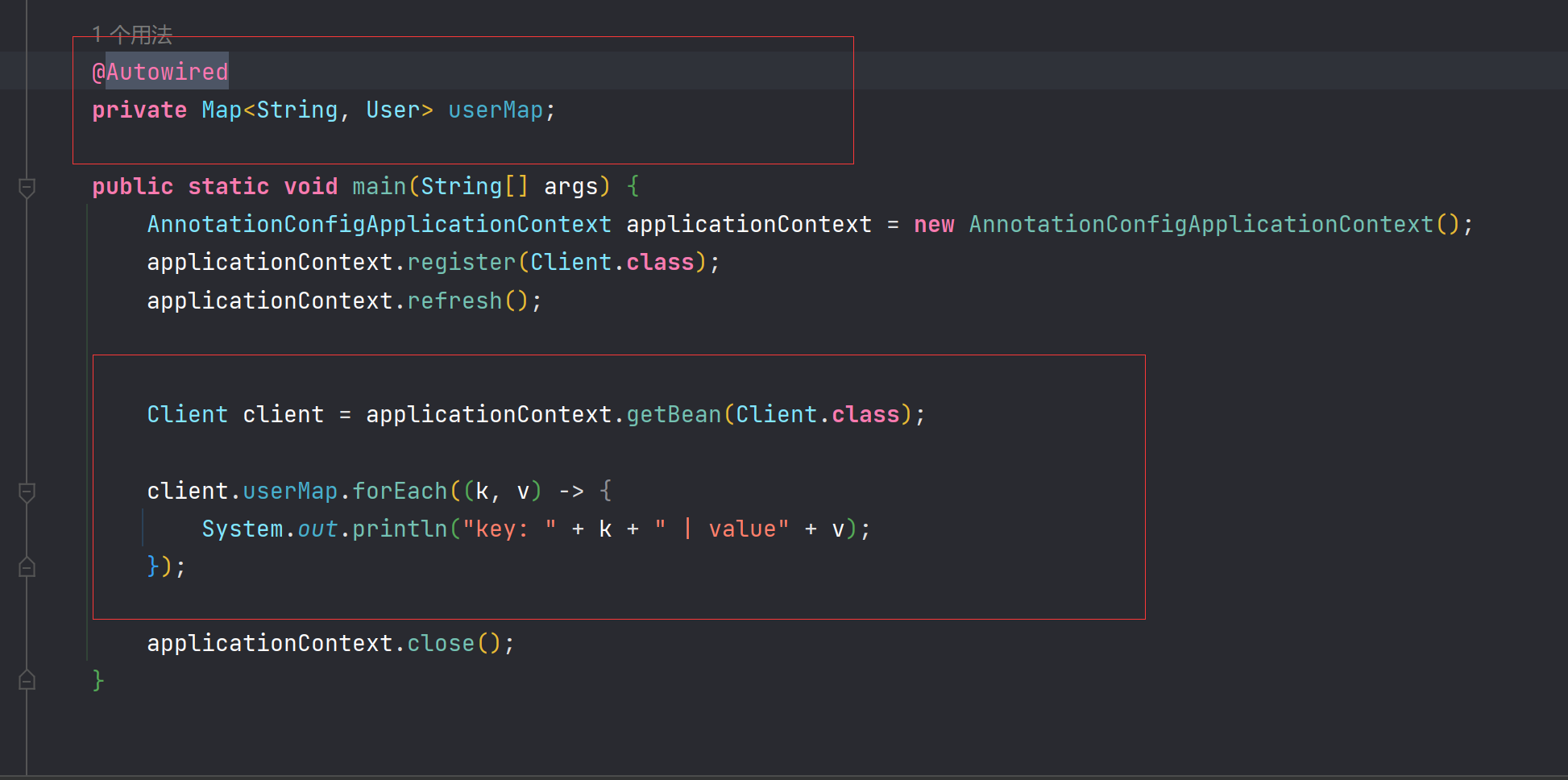
使用@Autowired直接注入map集合
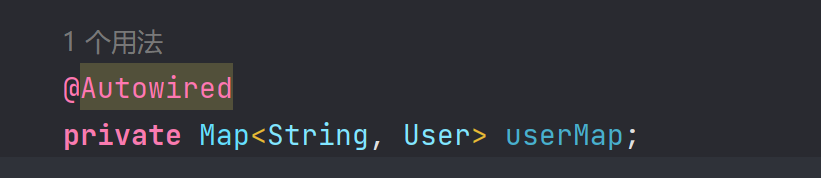
输出,打印,可以看到 singleton 和 prototype 作用域的对象同时存在
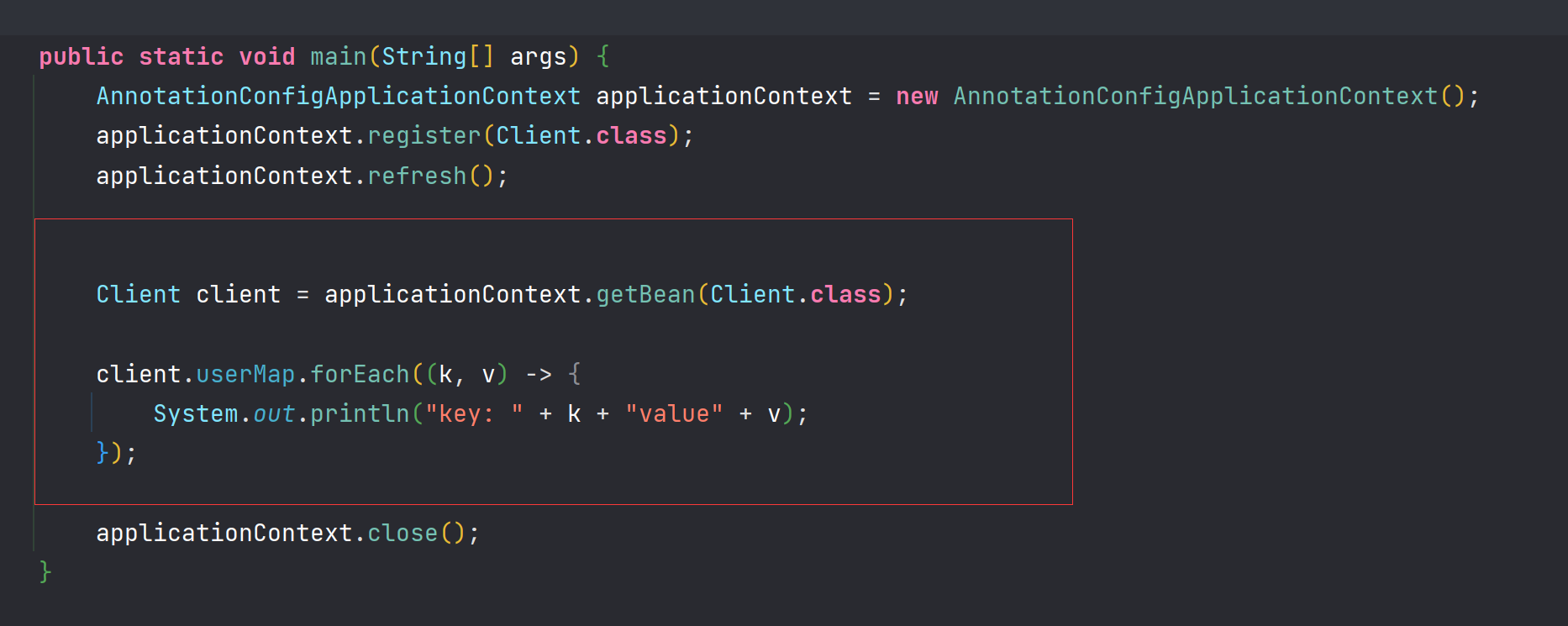

结论:
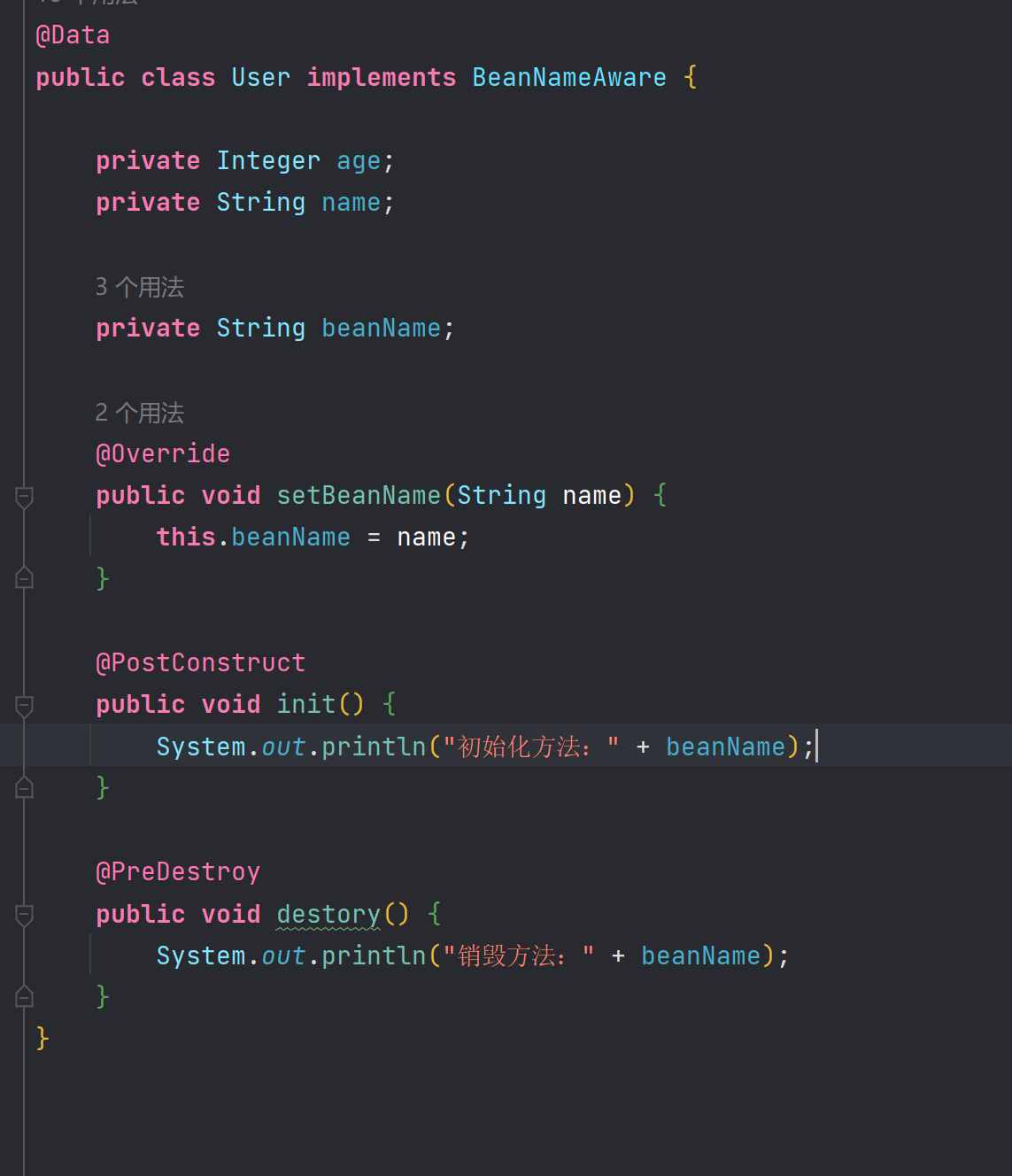
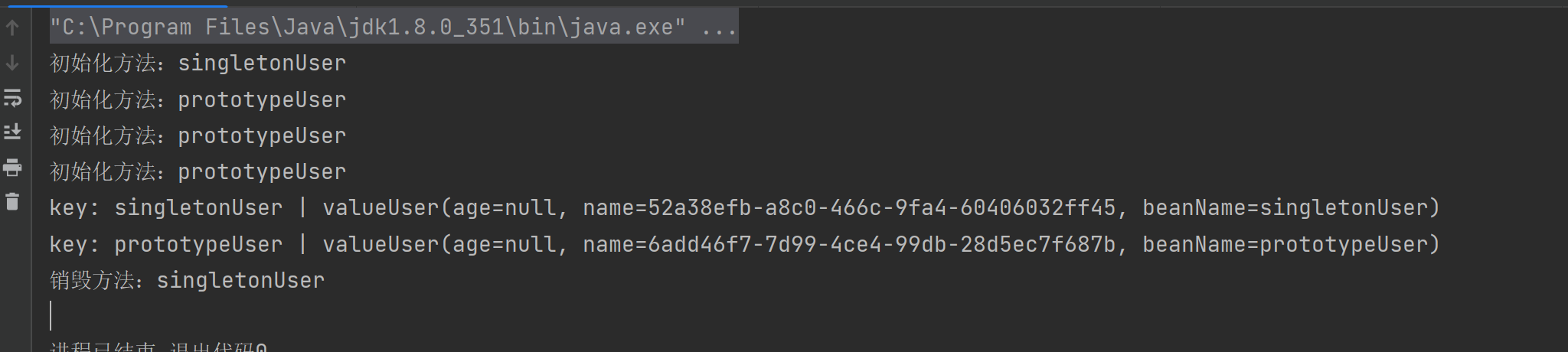
singleton 和 prototype 都会执行初始化方法回调
但仅 singleton 会执行销毁方法回调
为了方便看到 beanName,User类实现了 BeanNameAware 接口,并定义了 初始化 和 销毁方法,具体如下:
我们仍然使用依赖注入集合的方式同时拿到 singleton 和 prototype 作用域中的 User bean,并将他们输出
输出看看,可以看到 prototype bean 的销毁方法并没有被回调
我有一个围绕一些对象的包装类,我想将这些对象用作散列中的键。包装对象和解包装对象应映射到相同的键。一个简单的例子是这样的:classAattr_reader:xdefinitialize(inner)@inner=innerenddefx;@inner.x;enddef==(other)@inner.x==other.xendenda=A.new(o)#oisjustanyobjectthatallowso.xb=A.new(o)h={a=>5}ph[a]#5ph[b]#nil,shouldbe5ph[o]#nil,shouldbe5我试过==、===、eq?并散列所有无济于事。
如果您尝试在Ruby中的nil对象上调用方法,则会出现NoMethodError异常并显示消息:"undefinedmethod‘...’fornil:NilClass"然而,有一个tryRails中的方法,如果它被发送到一个nil对象,它只返回nil:require'rubygems'require'active_support/all'nil.try(:nonexisting_method)#noNoMethodErrorexceptionanymore那么try如何在内部工作以防止该异常? 最佳答案 像Ruby中的所有其他对象
让我们计算MRI范围内的类别:defcount_classesObjectSpace.count_objects[:T_CLASS]endk=count_classes用类方法定义类:classAdefself.foonilendend然后运行:putscount_classes-k#=>3请解释一下,为什么是三个? 最佳答案 查看MRI代码,每次你创建一个Class时,在Ruby中它是Class类型的对象,ruby会自动为这个新类创建“元类”类,这是另一个单例类型的Class对象。C函数调用(class.c)是:rb_define
我正在使用Ruby2.1.1和Rails4.1.0.rc1。当执行railsc时,它被锁定了。使用Ctrl-C停止,我得到以下错误日志:~/.rvm/gems/ruby-2.1.1/gems/spring-1.1.2/lib/spring/client/run.rb:47:in`gets':Interruptfrom~/.rvm/gems/ruby-2.1.1/gems/spring-1.1.2/lib/spring/client/run.rb:47:in`verify_server_version'from~/.rvm/gems/ruby-2.1.1/gems/spring-1.1.
转自:spring.profiles.active和spring.profiles.include的使用及区别说明下文笔者讲述spring.profiles.active和spring.profiles.include的区别简介说明,如下所示我们都知道,在日常开发中,开发|测试|生产环境都拥有不同的配置信息如:jdbc地址、ip、端口等此时为了避免每次都修改全部信息,我们则可以采用以上的属性处理此类异常spring.profiles.active属性例:配置文件,可使用以下方式定义application-${profile}.properties开发环境配置文件:application-dev
假设我有一个这样的单例类:classSettingsincludeSingletondeftimeout#lazy-loadtimeoutfromconfigfile,orwhateverendend现在,如果我想知道使用什么超时,我需要编写如下内容:Settings.instance.timeout但我宁愿将其缩短为Settings.timeout使这项工作有效的一个明显方法是将设置的实现修改为:classSettingsincludeSingletondefself.timeoutinstance.timeoutenddeftimeout#lazy-loadtimeoutfromc
我目前正在尝试学习RubyonRails和测试框架RSpec。assigns在此RSpec测试中做什么?describe"GETindex"doit"assignsallmymodelas@mymodel"domymodel=Factory(:mymodel)get:indexassigns(:mymodels).shouldeq([mymodel])endend 最佳答案 assigns只是检查您在Controller中设置的实例变量的值。这里检查@mymodels。 关于ruby-o
方法应返回-1,0或1分别表示“小于”、“等于”和“大于”。对于某些类型的可排序对象,通常将排序顺序基于多个属性。以下是可行的,但我认为它看起来很笨拙:classLeagueStatsattr_accessor:points,:goal_diffdefinitializepts,gd@points=pts@goal_diff=gdenddefothercompare_pts=pointsother.pointsreturncompare_ptsunlesscompare_pts==0goal_diffother.goal_diffendend尝试一下:[LeagueStats.new(
我创建了一个由于“在运行时执行的单例元类定义”而无法编码的对象(这段代码的描述是否正确?)。这是通过以下代码执行的:#defineclassXthatmyusesingletonclassmetaprogrammingfeatures#throughcallofmethod:break_marshalling!classXdefbreak_marshalling!meta_class=class我该怎么做才能使对象编码正确?是否可以从对象instance_of_x的classX中“移除”单例组件?我真的需要一个建议,因为我们的一些对象需要通过Marshal.dump序列化机制进行缓存。
这段代码似乎创建了一个范围从a到z的数组,但我不明白*的作用。有人可以解释一下吗?[*"a".."z"] 最佳答案 它叫做splatoperator.SplattinganLvalueAmaximumofonelvaluemaybesplattedinwhichcaseitisassignedanArrayconsistingoftheremainingrvaluesthatlackcorrespondinglvalues.Iftherightmostlvalueissplattedthenitconsumesallrvaluesw
