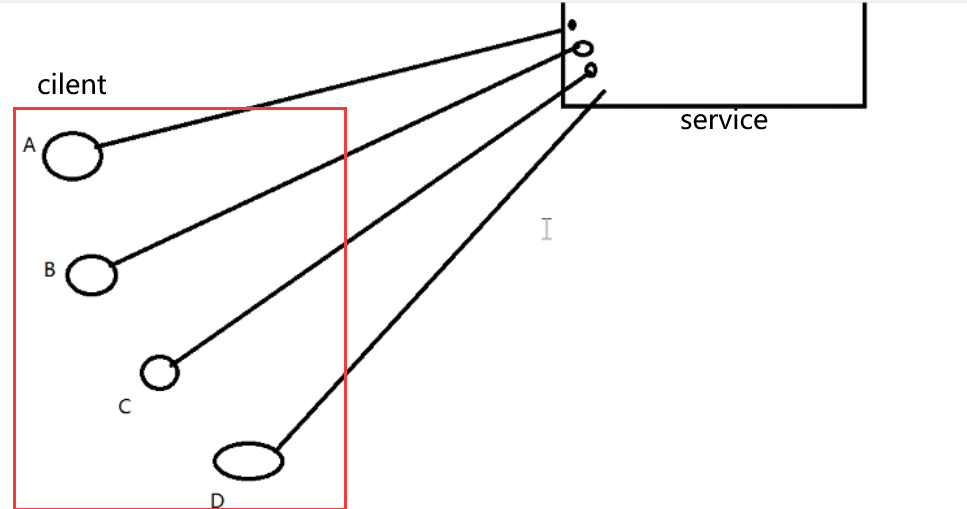
服务器需要维护N多个与客户端之间的socketfd;并且在receive之前需要知道数据知否出现---》组件IO多路复用技术出现---》解决检测服务器端N多个fd的状态
IO多路复用的三种方案:select/poll/epoll
select(fds+1, rds, wds, timeout)poll(fds, nfd, timeout)epoll_create(size/flags)--》创建根节点---》epoll实例epoll_ctl(fd, op, events)---》挂载fd节点epoll_wait(fd, events, maxevents, timeout)---》检测Tcp建立连接---》需要的fds放入IO多路复用中管理---》检测fd缓存状态---》receive
receive(fd,buff,sizeof(buff),0)| select | poll | epoll | |
|---|---|---|---|
| 性能 | 随IO处理数增加,性能逐渐下降;并且连接数有限制 | 随IO处理数增加,性能逐渐下降 | 随IO处理数增加,性能基本上不会下降 |
| 连接数 | 最大连接数1024;处理1024以上则需要修改宏FD_SETSIZE,重新编译 | 无限制 | 无限制 |
| 数据结构 | 不确定,有数组的可能,但是为线性结构 | 不确定,有链表的可能,但是为线性结构 | 红黑树,队列 |
| 处理方式 | 线性轮询 | 线性轮询 | 回调callback |
| 内存拷贝 | 所有fds从用户空间和内核空间来回拷贝** | 所有fds从用户空间和内核空间来回拷贝 | epoll_wait()只需要从就绪队列上拷贝由内核空间到用户空间 |
| 使用复杂度 | 低 | 低 | 中 |
| 时间复杂度 | O(n) | O(n) | O() |
红黑树:
等待补充链接
select:kern_select---》core_sys_select---》do_select---linux-6.0.2\fs\select.c
static int kern_select(int n, fd_set __user *inp, fd_set __user *outp,fd_set __user *exp, struct __kernel_old_timeval __user *tvp){
	struct timespec64 end_time, *to = NULL;
	struct __kernel_old_timeval tv;
	int ret;
	if (tvp) {
        //copy_from_user从用户空间拷贝fds
		if (copy_from_user(&tv, tvp, sizeof(tv)))
			return -EFAULT;
		to = &end_time;
		if (poll_select_set_timeout(to,
				tv.tv_sec + (tv.tv_usec / USEC_PER_SEC),
				(tv.tv_usec % USEC_PER_SEC) * NSEC_PER_USEC))
			return -EINVAL;
	}
    //调用select--》core_sys_select
	ret = core_sys_select(n, inp, outp, exp, to);
	return poll_select_finish(&end_time, tvp, PT_TIMEVAL, ret);
}
int core_sys_select(int n, fd_set __user *inp, fd_set __user *outp,
			   fd_set __user *exp, struct timespec64 *end_time)
{
	......
    //加读锁,读取文件数量
    rcu_read_lock();
	fdt = files_fdtable(current->files);
	max_fds = fdt->max_fds;
	rcu_read_unlock();
    ......
	//select底层处理---》do_select
	ret = do_select(n, &fds, end_time);

	if (ret < 0)
		goto out;
	if (!ret) {
		ret = -ERESTARTNOHAND;
		if (signal_pending(current))
			goto out;
		ret = 0;
	}
	......
out_nofds:
	return ret;
}
static int do_select(int n, fd_set_bits *fds, struct timespec64 *end_time)
{
    .....
    //读锁,读取文件数量
	rcu_read_lock();
	retval = max_select_fd(n, fds);
	rcu_read_unlock();
	.....
    //通过循环遍历,主要流程流程
	for (;;) {
		unsigned long *rinp, *routp, *rexp, *inp, *outp, *exp;
		bool can_busy_loop = false;

		inp = fds->in; outp = fds->out; exp = fds->ex;
		rinp = fds->res_in; routp = fds->res_out; rexp = fds->res_ex;

		for (i = 0; i < n; ++rinp, ++routp, ++rexp) {
			unsigned long in, out, ex, all_bits, bit = 1, j;
			unsigned long res_in = 0, res_out = 0, res_ex = 0;
			__poll_t mask;

			in = *inp++; out = *outp++; ex = *exp++;
			all_bits = in | out | ex;
			if (all_bits == 0) {
				i += BITS_PER_LONG;
				continue;
			}

			for (j = 0; j < BITS_PER_LONG; ++j, ++i, bit <<= 1) {
				struct fd f;
				if (i >= n)
					break;
				if (!(bit & all_bits))
					continue;
				mask = EPOLLNVAL;
				f = fdget(i);
				if (f.file) {
					wait_key_set(wait, in, out, bit,
						     busy_flag);
					mask = vfs_poll(f.file, wait);

					fdput(f);
				}
				if ((mask & POLLIN_SET) && (in & bit)) {
					res_in |= bit;
					retval++;
					wait->_qproc = NULL;
				}
				if ((mask & POLLOUT_SET) && (out & bit)) {
					res_out |= bit;
					retval++;
					wait->_qproc = NULL;
				}
				if ((mask & POLLEX_SET) && (ex & bit)) {
					res_ex |= bit;
					retval++;
					wait->_qproc = NULL;
				}
				if (retval) {
					can_busy_loop = false;
					busy_flag = 0;
				} else if (busy_flag & mask)
					can_busy_loop = true;
			}
			if (res_in)
				*rinp = res_in;
			if (res_out)
				*routp = res_out;
			if (res_ex)
				*rexp = res_ex;
			cond_resched();
		}
		wait->_qproc = NULL;
		if (retval || timed_out || signal_pending(current))
			break;
		if (table.error) {
			retval = table.error;
			break;
		}
		if (can_busy_loop && !need_resched()) {
			if (!busy_start) {
				busy_start = busy_loop_current_time();
				continue;
			}
			if (!busy_loop_timeout(busy_start))
				continue;
		}
		busy_flag = 0;
		if (end_time && !to) {
			expire = timespec64_to_ktime(*end_time);
			to = &expire;
		}

		if (!poll_schedule_timeout(&table, TASK_INTERRUPTIBLE,
					   to, slack))
			timed_out = 1;
	}

	poll_freewait(&table);

	return retval;
}
poll:do_sys_poll---》do_poll---linux-6.0.2\fs\select.c
static int do_sys_poll(struct pollfd __user *ufds, unsigned int nfds,struct timespec64 *end_time)
{
    ......
	len = min_t(unsigned int, nfds, N_STACK_PPS);
	for (;;) {
	.....
        //copy_from_user从用户空间拷贝fds
		if (copy_from_user(walk->entries, ufds + nfds-todo,
					sizeof(struct pollfd) * walk->len))
			goto out_fds;
	.....
	}
	.....
out_fds:
	//没有拷贝成功
    .....
	return err;
	.....
}
static int do_poll(struct poll_list *list, struct poll_wqueues *wait,struct timespec64 *end_time)
{
	......
    //poll底层处理流程
	for (;;) {
		struct poll_list *walk;
		bool can_busy_loop = false;
		//这个写法,似乎是链表
		for (walk = list; walk != NULL; walk = walk->next) {
			struct pollfd * pfd, * pfd_end;

			pfd = walk->entries;
			pfd_end = pfd + walk->len;
			for (; pfd != pfd_end; pfd++) {
				if (do_pollfd(pfd, pt, &can_busy_loop,
					      busy_flag)) {
					count++;
					pt->_qproc = NULL;
					/* found something, stop busy polling */
					busy_flag = 0;
					can_busy_loop = false;
				}
			}
		}
		pt->_qproc = NULL;
		if (!count) {
			count = wait->error;
			if (signal_pending(current))
				count = -ERESTARTNOHAND;
		}
		if (count || timed_out)
			break;
		if (can_busy_loop && !need_resched()) {
			if (!busy_start) {
				busy_start = busy_loop_current_time();
				continue;
			}
			if (!busy_loop_timeout(busy_start))
				continue;
		}
		busy_flag = 0;

		if (end_time && !to) {
			expire = timespec64_to_ktime(*end_time);
			to = &expire;
		}

		if (!poll_schedule_timeout(wait, TASK_INTERRUPTIBLE, to, slack))
			timed_out = 1;
	}
	return count;
}
epoll:do_epoll_wait---》ep_poll--linux-6.0.2\fs\eventpoll.c
static int do_epoll_wait(int epfd, struct epoll_event __user *events,int maxevents, struct timespec64 *to)
{
    .....
    //调用ep_poll
	error = ep_poll(ep, events, maxevents, to);

error_fput:
	fdput(f);
	return error;
}
static int ep_poll(struct eventpoll *ep, struct epoll_event __user *events,int maxevents, struct timespec64 *timeout)
{
	int res, eavail, timed_out = 0;
	u64 slack = 0;
	wait_queue_entry_t wait;
	ktime_t expires, *to = NULL;

	lockdep_assert_irqs_enabled();

	if (timeout && (timeout->tv_sec | timeout->tv_nsec)) {
		slack = select_estimate_accuracy(timeout);
		to = &expires;
		*to = timespec64_to_ktime(*timeout);
	} else if (timeout) {
		timed_out = 1;
	}
	eavail = ep_events_available(ep);

	while (1) {
		if (eavail) {
			res = ep_send_events(ep, events, maxevents);
			if (res)
				return res;
		}

		if (timed_out)
			return 0;

		eavail = ep_busy_loop(ep, timed_out);
		if (eavail)
			continue;

		if (signal_pending(current))
			return -EINTR;
		init_wait(&wait);
		wait.func = ep_autoremove_wake_function;

		write_lock_irq(&ep->lock);
		__set_current_state(TASK_INTERRUPTIBLE);
		eavail = ep_events_available(ep);
		if (!eavail)
			__add_wait_queue_exclusive(&ep->wq, &wait);

		write_unlock_irq(&ep->lock);

		if (!eavail)
			timed_out = !schedule_hrtimeout_range(to, slack,
							      HRTIMER_MODE_ABS);
		__set_current_state(TASK_RUNNING);
		eavail = 1;

		if (!list_empty_careful(&wait.entry)) {
			write_lock_irq(&ep->lock);
			if (timed_out)
				eavail = list_empty(&wait.entry);
			__remove_wait_queue(&ep->wq, &wait);
			write_unlock_irq(&ep->lock);
		}
	}
}
一文搞懂select、poll和epoll区别 - 知乎 (zhihu.com)
这里有一个很好的答案解释了如何在Ruby中下载文件而不将其加载到内存中:https://stackoverflow.com/a/29743394/4852737require'open-uri'download=open('http://example.com/image.png')IO.copy_stream(download,'~/image.png')我如何验证下载文件的IO.copy_stream调用是否真的成功——这意味着下载的文件与我打算下载的文件完全相同,而不是下载一半的损坏文件?documentation说IO.copy_stream返回它复制的字节数,但是当我还没有下
我正在尝试解析一个文本文件,该文件每行包含可变数量的单词和数字,如下所示:foo4.500bar3.001.33foobar如何读取由空格而不是换行符分隔的文件?有什么方法可以设置File("file.txt").foreach方法以使用空格而不是换行符作为分隔符? 最佳答案 接受的答案将slurp文件,这可能是大文本文件的问题。更好的解决方案是IO.foreach.它是惯用的,将按字符流式传输文件:File.foreach(filename,""){|string|putsstring}包含“thisisanexample”结果的
1.错误信息:Errorresponsefromdaemon:Gethttps://registry-1.docker.io/v2/:net/http:requestcanceledwhilewaitingforconnection(Client.Timeoutexceededwhileawaitingheaders)或者:Errorresponsefromdaemon:Gethttps://registry-1.docker.io/v2/:net/http:TLShandshaketimeout2.报错原因:docker使用的镜像网址默认为国外,下载容易超时,需要修改成国内镜像地址(首先阿里
print"Enteryourpassword:"pass=STDIN.noecho(&:gets)puts"Yourpasswordis#{pass}!"输出:Enteryourpassword:input.rb:2:in`':undefinedmethod`noecho'for#>(NoMethodError) 最佳答案 一开始require'io/console'后来的Ruby1.9.3 关于ruby-为什么不能使用类IO的实例方法noecho?,我们在StackOverflow上
当我将IO::popen与不存在的命令一起使用时,我在屏幕上打印了一条错误消息:irb>IO.popen"fakefake"#=>#irb>(irb):1:commandnotfound:fakefake有什么方法可以捕获此错误,以便我可以在脚本中进行检查? 最佳答案 是:升级到ruby1.9。如果您在1.9中运行它,则会引发Errno::ENOENT,您将能够拯救它。(编辑)这是在1.8中的一种hackish方式:error=IO.pipe$stderr.reopenerror[1]pipe=IO.popen'qwe'#
当我尝试使用“套接字”库中的方法“read_nonblock”时出现以下错误IO::EAGAINWaitReadable:Resourcetemporarilyunavailable-readwouldblock但是当我通过终端上的IRB尝试时它工作正常如何让它读取缓冲区? 最佳答案 IgetthefollowingerrorwhenItrytousethemethod"read_nonblock"fromthe"socket"library当缓冲区中的数据未准备好时,这是预期的行为。由于异常IO::EAGAINWaitReadab
我需要将目录中的一堆文件上传到S3。由于上传所需的90%以上的时间都花在了等待http请求完成上,所以我想以某种方式同时执行其中的几个。Fibers能帮我解决这个问题吗?它们被描述为解决此类问题的一种方法,但我想不出在http调用阻塞时我可以做任何工作的任何方法。有什么方法可以在没有线程的情况下解决这个问题? 最佳答案 我没有使用1.9中的纤程,但是1.8.6中的常规线程可以解决这个问题。尝试使用队列http://ruby-doc.org/stdlib/libdoc/thread/rdoc/classes/Queue.html查看文
在ruby中...我有一个由外部进程创建的IO对象,我需要从中获取文件名。然而我似乎只能得到文件描述符(3),这对我来说不是很有用。有没有办法从此对象获取文件名甚至获取文件对象?我正在从通知程序中获取IO对象。所以这也可能是获取文件路径的一种方式? 最佳答案 关于howtogetathefilenameinC也有类似的问题,我将在这里以ruby的方式给出这个问题的答案。在Linux中获取文件名假设io是您的IO对象。以下代码为您提供了文件名。File.readlink("/proc/self/fd/#{io.fileno}")例
一、网络环境及TOP1.1R1相当于内网的一台PC, IP:192.168.1.10 网关为 192.168.1.254[R1]iproute-static0.0.0.00192.168.1.254#R1配置默认路由(网关)1.2R2为出口路由器,分别连接内网R1及外网R31)R2 内网接口IP:192.168.1.2542)R2外网接口IP:100.1.1.102)R2NAT地址为:100.1.1.11-100.1.1.14二、静态NAT配置1.1静态NAT(一对一双向)R2配置静态NAT,将公网IP100.1.1.11映射到内网R1 192.168.1.10[R2]intg0/0/1[R2
几天前,我成功地安装了Postgresql并从SQLite创建/迁移了我的数据库(为部署我的Rails4应用程序做准备)……我是这么想的。我重新启动了我的服务器,但是当我尝试访问我的应用程序时,出现了这个错误:PG::ConnectionBadcouldnotconnecttoserver:ConnectionrefusedIstheserverrunninglocallyandacceptingconnectionsonUnixdomainsocket"/var/run/postgresql/.s.PGSQL.5432"?我在SO上看到了几个类似的已回答问题,但它们都涉及Mac。由于
