文章目录
Android程序不像Java程序一样,随便创建一个类,写个main()方法就能跑了,而是要有一个完整的Android工程环境,在这个环境下,我们有像Activity、Service、BroadcastReceiver等系统组件,而这些组件并不是像一个普通的Java对象new一下就能创建实例的了,而是要有它们各自的上下文环境,也就是我们这里讨论的Context。可以这样讲,Context是维持Android程序中各组件能够正常工作的一个核心功能类。
下面我们来看一下Context的继承结构:
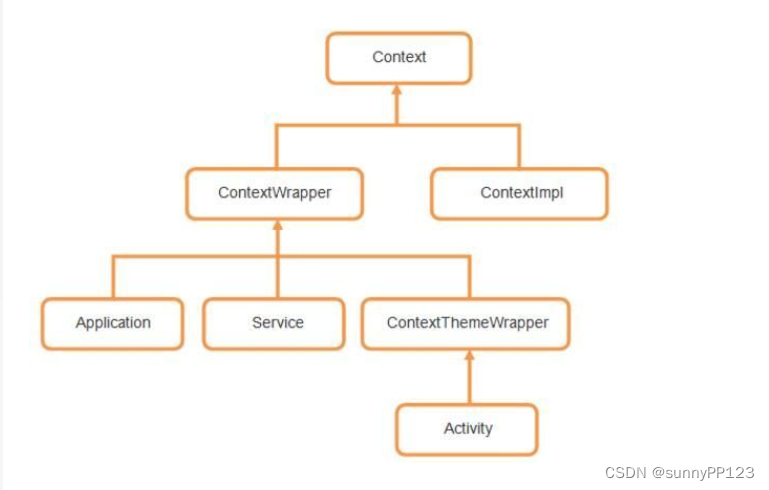
直系子类有两个,一个是ContextWrapper,一个是ContextImpl。那么从名字上就可以看出,ContextWrapper是上下文功能的封装类,而ContextImpl则是上下文功能的实现类。而ContextWrapper又有三个直接的子类,ContextThemeWrapper、Service和Application。其中,ContextThemeWrapper是一个带主题的封装类,而它有一个直接子类就是Activity。
Context一共有三种类型,分别是Application、Activity和Service。这三个类虽然分别各种承担着不同的作用,但它们都属于Context的一种,而它们具体Context的功能则是由ContextImpl类去实现的。
那么一个应用程序中到底有多少个Context呢?其实根据上面的Context类型我们就已经可以得出答案了。Context一共有Application、Activity和Service三种类型,因此一个应用程序中Context数量的计算公式就可以这样写
Context数量 = Activity数量 + Service数量 + 1
上面的1代表着Application的数量,因为一个应用程序中可以有多个Activity和多个Service,但是只能有一个Application。
就是代表当前上下文环境,这个是给View了提供的方法。返回的是当前View运行在哪个Activity Context中。
public class MainActivity extends AppCompatActivity {
   private static final String TAG = "MainActivity";

   @Override
   protected void onCreate(Bundle savedInstanceState) {
       super.onCreate(savedInstanceState);
       setContentView(R.layout.activity_main);

       Button btn = findViewById(R.id.handler_btn);
       Context context = btn.getContext();

   	// 如果说btn是在当前Activity调用的,那么这两个打印的结果是相同的,都是指的是MainActivity对象,它是一个Context。
       Log.d(TAG, "onCreate: "+context);
       Log.d(TAG, "onCreate: "+this);

   }

}
都是获取当前应用的上下文环境。即当前应用所使用的的Application,这在AndroidManifest中唯一指定。意味着,在当前app的任意位置使用这个函数得到的是同一个Context。
		Context applicationContext = getApplicationContext();
        Application application = getApplication();
        Log.d(TAG, "onCreate: "+applicationContext);
        Log.d(TAG, "onCreate: "+application);
/**
	打印结果:
		2022-10-18 23:27:52.368 20708-20708/com.example.androidlearn D/MainActivity: onCreate: android.app.Application@bad9c8a
		2022-10-18 23:27:52.368 20708-20708/com.example.androidlearn D/MainActivity: onCreate: android.app.Application@bad9c8a
*/
既然这两个方法得到的结果都是相同的,那么Android为什么要提供两个功能重复的方法呢?实际上这两个方法在作用域上有比较大的区别。getApplication()方法的语义性非常强,一看就知道是用来获取Application实例的,但是这个方法只有在Activity和Service中才能调用的到。那么也许在绝大多数情况下我们都是在Activity或者Service中使用Application的,但是如果在一些其它的场景,比如BroadcastReceiver中也想获得Application的实例,这时就可以借助getApplicationContext()方法了
public class MyReceiver extends BroadcastReceiver {

	@Override
	public void onReceive(Context context, Intent intent) {
		Application mApp = (Application) context.getApplicationContext();
		Log.d("TAG", "App is " + mApp);
	}

}
也就是说,getApplicationContext()方法的作用域会更广一些,任何一个Context的实例,只要调用getApplicationContext()方法都可以拿到我们的Application对象。
getBaseContext()方法得到的是一个ContextImpl对象。这个ContextImpl是不是感觉有点似曾相识?回去看一下Context的继承结构图吧,ContextImpl正是上下文功能的实现类。也就是说像Application、Activity这样的类其实并不会去具体实现Context的功能,而仅仅是做了一层接口封装而已,Context的具体功能都是由ContextImpl类去完成的。那么这样的设计到底是怎么实现的呢?我们还是来看一下源码吧。因为Application、Activity、Service都是直接或间接继承自ContextWrapper的,我们就直接看ContextWrapper的源码,如下所示:
/**
 * Proxying implementation of Context that simply delegates all of its calls to
 * another Context.  Can be subclassed to modify behavior without changing
 * the original Context.
 */
public class ContextWrapper extends Context {
    Context mBase;

    /**
     * Set the base context for this ContextWrapper.  All calls will then be
     * delegated to the base context.  Throws
     * IllegalStateException if a base context has already been set.
     *
     * @param base The new base context for this wrapper.
     */
    protected void attachBaseContext(Context base) {
        if (mBase != null) {
            throw new IllegalStateException("Base context already set");
        }
        mBase = base;
    }

    /**
     * @return the base context as set by the constructor or setBaseContext
     */
    public Context getBaseContext() {
        return mBase;
    }

    @Override
    public AssetManager getAssets() {
        return mBase.getAssets();
    }

    @Override
    public Resources getResources() {
        return mBase.getResources();
    }

    @Override
    public ContentResolver getContentResolver() {
        return mBase.getContentResolver();
    }

    @Override
    public Looper getMainLooper() {
        return mBase.getMainLooper();
    }

    @Override
    public Context getApplicationContext() {
        return mBase.getApplicationContext();
    }

    @Override
    public String getPackageName() {
        return mBase.getPackageName();
    }

    @Override
    public void startActivity(Intent intent) {
        mBase.startActivity(intent);
    }

    @Override
    public void sendBroadcast(Intent intent) {
        mBase.sendBroadcast(intent);
    }

    @Override
    public Intent registerReceiver(
        BroadcastReceiver receiver, IntentFilter filter) {
        return mBase.registerReceiver(receiver, filter);
    }

    @Override
    public void unregisterReceiver(BroadcastReceiver receiver) {
        mBase.unregisterReceiver(receiver);
    }

    @Override
    public ComponentName startService(Intent service) {
        return mBase.startService(service);
    }

    @Override
    public boolean stopService(Intent name) {
        return mBase.stopService(name);
    }

    @Override
    public boolean bindService(Intent service, ServiceConnection conn,
            int flags) {
        return mBase.bindService(service, conn, flags);
    }

    @Override
    public void unbindService(ServiceConnection conn) {
        mBase.unbindService(conn);
    }

    @Override
    public Object getSystemService(String name) {
        return mBase.getSystemService(name);
    }

    ......
}
由于ContextWrapper中的方法还是非常多的,我就进行了一些筛选,只贴出来了部分方法。那么上面的这些方法相信大家都是非常熟悉的,getResources()、getPackageName()、getSystemService()等等都是我们经常要用到的方法。那么所有这些方法的实现又是什么样的呢?其实所有ContextWrapper中方法的实现都非常统一,就是调用了mBase对象中对应当前方法名的方法。
那么这个mBase对象又是什么呢?我们来看第16行的attachBaseContext()方法,这个方法中传入了一个base参数,并把这个参数赋值给了mBase对象。而attachBaseContext()方法其实是由系统来调用的,它会把ContextImpl对象作为参数传递到attachBaseContext()方法当中,从而赋值给mBase对象,之后ContextWrapper中的所有方法其实都是通过这种委托的机制交由ContextImpl去具体实现的,所以说ContextImpl是上下文功能的实现类是非常准确的。
那么另外再看一下我们刚刚打印的getBaseContext()方法,在第26行。这个方法只有一行代码,就是返回了mBase对象而已,而mBase对象其实就是ContextImpl对象,因此刚才的打印结果也得到了印证。
参考链接:Android Context完全解析
我有一个字符串input="maybe(thisis|thatwas)some((nice|ugly)(day|night)|(strange(weather|time)))"Ruby中解析该字符串的最佳方法是什么?我的意思是脚本应该能够像这样构建句子:maybethisissomeuglynightmaybethatwassomenicenightmaybethiswassomestrangetime等等,你明白了......我应该一个字符一个字符地读取字符串并构建一个带有堆栈的状态机来存储括号值以供以后计算,还是有更好的方法?也许为此目的准备了一个开箱即用的库?
我正在使用的第三方API的文档状态:"[O]urAPIonlyacceptspaddedBase64encodedstrings."什么是“填充的Base64编码字符串”以及如何在Ruby中生成它们。下面的代码是我第一次尝试创建转换为Base64的JSON格式数据。xa=Base64.encode64(a.to_json) 最佳答案 他们说的padding其实就是Base64本身的一部分。它是末尾的“=”和“==”。Base64将3个字节的数据包编码为4个编码字符。所以如果你的输入数据有长度n和n%3=1=>"=="末尾用于填充n%
我主要使用Ruby来执行此操作,但到目前为止我的攻击计划如下:使用gemsrdf、rdf-rdfa和rdf-microdata或mida来解析给定任何URI的数据。我认为最好映射到像schema.org这样的统一模式,例如使用这个yaml文件,它试图描述数据词汇表和opengraph到schema.org之间的转换:#SchemaXtoschema.orgconversion#data-vocabularyDV:name:namestreet-address:streetAddressregion:addressRegionlocality:addressLocalityphoto:i
我正在使用ruby1.9解析以下带有MacRoman字符的csv文件#encoding:ISO-8859-1#csv_parse.csvName,main-dialogue"Marceu","Giveittohimóhe,hiswife."我做了以下解析。require'csv'input_string=File.read("../csv_parse.rb").force_encoding("ISO-8859-1").encode("UTF-8")#=>"Name,main-dialogue\r\n\"Marceu\",\"Giveittohim\x97he,hiswife.\"\
请帮助我理解范围运算符...和..之间的区别,作为Ruby中使用的“触发器”。这是PragmaticProgrammersguidetoRuby中的一个示例:a=(11..20).collect{|i|(i%4==0)..(i%3==0)?i:nil}返回:[nil,12,nil,nil,nil,16,17,18,nil,20]还有:a=(11..20).collect{|i|(i%4==0)...(i%3==0)?i:nil}返回:[nil,12,13,14,15,16,17,18,nil,20] 最佳答案 触发器(又名f/f)是
我正在检查一个Rails项目。在ERubyHTML模板页面上,我看到了这样几行:我不明白为什么不这样写:在这种情况下,||=和ifnil?有什么区别? 最佳答案 在这种特殊情况下没有区别,但可能是出于习惯。每当我看到nil?被使用时,它几乎总是使用不当。在Ruby中,很少有东西在逻辑上是假的,只有文字false和nil是。这意味着像if(!x.nil?)这样的代码几乎总是更好地表示为if(x)除非期望x可能是文字false。我会将其切换为||=false,因为它具有相同的结果,但这在很大程度上取决于偏好。唯一的缺点是赋值会在每次运行
我正在阅读一本关于Ruby的书,作者在编写类初始化定义时使用的形式与他在本书前几节中使用的形式略有不同。它看起来像这样:classTicketattr_accessor:venue,:datedefinitialize(venue,date)self.venue=venueself.date=dateendend在本书的前几节中,它的定义如下:classTicketattr_accessor:venue,:datedefinitialize(venue,date)@venue=venue@date=dateendend在第一个示例中使用setter方法与在第二个示例中使用实例变量之间是
简而言之错误:NOTE:Gem::SourceIndex#add_specisdeprecated,useSpecification.add_spec.Itwillberemovedonorafter2011-11-01.Gem::SourceIndex#add_speccalledfrom/opt/local/lib/ruby/site_ruby/1.8/rubygems/source_index.rb:91./opt/local/lib/ruby/gems/1.8/gems/rails-2.3.8/lib/rails/gem_dependency.rb:275:in`==':und
在应用开发中,有时候我们需要获取系统的设备信息,用于数据上报和行为分析。那在鸿蒙系统中,我们应该怎么去获取设备的系统信息呢,比如说获取手机的系统版本号、手机的制造商、手机型号等数据。1、获取方式这里分为两种情况,一种是设备信息的获取,一种是系统信息的获取。1.1、获取设备信息获取设备信息,鸿蒙的SDK包为我们提供了DeviceInfo类,通过该类的一些静态方法,可以获取设备信息,DeviceInfo类的包路径为:ohos.system.DeviceInfo.具体的方法如下:ModifierandTypeMethodDescriptionstatic StringgetAbiList()Obt
作为新的阿里云用户,您可以50免费试用多种优惠,价值高达1,700美元(或8,500美元)。这将让您了解和体验阿里云平台上提供的一系列产品和服务。如果您以个人身份注册免费试用,您将获得价值1,700美元的优惠。但是,如果您是注册公司,您可以选择企业免费试用,提交基本信息通过企业实名注册验证,即可开始价值$8,500的免费试用!本教程介绍了如何设置您的帐户并使用您的免费试用版。关于免费试用在我们开始此试用之前,您还必须遵守以下条款和条件才能访问您的免费试用:只有在一年内创建的账户才有资格获得阿里云免费试用。通过此免费试用优惠,用户可以免费试用免费试用活动页面上列出的每种产品一次。如果您有多个帐
