从零开始搭建Vue3环境(vite+ts+vue-router),手拉手做一个router项目
我们使用vite来搭建vue3环境(没有安装vite需要去安装vite)
npm create vite routerStudy
在命令行选择

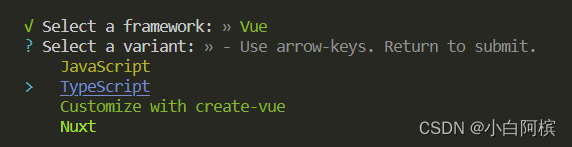
cd routerStudy
npm i
npm run dev
环境搭建成功!!
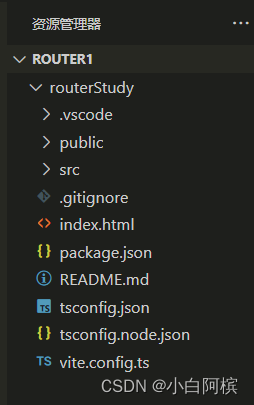
npm i vue-router@4
<template>
    <div>
        这是文件一
    </div>
</template>

<script setup lang="ts">

</script>

<style scoped>

</style>
src/components/File2.vue:
<template>
    <div>
        这是文件二
    </div>
</template>

<script setup lang="ts">

</script>

<style scoped>

</style>
在src下新建router文件夹
在router文件夹下新建router.ts:
import { createRouter,createWebHistory,createWebHashHistory } from 'vue-router'
import File1 from '../components/File1.vue'
import File2 from '../components/File2.vue'

const routes = [
    {
        path: '/',
        component:File1
    },
    {
        path: '/file2',
        component:File2
    }
]

const router = createRouter({
    // history: createWebHistory(),
    history:createWebHashHistory(),
    routes,
})

export default router;
import { createApp } from 'vue'
import './style.css'
import App from './App.vue'
import router from './router/router'

createApp(App).use(router).mount('#app')
<script setup lang="ts">

</script>

<template>
    <router-view/>
    <button><router-link to="/">去文件一</router-link></button>
    <button><router-link to="/file2">去文件二</router-link></button>
</template>

<style scoped>
</style>

当我们需要对每个用户加载同一个组件,但用户id不同。我们就需要在vue-router种使用一个动态字段来实现,再通过$routr.params来获取值:
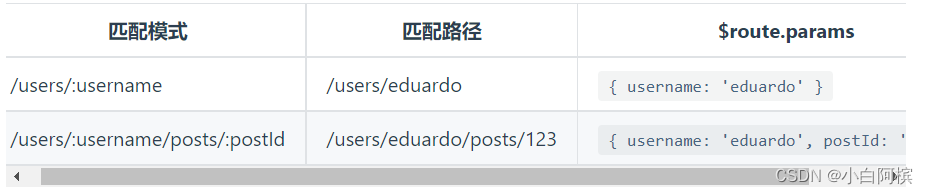
我们用具体实例来实现一下:
(1)修改src/router/router.ts:
import { createRouter,createWebHistory,createWebHashHistory } from 'vue-router'
import File1 from '../components/File1.vue'
import File2 from '../components/File2.vue'

const routes = [
    {
        path: '/',
        component:File1
    },
    {
        path: '/file2/:username/abc/:userid', //注意看这个
        component:File2
    }
]

const router = createRouter({
    history: createWebHistory(),
    // history:createWebHashHistory(),
    routes,
})

export default router;
(2)修改组件HelloWorld.vue:
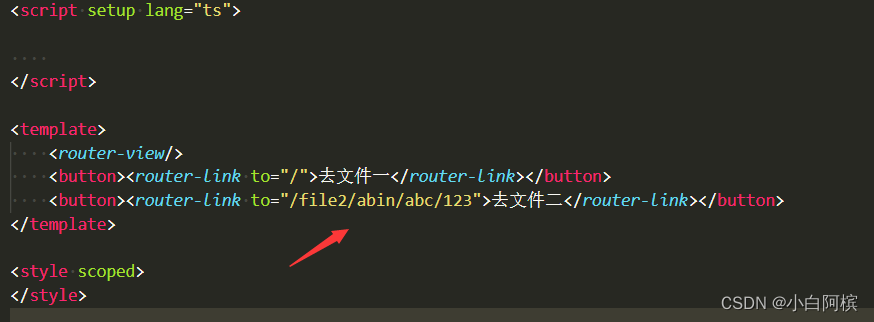
(3) 修改组件File2.vue:
<template>
    <div>
        这是文件二
    </div>
</template>

<script setup lang="ts">
import {getCurrentInstance,onMounted } from 'vue'

const instance  = getCurrentInstance()
if (instance != null) {
    const _this = instance.appContext.config.globalProperties //vue3获取当前this

onMounted(() => {
    console.log(_this.$route.params)
  })
}
</script>

<style scoped>

</style>
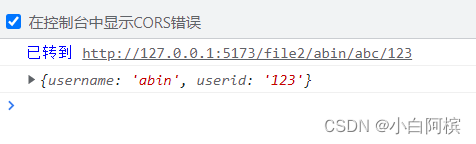
(4)点击去文件二按钮

(5)查看控制台
当用户在导航栏乱输一通后,路由表中没有对应的路由,这时候,就需要将用户转去404页面。那么
我们该如何处理呢?
(1)修改router/router.ts:
import { createRouter,createWebHistory,createWebHashHistory } from 'vue-router'
import File1 from '../components/File1.vue'
import File2 from '../components/File2.vue'
import NotFound from '../components/NotFound.vue'
import UserGeneric from '../components/UserGeneric.vue'


const routes = [
    {
        path: '/',
        component:File1
    },
    {
        path: '/file2/:username/abc/:userid',
        component:File2
    },
    // 将匹配所有内容并将其放在 `$route.params.pathMatch` 下
    {
        path: '/:pathMatch(.*)*', name: 'NotFound', component: NotFound
    },
    // 将匹配以 `/user-` 开头的所有内容,并将其放在 `$route.params.afterUser` 下
    {
        path: '/user-:afterUser(.*)', component: UserGeneric
    },
]

const router = createRouter({
    history: createWebHistory(),
    // history:createWebHashHistory(),
    routes,
})

export default router;
(2)新建组件NotFound.vue:
<template>
    <div>
        糟糕!页面没有找到。。。呜呜呜
    </div>
</template>

<script setup lang="ts">
import {getCurrentInstance,onMounted } from 'vue'

const instance  = getCurrentInstance()
if (instance != null) {
    const _this = instance.appContext.config.globalProperties //vue3获取当前this

onMounted(() => {
    console.log(_this.$route.params)
  })
}
</script>

<style scoped>

</style>
(3)修改HelloWorld.vue
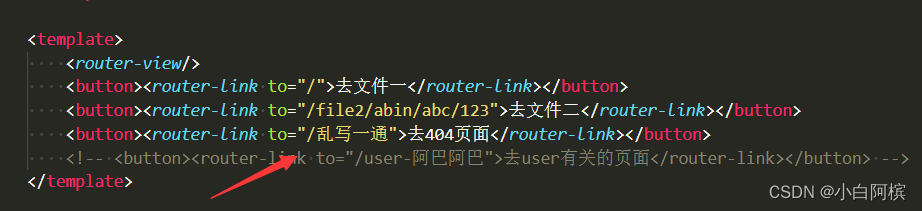
(4)点击去404页面按钮(或者在地址栏乱写一通)


(5)出现404页面,说明运行成功!!!
路由是可以嵌套的。例如:
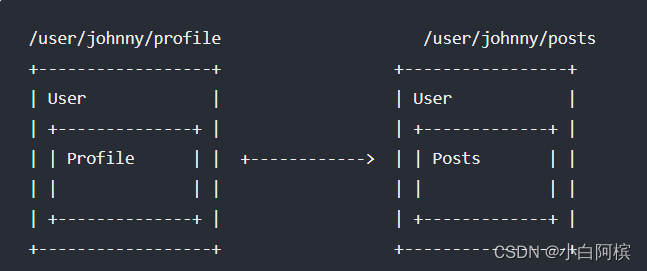
嵌套的理解挺简单的,我就不多叭叭了,直接上代码,看完就懂了。
(1)新建组件Children1.vue:
<template>
    <div>
        我是孩子1
    </div>
</template>

<script setup lang="ts">

</script>

<style scoped>

</style>
(2)新建组件Children2.vue:
<template>
    <div>
        我是孩子2
    </div>
</template>

<script setup lang="ts">

</script>

<style scoped>

</style>
(3)修改router/router.ts:
import { createRouter,createWebHistory,createWebHashHistory } from 'vue-router'
import File1 from '../components/File1.vue'
import File2 from '../components/File2.vue'
import NotFound from '../components/NotFound.vue'
import UserGeneric from '../components/UserGeneric.vue'
import Children1 from '../components/Children1.vue'
import Children2 from '../components/Children2.vue'


const routes = [
    {
        path: '/',
        component: File1,

    },
    {
        path: '/file2',
        component: File2,
        children: [  //使用嵌套路由
            {
                path: 'children1',
                component:Children1
            },
            {
                path: 'children2',
                component:Children2
            },
        ]
    },
    {
        path: '/:pathMatch(.*)*', name: 'NotFound', component: NotFound
    },
    {
        path: '/user-:afterUser(.*)', component: UserGeneric
    },
]

const router = createRouter({
    history: createWebHistory(),
    // history:createWebHashHistory(),
    routes,
})

export default router;
(4)修改组件HelloWorld.vue:
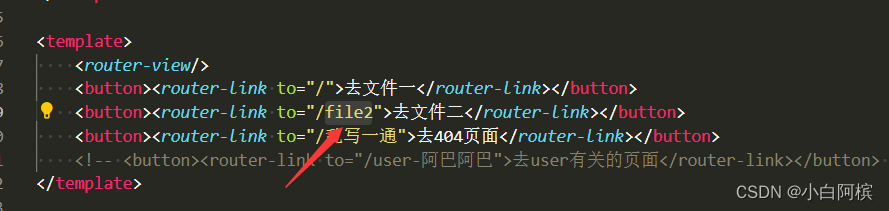
(5)修改组件File2.vue:
<template>
    <div>
        这是文件二
        <div>
            我是文件二里的内容
            <router-view/>
            <button><router-link to="/file2/children1">找孩子1</router-link></button>
            <button><router-link to="/file2/children2">找孩子2</router-link></button>
        </div>
    </div>
</template>

<script setup lang="ts">

</script>

<style scoped>

</style>
(6)先点去文件二,再点击找孩子1按钮,出现即成功!!

除了使用/< router-link/> 创建 a 标签来定义导航链接,我们还可以借助 router 的实例方法,通过编写代码来实现。
(1)修改组件NotFound.vue:
<template>
    <div>
        糟糕!页面没有找到。。。呜呜呜
    </div>
</template>

<script setup lang="ts">
import {getCurrentInstance,onMounted } from 'vue'

const instance  = getCurrentInstance()
if (instance != null) {
    const _this = instance.appContext.config.globalProperties //vue3获取当前this


    // 1.字符串路径
    _this.$router.push('/file2/children2')

    // 2.带有路径的对象
    // _this.$router.push({path:'/file2/children2'})

    // 3.命名的路由,并加上参数,让路由建立 url
    // _this.$router.push({name:'file2',params:{username:'children2'}})

    // 4.带查询参数,结果是 /register?plan=private
    // _this.$router.push({ path: '/file2/children2', query: {userid:'123'} })


    onMounted(() => {
    console.log(_this.$route.params)
  })
}
</script>

<style scoped>

</style>
(2)再点“去404页面”,发现没有去404页面了,说明编程式导航成功!!

它的作用类似于 router.push,唯一不同的是,它在导航时不会向 history 添加新记录,正如它的名字所暗示的那样——它取代了当前的条目。
修改组件NotFound.vue:
<template>
    <div>
        糟糕!页面没有找到。。。呜呜呜
    </div>
</template>

<script setup lang="ts">
import {getCurrentInstance,onMounted } from 'vue'

const instance  = getCurrentInstance()
if (instance != null) {
    const _this = instance.appContext.config.globalProperties //vue3获取当前this

    // 一。router.push的使用:
    // 1.字符串路径
    // _this.$router.push('/file2/children2')

    // 2.带有路径的对象
    // _this.$router.push({path:'/file2/children2'})

    // 3.命名的路由,并加上参数,让路由建立 url
    // _this.$router.push({name:'file2',params:{username:'children2'}})

    // 4.带查询参数,结果是 /register?plan=private
    // _this.$router.push({ path: '/file2/children2', query: {userid:'123'} })

    // 二。router.replace的使用:
    _this.$router.replace('/file2/children1')


    onMounted(() => {
    console.log(_this.$route.params)
  })
}
</script>

<style scoped>

</style>
修改组件NotFound.vue:
<template>
    <div>
        糟糕!页面没有找到。。。呜呜呜
    </div>
</template>

<script setup lang="ts">
import {getCurrentInstance,onMounted } from 'vue'

const instance  = getCurrentInstance()
if (instance != null) {
    const _this = instance.appContext.config.globalProperties //vue3获取当前this

    // 一。router.push的使用:
    // 1.字符串路径
    // _this.$router.push('/file2/children2')

    // 2.带有路径的对象
    // _this.$router.push({path:'/file2/children2'})

    // 3.命名的路由,并加上参数,让路由建立 url
    // _this.$router.push({name:'file2',params:{username:'children2'}})

    // 4.带查询参数,结果是 /register?plan=private
    // _this.$router.push({ path: '/file2/children2', query: {userid:'123'} })

    // 二。router.replace的使用:
    // _this.$router.replace('/file2/children1')

    // 三。router.go的使用:
    _this.$router.go(-1)  //相当于点击回退一次

    onMounted(() => {
    console.log(_this.$route.params)
  })
}
</script>

<style scoped>

</style>
我正在学习如何使用Nokogiri,根据这段代码我遇到了一些问题:require'rubygems'require'mechanize'post_agent=WWW::Mechanize.newpost_page=post_agent.get('http://www.vbulletin.org/forum/showthread.php?t=230708')puts"\nabsolutepathwithtbodygivesnil"putspost_page.parser.xpath('/html/body/div/div/div/div/div/table/tbody/tr/td/div
我有一个Ruby程序,它使用rubyzip压缩XML文件的目录树。gem。我的问题是文件开始变得很重,我想提高压缩级别,因为压缩时间不是问题。我在rubyzipdocumentation中找不到一种为创建的ZIP文件指定压缩级别的方法。有人知道如何更改此设置吗?是否有另一个允许指定压缩级别的Ruby库? 最佳答案 这是我通过查看rubyzip内部创建的代码。level=Zlib::BEST_COMPRESSIONZip::ZipOutputStream.open(zip_file)do|zip|Dir.glob("**/*")d
类classAprivatedeffooputs:fooendpublicdefbarputs:barendprivatedefzimputs:zimendprotecteddefdibputs:dibendendA的实例a=A.new测试a.foorescueputs:faila.barrescueputs:faila.zimrescueputs:faila.dibrescueputs:faila.gazrescueputs:fail测试输出failbarfailfailfail.发送测试[:foo,:bar,:zim,:dib,:gaz].each{|m|a.send(m)resc
很好奇,就使用rubyonrails自动化单元测试而言,你们正在做什么?您是否创建了一个脚本来在cron中运行rake作业并将结果邮寄给您?git中的预提交Hook?只是手动调用?我完全理解测试,但想知道在错误发生之前捕获错误的最佳实践是什么。让我们理所当然地认为测试本身是完美无缺的,并且可以正常工作。下一步是什么以确保他们在正确的时间将可能有害的结果传达给您? 最佳答案 不确定您到底想听什么,但是有几个级别的自动代码库控制:在处理某项功能时,您可以使用类似autotest的内容获得关于哪些有效,哪些无效的即时反馈。要确保您的提
假设我做了一个模块如下:m=Module.newdoclassCendend三个问题:除了对m的引用之外,还有什么方法可以访问C和m中的其他内容?我可以在创建匿名模块后为其命名吗(就像我输入“module...”一样)?如何在使用完匿名模块后将其删除,使其定义的常量不再存在? 最佳答案 三个答案:是的,使用ObjectSpace.此代码使c引用你的类(class)C不引用m:c=nilObjectSpace.each_object{|obj|c=objif(Class===objandobj.name=~/::C$/)}当然这取决于
我正在尝试使用ruby和Savon来使用网络服务。测试服务为http://www.webservicex.net/WS/WSDetails.aspx?WSID=9&CATID=2require'rubygems'require'savon'client=Savon::Client.new"http://www.webservicex.net/stockquote.asmx?WSDL"client.get_quotedo|soap|soap.body={:symbol=>"AAPL"}end返回SOAP异常。检查soap信封,在我看来soap请求没有正确的命名空间。任何人都可以建议我
关闭。这个问题是opinion-based.它目前不接受答案。想要改进这个问题?更新问题,以便editingthispost可以用事实和引用来回答它.关闭4年前。Improvethisquestion我想在固定时间创建一系列低音和高音调的哔哔声。例如:在150毫秒时发出高音调的蜂鸣声在151毫秒时发出低音调的蜂鸣声200毫秒时发出低音调的蜂鸣声250毫秒的高音调蜂鸣声有没有办法在Ruby或Python中做到这一点?我真的不在乎输出编码是什么(.wav、.mp3、.ogg等等),但我确实想创建一个输出文件。
我在我的项目目录中完成了compasscreate.和compassinitrails。几个问题:我已将我的.sass文件放在public/stylesheets中。这是放置它们的正确位置吗?当我运行compasswatch时,它不会自动编译这些.sass文件。我必须手动指定文件:compasswatchpublic/stylesheets/myfile.sass等。如何让它自动运行?文件ie.css、print.css和screen.css已放在stylesheets/compiled。如何在编译后不让它们重新出现的情况下删除它们?我自己编译的.sass文件编译成compiled/t
我想将html转换为纯文本。不过,我不想只删除标签,我想智能地保留尽可能多的格式。为插入换行符标签,检测段落并格式化它们等。输入非常简单,通常是格式良好的html(不是整个文档,只是一堆内容,通常没有anchor或图像)。我可以将几个正则表达式放在一起,让我达到80%,但我认为可能有一些现有的解决方案更智能。 最佳答案 首先,不要尝试为此使用正则表达式。很有可能你会想出一个脆弱/脆弱的解决方案,它会随着HTML的变化而崩溃,或者很难管理和维护。您可以使用Nokogiri快速解析HTML并提取文本:require'nokogiri'h
我想为Heroku构建一个Rails3应用程序。他们使用Postgres作为他们的数据库,所以我通过MacPorts安装了postgres9.0。现在我需要一个postgresgem并且共识是出于性能原因你想要pggem。但是我对我得到的错误感到非常困惑当我尝试在rvm下通过geminstall安装pg时。我已经非常明确地指定了所有postgres目录的位置可以找到但仍然无法完成安装:$envARCHFLAGS='-archx86_64'geminstallpg--\--with-pg-config=/opt/local/var/db/postgresql90/defaultdb/po
