我在尝试创建像 Spotify 播放器中那样的 UICollectionView 时遇到很多困难:
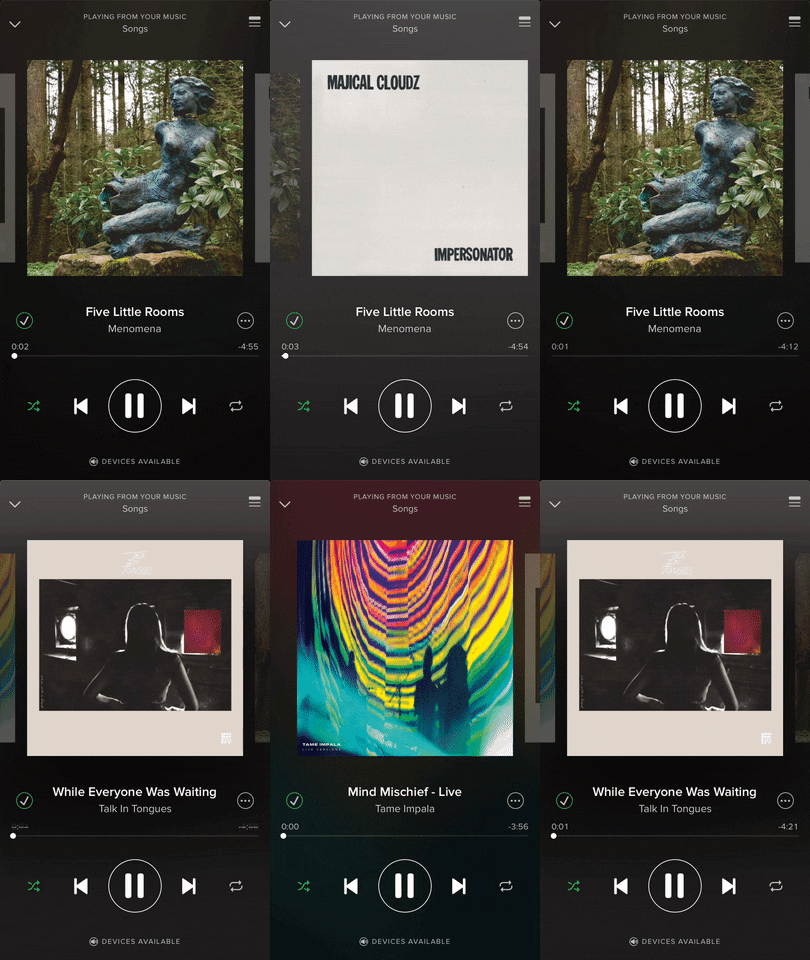
对我来说,问题有两个。
1) 如何将单元格居中,以便您可以看到中间的单元格以及左侧和右侧的单元格。
2) 在 pagingEnabled = YES 的情况下,collectionview 可以正确地从一页滑动到另一页。但是,如果单元格没有居中,它只是将 Collection View 移动到屏幕宽度的页面上。所以问题是如何使页面移动才能获得上述效果。
3) 如何在移动时为单元格的大小设置动画
我目前拥有的代码是一个简单的 UICollectionView,具有普通委托(delegate)设置和自定义 UICollectionview 单元格(正方形)。也许我需要继承 UICollectionViewFlowLayout?或者我可能需要将 pagingEnabled 设置为 NO 然后使用自定义滑动事件?希望得到任何帮助!
最佳答案
为了创建水平旋转木马布局,您必须子类化 UICollectionViewFlowLayout 然后覆盖 targetContentOffset(forProposedContentOffset:withScrollingVelocity:) , layoutAttributesForElements(in:)和 shouldInvalidateLayout(forBoundsChange:) .
以下 Swift 5/iOS 12.2 完整代码展示了如何实现它们。
CollectionViewController.swift
import UIKit

class CollectionViewController: UICollectionViewController {

    let collectionDataSource = CollectionDataSource()
    let flowLayout = ZoomAndSnapFlowLayout()

    override func viewDidLoad() {
        super.viewDidLoad()

        title = "Zoomed & snapped cells"

        guard let collectionView = collectionView else { fatalError() }
        //collectionView.decelerationRate = .fast // uncomment if necessary
        collectionView.dataSource = collectionDataSource
        collectionView.collectionViewLayout = flowLayout
        collectionView.contentInsetAdjustmentBehavior = .always
        collectionView.register(CollectionViewCell.self, forCellWithReuseIdentifier: "Cell")
    }

}
ZoomAndSnapFlowLayout.swift
import UIKit

class ZoomAndSnapFlowLayout: UICollectionViewFlowLayout {

    let activeDistance: CGFloat = 200
    let zoomFactor: CGFloat = 0.3

    override init() {
        super.init()

        scrollDirection = .horizontal
        minimumLineSpacing = 40
        itemSize = CGSize(width: 150, height: 150)
    }

    required init?(coder aDecoder: NSCoder) {
        fatalError("init(coder:) has not been implemented")
    }

    override func prepare() {
        guard let collectionView = collectionView else { fatalError() }
        let verticalInsets = (collectionView.frame.height - collectionView.adjustedContentInset.top - collectionView.adjustedContentInset.bottom - itemSize.height) / 2
        let horizontalInsets = (collectionView.frame.width - collectionView.adjustedContentInset.right - collectionView.adjustedContentInset.left - itemSize.width) / 2
        sectionInset = UIEdgeInsets(top: verticalInsets, left: horizontalInsets, bottom: verticalInsets, right: horizontalInsets)

        super.prepare()
    }

    override func layoutAttributesForElements(in rect: CGRect) -> [UICollectionViewLayoutAttributes]? {
        guard let collectionView = collectionView else { return nil }
        let rectAttributes = super.layoutAttributesForElements(in: rect)!.map { $0.copy() as! UICollectionViewLayoutAttributes }
        let visibleRect = CGRect(origin: collectionView.contentOffset, size: collectionView.frame.size)

        // Make the cells be zoomed when they reach the center of the screen
        for attributes in rectAttributes where attributes.frame.intersects(visibleRect) {
            let distance = visibleRect.midX - attributes.center.x
            let normalizedDistance = distance / activeDistance

            if distance.magnitude < activeDistance {
                let zoom = 1 + zoomFactor * (1 - normalizedDistance.magnitude)
                attributes.transform3D = CATransform3DMakeScale(zoom, zoom, 1)
                attributes.zIndex = Int(zoom.rounded())
            }
        }

        return rectAttributes
    }

    override func targetContentOffset(forProposedContentOffset proposedContentOffset: CGPoint, withScrollingVelocity velocity: CGPoint) -> CGPoint {
        guard let collectionView = collectionView else { return .zero }

        // Add some snapping behaviour so that the zoomed cell is always centered
        let targetRect = CGRect(x: proposedContentOffset.x, y: 0, width: collectionView.frame.width, height: collectionView.frame.height)
        guard let rectAttributes = super.layoutAttributesForElements(in: targetRect) else { return .zero }

        var offsetAdjustment = CGFloat.greatestFiniteMagnitude
        let horizontalCenter = proposedContentOffset.x + collectionView.frame.width / 2

        for layoutAttributes in rectAttributes {
            let itemHorizontalCenter = layoutAttributes.center.x
            if (itemHorizontalCenter - horizontalCenter).magnitude < offsetAdjustment.magnitude {
                offsetAdjustment = itemHorizontalCenter - horizontalCenter
            }
        }

        return CGPoint(x: proposedContentOffset.x + offsetAdjustment, y: proposedContentOffset.y)
    }

    override func shouldInvalidateLayout(forBoundsChange newBounds: CGRect) -> Bool {
        // Invalidate layout so that every cell get a chance to be zoomed when it reaches the center of the screen
        return true
    }

    override func invalidationContext(forBoundsChange newBounds: CGRect) -> UICollectionViewLayoutInvalidationContext {
        let context = super.invalidationContext(forBoundsChange: newBounds) as! UICollectionViewFlowLayoutInvalidationContext
        context.invalidateFlowLayoutDelegateMetrics = newBounds.size != collectionView?.bounds.size
        return context
    }

}
CollectionDataSource.swift
import UIKit

class CollectionDataSource: NSObject, UICollectionViewDataSource {

    func collectionView(_ collectionView: UICollectionView, numberOfItemsInSection section: Int) -> Int {
        return 9
    }

    func collectionView(_ collectionView: UICollectionView, cellForItemAt indexPath: IndexPath) -> UICollectionViewCell {
        let cell = collectionView.dequeueReusableCell(withReuseIdentifier: "Cell", for: indexPath) as! CollectionViewCell
        return cell
    }

}
CollectionViewCell.swift
import UIKit

class CollectionViewCell: UICollectionViewCell {

    override init(frame: CGRect) {
        super.init(frame: frame)

        contentView.backgroundColor = .green
    }

    required init?(coder aDecoder: NSCoder) {
        fatalError("init(coder:) has not been implemented")
    }

}
预期结果:

来源:
关于ios - 如何像 Spotify 的播放器一样创建一个居中的 UICollectionView,我们在Stack Overflow上找到一个类似的问题: https://stackoverflow.com/questions/35045155/
我正在学习如何使用Nokogiri,根据这段代码我遇到了一些问题:require'rubygems'require'mechanize'post_agent=WWW::Mechanize.newpost_page=post_agent.get('http://www.vbulletin.org/forum/showthread.php?t=230708')puts"\nabsolutepathwithtbodygivesnil"putspost_page.parser.xpath('/html/body/div/div/div/div/div/table/tbody/tr/td/div
总的来说,我对ruby还比较陌生,我正在为我正在创建的对象编写一些rspec测试用例。许多测试用例都非常基础,我只是想确保正确填充和返回值。我想知道是否有办法使用循环结构来执行此操作。不必为我要测试的每个方法都设置一个assertEquals。例如:describeitem,"TestingtheItem"doit"willhaveanullvaluetostart"doitem=Item.new#HereIcoulddotheitem.name.shouldbe_nil#thenIcoulddoitem.category.shouldbe_nilendend但我想要一些方法来使用
出于纯粹的兴趣,我很好奇如何按顺序创建PI,而不是在过程结果之后生成数字,而是让数字在过程本身生成时显示。如果是这种情况,那么数字可以自行产生,我可以对以前看到的数字实现垃圾收集,从而创建一个无限系列。结果只是在Pi系列之后每秒生成一个数字。这是我通过互联网筛选的结果:这是流行的计算机友好算法,类机器算法:defarccot(x,unity)xpow=unity/xn=1sign=1sum=0loopdoterm=xpow/nbreakifterm==0sum+=sign*(xpow/n)xpow/=x*xn+=2sign=-signendsumenddefcalc_pi(digits
关闭。这个问题是opinion-based.它目前不接受答案。想要改进这个问题?更新问题,以便editingthispost可以用事实和引用来回答它.关闭4年前。Improvethisquestion我想在固定时间创建一系列低音和高音调的哔哔声。例如:在150毫秒时发出高音调的蜂鸣声在151毫秒时发出低音调的蜂鸣声200毫秒时发出低音调的蜂鸣声250毫秒的高音调蜂鸣声有没有办法在Ruby或Python中做到这一点?我真的不在乎输出编码是什么(.wav、.mp3、.ogg等等),但我确实想创建一个输出文件。
给定这段代码defcreate@upgrades=User.update_all(["role=?","upgraded"],:id=>params[:upgrade])redirect_toadmin_upgrades_path,:notice=>"Successfullyupgradeduser."end我如何在该操作中实际验证它们是否已保存或未重定向到适当的页面和消息? 最佳答案 在Rails3中,update_all不返回任何有意义的信息,除了已更新的记录数(这可能取决于您的DBMS是否返回该信息)。http://ar.ru
我在我的项目目录中完成了compasscreate.和compassinitrails。几个问题:我已将我的.sass文件放在public/stylesheets中。这是放置它们的正确位置吗?当我运行compasswatch时,它不会自动编译这些.sass文件。我必须手动指定文件:compasswatchpublic/stylesheets/myfile.sass等。如何让它自动运行?文件ie.css、print.css和screen.css已放在stylesheets/compiled。如何在编译后不让它们重新出现的情况下删除它们?我自己编译的.sass文件编译成compiled/t
我正在寻找执行以下操作的正确语法(在Perl、Shell或Ruby中):#variabletoaccessthedatalinesappendedasafileEND_OF_SCRIPT_MARKERrawdatastartshereanditcontinues. 最佳答案 Perl用__DATA__做这个:#!/usr/bin/perlusestrict;usewarnings;while(){print;}__DATA__Texttoprintgoeshere 关于ruby-如何将脚
Rackup通过Rack的默认处理程序成功运行任何Rack应用程序。例如:classRackAppdefcall(environment)['200',{'Content-Type'=>'text/html'},["Helloworld"]]endendrunRackApp.new但是当最后一行更改为使用Rack的内置CGI处理程序时,rackup给出“NoMethodErrorat/undefinedmethod`call'fornil:NilClass”:Rack::Handler::CGI.runRackApp.newRack的其他内置处理程序也提出了同样的反对意见。例如Rack
使用带有Rails插件的vim,您可以创建一个迁移文件,然后一次性打开该文件吗?textmate也可以这样吗? 最佳答案 你可以使用rails.vim然后做类似的事情::Rgeneratemigratonadd_foo_to_bar插件将打开迁移生成的文件,这正是您想要的。我不能代表textmate。 关于ruby-使用VimRails,您可以创建一个新的迁移文件并一次性打开它吗?,我们在StackOverflow上找到一个类似的问题: https://sta
我需要从一个View访问多个模型。以前,我的links_controller仅用于提供以不同方式排序的链接资源。现在我想包括一个部分(我假设)显示按分数排序的顶级用户(@users=User.all.sort_by(&:score))我知道我可以将此代码插入每个链接操作并从View访问它,但这似乎不是“ruby方式”,我将需要在不久的将来访问更多模型。这可能会变得很脏,是否有针对这种情况的任何技术?注意事项:我认为我的应用程序正朝着单一格式和动态页面内容的方向发展,本质上是一个典型的网络应用程序。我知道before_filter但考虑到我希望应用程序进入的方向,这似乎很麻烦。最终从任何
