@Async的作用就是异步处理任务。
在使用@Async时,如果不指定线程池的名称,也就是不自定义线程池,@Async是有默认线程池的,使用的是Spring默认的线程池SimpleAsyncTaskExecutor。
默认线程池的默认配置如下:
从最大线程数可以看出,在并发情况下,会无限制的创建线程。
也可以通过yml重新配置:
spring:
  task:
    execution:
      pool:
        max-size: 10
        core-size: 5
        keep-alive: 3s
        queue-capacity: 1000
        thread-name-prefix: my-executor
也可以自定义线程池,下面通过简单的代码来实现以下@Async自定义线程池。
Spring为任务调度与异步方法执行提供了注解@Async支持,通过在方法上标注@Async注解,可使得方法被异步调用。在需要异步执行的方法上加入@Async注解,并指定使用的线程池,当然可以不指定,直接写@Async。
<dependency>
    <groupId>com.google.guava</groupId>
    <artifactId>guava</artifactId>
    <version>31.0.1-jre</version>
</dependency>
package com.jack.config;

import com.google.common.util.concurrent.ThreadFactoryBuilder;
import org.springframework.context.annotation.Bean;
import org.springframework.context.annotation.Configuration;
import org.springframework.scheduling.annotation.EnableAsync;
import org.springframework.scheduling.concurrent.ThreadPoolTaskExecutor;

import java.util.concurrent.*;

@EnableAsync// 支持异步操作
@Configuration
public class AsyncTaskConfig {

    /**
     * com.google.guava中的线程池
     * @return
     */
    @Bean("my-executor")
    public Executor firstExecutor() {
        ThreadFactory threadFactory = new ThreadFactoryBuilder().setNameFormat("my-executor").build();
        // 获取CPU的处理器数量
        int curSystemThreads = Runtime.getRuntime().availableProcessors() * 2;
        ThreadPoolExecutor threadPool = new ThreadPoolExecutor(curSystemThreads, 100,
                200, TimeUnit.SECONDS,
                new LinkedBlockingQueue<>(), threadFactory);
        threadPool.allowsCoreThreadTimeOut();
        return threadPool;
    }

    /**
     * Spring线程池
     * @return
     */
    @Bean("async-executor")
    public Executor asyncExecutor() {
        ThreadPoolTaskExecutor taskExecutor = new ThreadPoolTaskExecutor();
        // 核心线程数
        taskExecutor.setCorePoolSize(10);
        // 线程池维护线程的最大数量,只有在缓冲队列满了之后才会申请超过核心线程数的线程
        taskExecutor.setMaxPoolSize(100);
        // 缓存队列
        taskExecutor.setQueueCapacity(50);
        // 空闲时间,当超过了核心线程数之外的线程在空闲时间到达之后会被销毁
        taskExecutor.setKeepAliveSeconds(200);
        // 异步方法内部线程名称
        taskExecutor.setThreadNamePrefix("async-executor-");

        /**
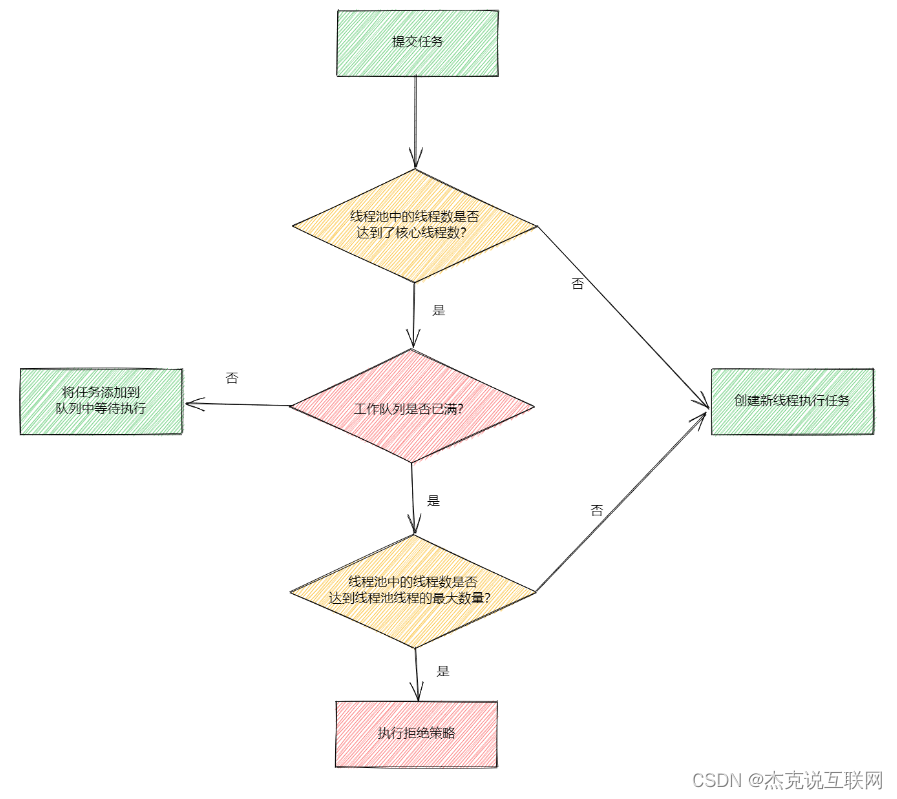
         * 当线程池的任务缓存队列已满并且线程池中的线程数目达到maximumPoolSize,如果还有任务到来就会采取任务拒绝策略
         * 通常有以下四种策略:
         * ThreadPoolExecutor.AbortPolicy:丢弃任务并抛出RejectedExecutionException异常。
         * ThreadPoolExecutor.DiscardPolicy:也是丢弃任务,但是不抛出异常。
         * ThreadPoolExecutor.DiscardOldestPolicy:丢弃队列最前面的任务,然后重新尝试执行任务(重复此过程)
         * ThreadPoolExecutor.CallerRunsPolicy:重试添加当前的任务,自动重复调用 execute() 方法,直到成功
         */
        taskExecutor.setRejectedExecutionHandler(new ThreadPoolExecutor.CallerRunsPolicy());
        taskExecutor.initialize();
        return taskExecutor;
    }
}
package com.jack.controller;

import com.nezha.service.UserService;
import org.slf4j.Logger;
import org.slf4j.LoggerFactory;
import org.springframework.beans.factory.annotation.Autowired;
import org.springframework.scheduling.annotation.Async;
import org.springframework.web.bind.annotation.GetMapping;
import org.springframework.web.bind.annotation.RequestMapping;
import org.springframework.web.bind.annotation.RestController;

@RestController
@RequestMapping("/test")
public class UserController {

    private static final Logger logger = LoggerFactory.getLogger(UserController.class);

    @Autowired
    private UserService userService;

    @GetMapping("asyncTest")
    public void asyncTest() {
        logger.info("杰克真帅");
        userService.asyncTest();
        asyncTest2();
        logger.info("杰克编程,每日更新Java干货");
    }

    @Async("my-executor")
    public void asyncTest2() {
        logger.info("同文件内执行执行异步任务");
    }
}
package com.nezha.service;

public interface UserService {

    // 普通方法
    void test();

    // 异步方法
    void asyncTest();
}
service实现类
package com.jack.service;

import org.slf4j.Logger;
import org.slf4j.LoggerFactory;
import org.springframework.scheduling.annotation.Async;
import org.springframework.stereotype.Service;

@Service
public class UserServiceImpl implements UserService {

    private static final Logger logger = LoggerFactory.getLogger(UserServiceImpl.class);

    @Override
    public void test() {
        logger.info("执行普通任务");
    }

    @Async("my-executor")
    @Override
    public void asyncTest() {
        logger.info("执行异步任务");
    }
}

查到了@Async失效的几个原因:
这里就不一一演示了,有兴趣的小伙伴可以研究一下。
ThreadPoolTaskExecutor是spring core包中的,而ThreadPoolExecutor是JDK中的JUC。ThreadPoolTaskExecutor是对ThreadPoolExecutor进行了封装。
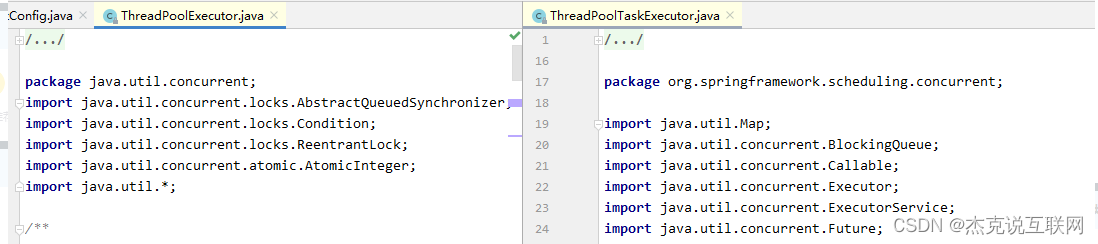
查看一下ThreadPoolTaskExecutor 的 initialize()方法
public abstract class ExecutorConfigurationSupport extends CustomizableThreadFactory
		implements BeanNameAware, InitializingBean, DisposableBean {
	...

	/**
	 * Set up the ExecutorService.
	 */
	public void initialize() {
		if (logger.isInfoEnabled()) {
			logger.info("Initializing ExecutorService" + (this.beanName != null ? " '" + this.beanName + "'" : ""));
		}
		if (!this.threadNamePrefixSet && this.beanName != null) {
			setThreadNamePrefix(this.beanName + "-");
		}
		this.executor = initializeExecutor(this.threadFactory, this.rejectedExecutionHandler);
	}

	/**
	 * Create the target {@link java.util.concurrent.ExecutorService} instance.
	 * Called by {@code afterPropertiesSet}.
	 * @param threadFactory the ThreadFactory to use
	 * @param rejectedExecutionHandler the RejectedExecutionHandler to use
	 * @return a new ExecutorService instance
	 * @see #afterPropertiesSet()
	 */
	protected abstract ExecutorService initializeExecutor(
			ThreadFactory threadFactory, RejectedExecutionHandler rejectedExecutionHandler);

	...
}
再查看一下initializeExecutor抽象方法的具体实现类,其中有一个就是ThreadPoolTaskExecutor类,查看它的initializeExecutor方法,使用的就是ThreadPoolExecutor。

public class ThreadPoolTaskExecutor extends ExecutorConfigurationSupport
		implements AsyncListenableTaskExecutor, SchedulingTaskExecutor {

	...

	@Override
	protected ExecutorService initializeExecutor(
			ThreadFactory threadFactory, RejectedExecutionHandler rejectedExecutionHandler) {

		BlockingQueue<Runnable> queue = createQueue(this.queueCapacity);

		ThreadPoolExecutor executor;
		if (this.taskDecorator != null) {
			executor = new ThreadPoolExecutor(
					this.corePoolSize, this.maxPoolSize, this.keepAliveSeconds, TimeUnit.SECONDS,
					queue, threadFactory, rejectedExecutionHandler) {
				@Override
				public void execute(Runnable command) {
					Runnable decorated = taskDecorator.decorate(command);
					if (decorated != command) {
						decoratedTaskMap.put(decorated, command);
					}
					super.execute(decorated);
				}
			};
		}
		else {
			executor = new ThreadPoolExecutor(
					this.corePoolSize, this.maxPoolSize, this.keepAliveSeconds, TimeUnit.SECONDS,
					queue, threadFactory, rejectedExecutionHandler);

		}

		if (this.allowCoreThreadTimeOut) {
			executor.allowCoreThreadTimeOut(true);
		}

		this.threadPoolExecutor = executor;
		return executor;
	}

	...

}
因此可以了解到ThreadPoolTaskExecutor是对ThreadPoolExecutor进行了封装。
配置文件中的线程池核心线程数为何配置为
// 获取CPU的处理器数量
int curSystemThreads = Runtime.getRuntime().availableProcessors() * 2;
Runtime.getRuntime().availableProcessors()获取的是CPU核心线程数,也就是计算资源。
在实际中,需要对具体的线程池大小进行调整,可以通过压测及机器设备现状,进行调整大小。
如果线程池太大,则会造成CPU不断的切换,对整个系统性能也不会有太大的提升,反而会导致系统缓慢。
喜欢博主的文章记得点赞、收藏、评论喔~
exe应该在我打开页面时运行。异步进程需要运行。有什么方法可以在ruby中使用两个参数异步运行exe吗?我已经尝试过ruby命令-system()、exec()但它正在等待过程完成。我需要用参数启动exe,无需等待进程完成是否有任何rubygems会支持我的问题? 最佳答案 您可以使用Process.spawn和Process.wait2:pid=Process.spawn'your.exe','--option'#Later...pid,status=Process.wait2pid您的程序将作为解释器的子进程执行。除
我真的很习惯使用Ruby编写以下代码:my_hash={}my_hash['test']=1Java中对应的数据结构是什么? 最佳答案 HashMapmap=newHashMap();map.put("test",1);我假设? 关于java-等价于Java中的RubyHash,我们在StackOverflow上找到一个类似的问题: https://stackoverflow.com/questions/22737685/
我正在尝试使用boilerpipe来自JRuby。我看过guide从JRuby调用Java,并成功地将它与另一个Java包一起使用,但无法弄清楚为什么同样的东西不能用于boilerpipe。我正在尝试基本上从JRuby中执行与此Java等效的操作:URLurl=newURL("http://www.example.com/some-location/index.html");Stringtext=ArticleExtractor.INSTANCE.getText(url);在JRuby中试过这个:require'java'url=java.net.URL.new("http://www
我只想对我一直在思考的这个问题有其他意见,例如我有classuser_controller和classuserclassUserattr_accessor:name,:usernameendclassUserController//dosomethingaboutanythingaboutusersend问题是我的User类中是否应该有逻辑user=User.newuser.do_something(user1)oritshouldbeuser_controller=UserController.newuser_controller.do_something(user1,user2)我
什么是ruby的rack或python的Java的wsgi?还有一个路由库。 最佳答案 来自Python标准PEP333:Bycontrast,althoughJavahasjustasmanywebapplicationframeworksavailable,Java's"servlet"APImakesitpossibleforapplicationswrittenwithanyJavawebapplicationframeworktoruninanywebserverthatsupportstheservletAPI.ht
这篇文章是继上一篇文章“Observability:从零开始创建Java微服务并监控它(一)”的续篇。在上一篇文章中,我们讲述了如何创建一个Javaweb应用,并使用Filebeat来收集应用所生成的日志。在今天的文章中,我来详述如何收集应用的指标,使用APM来监控应用并监督web服务的在线情况。源码可以在地址 https://github.com/liu-xiao-guo/java_observability 进行下载。摄入指标指标被视为可以随时更改的时间点值。当前请求的数量可以改变任何毫秒。你可能有1000个请求的峰值,然后一切都回到一个请求。这也意味着这些指标可能不准确,你还想提取最小/
HashMap中为什么引入红黑树,而不是AVL树呢1.概述开始学习这个知识点之前我们需要知道,在JDK1.8以及之前,针对HashMap有什么不同。JDK1.7的时候,HashMap的底层实现是数组+链表JDK1.8的时候,HashMap的底层实现是数组+链表+红黑树我们要思考一个问题,为什么要从链表转为红黑树呢。首先先让我们了解下链表有什么不好???2.链表上述的截图其实就是链表的结构,我们来看下链表的增删改查的时间复杂度增:因为链表不是线性结构,所以每次添加的时候,只需要移动一个节点,所以可以理解为复杂度是N(1)删:算法时间复杂度跟增保持一致查:既然是非线性结构,所以查询某一个节点的时候
遍历文件夹我们通常是使用递归进行操作,这种方式比较简单,也比较容易理解。本文为大家介绍另一种不使用递归的方式,由于没有使用递归,只用到了循环和集合,所以效率更高一些!一、使用递归遍历文件夹整体思路1、使用File封装初始目录,2、打印这个目录3、获取这个目录下所有的子文件和子目录的数组。4、遍历这个数组,取出每个File对象4-1、如果File是否是一个文件,打印4-2、否则就是一个目录,递归调用代码实现publicclassSearchFile{publicstaticvoidmain(String[]args){//初始目录Filedir=newFile("d:/Dev");Datebeg
我基本上来自Java背景并且努力理解Ruby中的模运算。(5%3)(-5%3)(5%-3)(-5%-3)Java中的上述操作产生,2个-22个-2但在Ruby中,相同的表达式会产生21个-1-2.Ruby在逻辑上有多擅长这个?模块操作在Ruby中是如何实现的?如果将同一个操作定义为一个web服务,两个服务如何匹配逻辑。 最佳答案 在Java中,模运算的结果与被除数的符号相同。在Ruby中,它与除数的符号相同。remainder()在Ruby中与被除数的符号相同。您可能还想引用modulooperation.
Java的Collections.unmodifiableList和Collections.unmodifiableMap在Ruby标准API中是否有等价物? 最佳答案 使用freeze应用程序接口(interface):Preventsfurthermodificationstoobj.ARuntimeErrorwillberaisedifmodificationisattempted.Thereisnowaytounfreezeafrozenobject.SeealsoObject#frozen?.Thismethodretur
