最近chatgpt已经火爆了,几乎是家喻户晓老少皆知啊,公测推出60天后就已经是UV人数过亿,日访问量号称也是过亿。投资chatgpt研发团队的微软也是2个月内迅速推出自己的chatgpt的bing搜索,股票下载量都是暴增啊。前面文章已经介绍过chatgpt技术可能会对整个人类组织分工带来的影响以及原因,这里就不在继续歪歪了。

从这篇文章开始,我打算实现一个mini版本的chatgpt,把背后的原理算法、数据准备工作都会介绍到。这系列文章预计会有7-8篇,主要是讲实现,不会介绍transformer模型技术细节、ppo数学推理。
到最后大家可以收获一个问答式的文本生成工具,大家也可以根据自己需要定制训练自己的模型做自己想要做的事,比如一个跟懂自己智能助理、解读论文的神器、可以通过语音方式理解需求帮你控制智能家居、通过语音帮你画一幅你想要的画...
第一篇先介绍整个RLHF大训练框架,介绍SFT模型训练:数据、基本模型。先介绍单个模型大家先熟悉代码在自己机器上试跑训练下数据。
第二部分会对模型改造、代码封装,让代码能够在多卡多机上训练;更工业风。
第三部分把流程封装,三部分的代码做一个整合,到这边你就可以得到一个真正能够训练中文语料的链路框架,并且可以自己准备训练标注语料。
第四部分会给大家介绍基于这个小的chatgpt引擎做的各种应用探索。

整个链路包括三块:
文本生成AGGENT,为了得到一个不错Agent我们需要用‘输入-输出’语料对训练一个不错基准模型,把这个过程叫做sft
评判文本生成好坏的Reward,为了得到Reward模型我们需要用‘输入-输出list’语料做一个排序打分模型,把这个过程叫做Reward
利用Reward反馈调试Agent模型PPO调控器
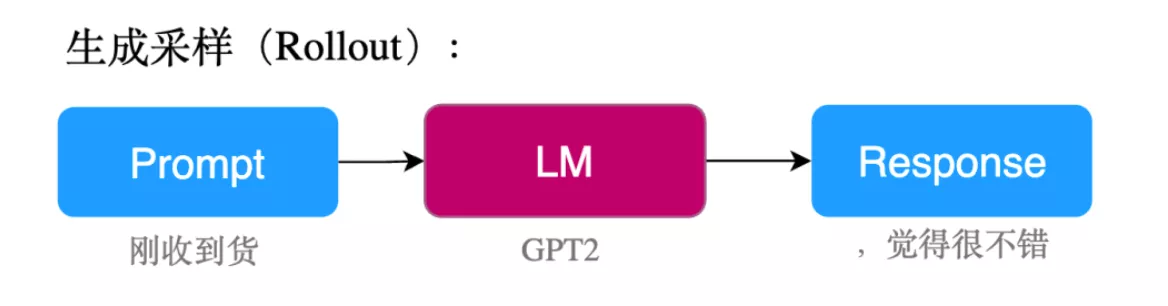
fig1.sft训练过程
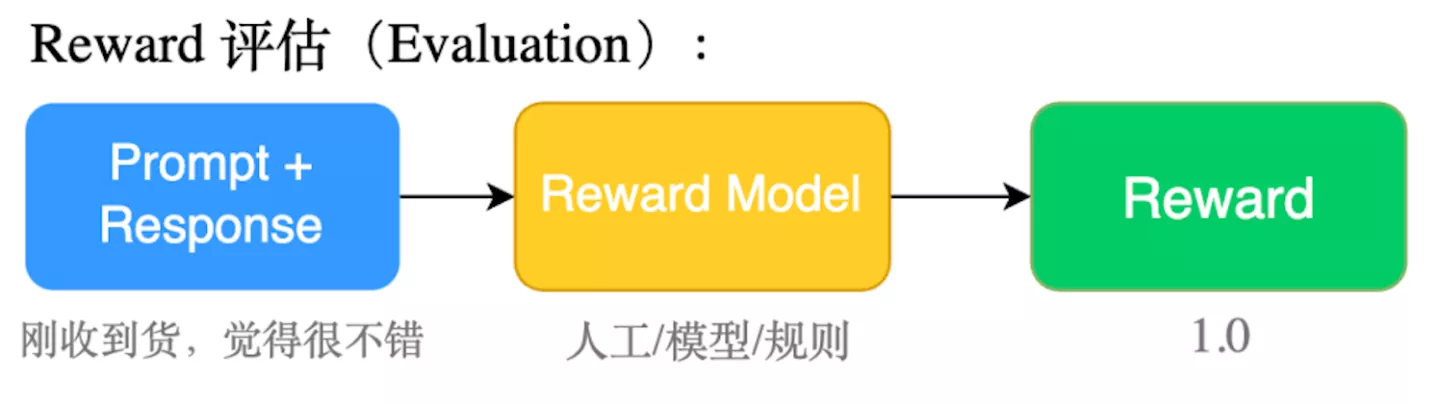
fig2.reward训练过程
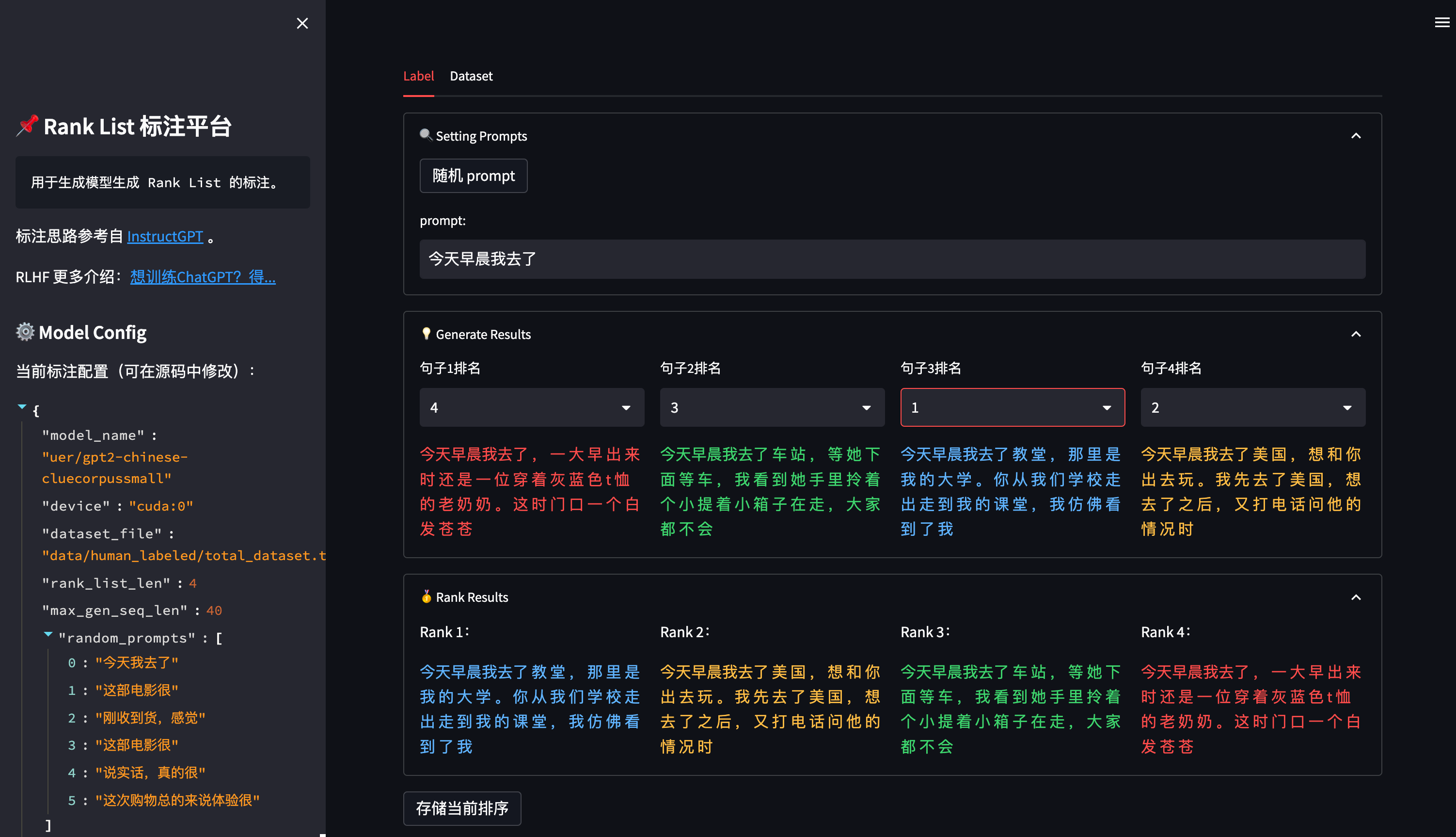
Rank数据打标
先训练一个基本的有文本生成能力的模型,可以选用GPT或者T5框架模型来做训练。
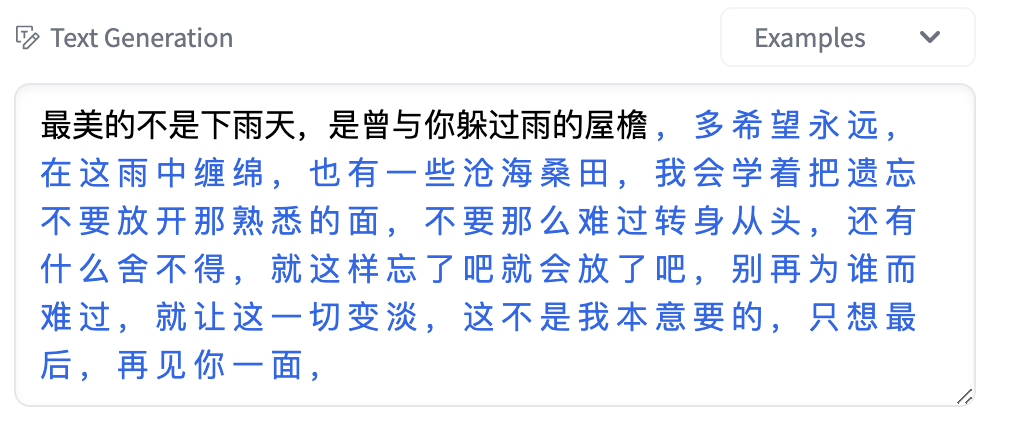
from transformers import BertTokenizer, GPT2LMHeadModel, TextGenerationPipeline
tokenizer = BertTokenizer.from_pretrained("uer/gpt2-chinese-lyric")
model = GPT2LMHeadModel.from_pretrained("uer/gpt2-chinese-lyric")
text_generator = TextGenerationPipeline(model, tokenizer)
text_generator("最美的不是下雨天,是曾与你躲过雨的屋檐", max_length=100, do_sample=True)数据样式:
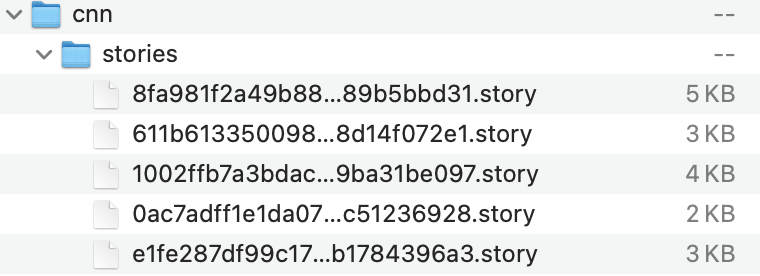
数据使用了deepmind整理的cnnstory部分数据:
原始数据样式如下:
(CNN)Syria is a Hell on Earth that is expanding in plain sight.

The death toll there has doubled in a year's time, if an opposition group is right.

Since civil war broke out there, 310,000 people have been killed, the Syrian Observatory for Human Rights said Thursday. A year earlier, SOHR's tally stood at 162,402. And the year before, the United Nations put the death toll at 70,000.

Violence has plunged well over half of all Syrians into such destitution that they are in dire need of survival aid, the United Nations says, as food rations are being cut for lack of donations.

Numbers alone can't convey the immeasurable anguish of millions, but maybe it can remind the rest of us of the magnitude of the world's currently greatest tragedy.

The number of years since perpetual bloodshed began, since dictator Bashar al-Assad's security forces fired on crowds of demonstrators and armed militant groups rose up against him in March 2011.

Percentage of the Syrian population killed. It would be like killing 3 to 4 million Americans. The range comes from the SOHR's death toll of 310,000 and a recent lower estimate by the U.N. of at least 220,000 dead.

The number of Syrians in need of immediate life-saving aid, according to the U.N.  That's the population of Moscow.

Syrians driven from their homes, the U.N. says. Imagine the entire Boston metropolitan area emptied out.

Syrians who have fled as refugees to neighboring countries, creating humanitarian and economic hardship across Syria's borders. Turkey has taken in 1.7 million, Lebanon 1.2 million, Jordan 625,000, and Iraq 245,000.

The reduction in the size of food rations the World Food Programme says it has been forced to make due to a lack of donations. That means people receiving aid will get only 60% of the daily nutrition they need.

@highlight

More people have been displaced than live in Moscow; more people lost their homes than live in greater Boston

@highlight

The WFP has cut food ration sizes by 30% for lack of donations
上面数据@highlight部分就是文章的摘要部分
#这个文件命名为until.py,
import random
import numpy as np
import torch
import torch.nn.functional as F
from transformers import GPT2Tokenizer
from tqdm import tnrange

#下面方法主要用来做gptencode
def add_special_tokens():
    """ Returns GPT2 tokenizer after adding separator and padding tokens """
    tokenizer = GPT2Tokenizer.from_pretrained('gpt2')
    special_tokens = {'pad_token':'<|pad|>','sep_token':'<|sep|>'}
    num_add_toks = tokenizer.add_special_tokens(special_tokens)
    return tokenizer

def set_seed(args):
    random.seed(args.seed)
    np.random.seed(args.seed)
    torch.manual_seed(args.seed)
    if args.n_gpu > 0:
        torch.cuda.manual_seed_all(args.seed)


def top_k_top_p_filtering(logits, top_k=0, top_p=0.0, filter_value=-float('Inf')):
    """ Filter a distribution of logits using top-k and/or nucleus (top-p) filtering
        Args:
            logits: logits distribution shape (vocabulary size)
            top_k > 0: keep only top k tokens with highest probability (top-k filtering).
            top_p > 0.0: keep the top tokens with cumulative probability >= top_p (nucleus filtering).
                Nucleus filtering is described in Holtzman et al. (http://arxiv.org/abs/1904.09751)
        From: https://gist.github.com/thomwolf/1a5a29f6962089e871b94cbd09daf317
    """
    assert logits.dim() == 1  # batch size 1 for now - could be updated for more but the code would be less clear
    top_k = min(top_k, logits.size(-1))  # Safety check
    if top_k > 0:
        # Remove all tokens with a probability less than the last token of the top-k
        indices_to_remove = logits < torch.topk(logits, top_k)[0][..., -1, None]
        logits[indices_to_remove] = filter_value

    if top_p > 0.0:
        sorted_logits, sorted_indices = torch.sort(logits, descending=True)
        cumulative_probs = torch.cumsum(F.softmax(sorted_logits, dim=-1), dim=-1)

        # Remove tokens with cumulative probability above the threshold
        sorted_indices_to_remove = cumulative_probs > top_p
        # Shift the indices to the right to keep also the first token above the threshold
        sorted_indices_to_remove[..., 1:] = sorted_indices_to_remove[..., :-1].clone()
        sorted_indices_to_remove[..., 0] = 0

        indices_to_remove = sorted_indices[sorted_indices_to_remove]
        logits[indices_to_remove] = filter_value
    return logits


def sample_seq(model, context, length, device, temperature=1, top_k=0, top_p=0.0):
    """ Generates a sequence of tokens
        Args:
            model: gpt/gpt2 model
            context: tokenized text using gpt/gpt2 tokenizer
            length: length of generated sequence.
            device: torch.device object.
            temperature >0: used to control the randomness of predictions by scaling the logits before applying softmax.
            top_k > 0: keep only top k tokens with highest probability (top-k filtering).
            top_p > 0.0: keep the top tokens with cumulative probability >= top_p (nucleus filtering).
    """

    context = torch.tensor(context, dtype=torch.long, device=device)
    context = context.unsqueeze(0)
    generated = context
    with torch.no_grad():
        for _ in tnrange(length):
            inputs = {'input_ids': generated}
            outputs = model(**inputs)  # Note: we could also use 'past' with GPT-2/Transfo-XL/XLNet (cached hidden-states)
            next_token_logits = outputs[0][0, -1, :] / temperature
            filtered_logits = top_k_top_p_filtering(next_token_logits, top_k=top_k, top_p=top_p)
            next_token = torch.multinomial(F.softmax(filtered_logits, dim=-1), num_samples=1)
            generated = torch.cat((generated, next_token.unsqueeze(0)), dim=1)
    return generated


def beam_search(model, context, length, beam_size, device, temperature=1):
    """ Generate sequence using beam search https://machinelearningmastery.com/beam-search-decoder-natural-language-processing/
        Args:
            model: gpt/gpt2 model
            context: tokenized text using gpt/gpt2 tokenizer
            length: length of generated sequence.
            beam_size: >=1 and <= total_no_of_tokens
            device: torch.device object.
            temperature >0: used to control the randomness of predictions by scaling the logits before applying softmax.
    """
    context = torch.tensor(context, dtype=torch.long, device=device)
    context = context.unsqueeze(0)
    with torch.no_grad():
        inputs = {'input_ids': context}
        outputs = model(**inputs)
        next_token_logits = outputs[0][0, -1, :] / temperature
        next_token_probs = F.softmax(next_token_logits)
        scores, indices = torch.topk(next_token_probs, beam_size)
        indices = indices.tolist()
        sequences = [[c] for c in indices]
        for _ in tnrange(length-1):
            logits = torch.zeros(beam_size*len(next_token_logits))
            for j in range(len(sequences)):
                new_generated = torch.cat((context,torch.tensor([sequences[j]], dtype=torch.long, device=device)),dim=1)
                inputs = {'input_ids': new_generated}
                outputs = model(**inputs)
                next_token_logits = outputs[0][0, -1, :] / temperature
                next_token_probs = F.softmax(next_token_logits)
                start, stop = j*len(next_token_logits), (j+1)*len(next_token_logits)
                logits[start:stop] = scores[j]*next_token_probs
            scores, new_logits_indices = torch.topk(logits,beam_size)
            logits = (new_logits_indices%50259).tolist()
            for j in range(len(sequences)):
                sequences[j] = sequences[j]+[logits[j]]
    return scores, sequences


def generate_beam_sample(data, tokenizer, model, num=1, length=100, beam_size=3, device=torch.device('cuda')):
    """ Generate summaries for "num" number of articles using beam search.
        Args:
            data = GPT21024Dataset object
            tokenizer = gpt/gpt2 tokenizer
            num = number of articles for which summaries has to be generated
    """
    for i in range(num):
        sample = data[i]
        idx = sample['sum_idx']
        context = sample['article'][:idx].tolist()
        summary = sample['article'][idx+1:][:100].tolist()
        scores, sequences = beam_search(model, context, length, beam_size, device)
        print('new_article', end='\n\n')
        print(tokenizer.decode(context[:-1]), end='\n\n')
        print('actual_summary', end='\n\n')
        print(tokenizer.decode(summary), end='\n\n')
        for i in range(len(sequences)):
            text = tokenizer.convert_ids_to_tokens(sequences[i],skip_special_tokens=True)
            text = tokenizer.convert_tokens_to_string(text)
            print("generated_summary-{} and Score is {}.".format(i+1, scores[i]), end='\n\n')
            print(text, end='\n\n')


def generate_sample(data, tokenizer, model, num=1, eval_step=False, length=100, temperature=1, top_k=10, top_p=0.5, device=torch.device('cuda')):
    """ Generate summaries for "num" number of articles.
        Args:
            data = GPT21024Dataset object
            tokenizer = gpt/gpt2 tokenizer
            model = gpt/gpt2 model
            num = number of articles for which summaries has to be generated
            eval_step = can be True/False, checks generating during evaluation or not
    """
    for i in range(num):
        sample = data[i]
        idx = sample['sum_idx']
        context = sample['article'][:idx].tolist()
        summary = sample['article'][idx+1:][:100].tolist()
        generated_text = sample_seq(model, context, length, device, temperature, top_k, top_p)
        generated_text = generated_text[0, len(context):].tolist()
        text = tokenizer.convert_ids_to_tokens(generated_text,skip_special_tokens=True)
        text = tokenizer.convert_tokens_to_string(text)
        if eval_step==False:
            print('new_article', end='\n\n')
            print(tokenizer.decode(context), end='\n\n')
            print("generated_summary", end='\n\n')
            print(text, end='\n\n')
            print('actual_summary', end='\n\n')
            print(tokenizer.decode(summary), end='\n\n')
        else:
            print(tokenizer.decode(context), end='\n\n')
            print("generated_summary", end='\n\n')
把数据转成一篇文章对应一个json文件格式,json包括article、abstract两部分,同时对文本做gptencode编码处理代码如下:
import json
import os
import pickle
import sys
import time

from utils import add_special_tokens

#tokenizer = GPT2Tokenizer.from_pretrained('gpt2')
dm_single_close_quote = '\u2019' # unicode
dm_double_close_quote = '\u201d'
# acceptable ways to end a sentence
END_TOKENS = ['.', '!', '?', '...', "'", "`", '"',
              dm_single_close_quote, dm_double_close_quote, ")"]


def fix_missing_period(line):
    """Adds a period to a line that is missing a period"""
    if "@highlight" in line:
        return line
    if line == "":
        return line
    if line[-1] in END_TOKENS:
        return line
    return line + " ."


def get_art_abs(lines):
    """ return as list of sentences"""

    # truncated trailing spaces, and normalize spaces
    lines = [' '.join(line.strip().split()) for line in lines]
    lines = [fix_missing_period(line) for line in lines]

    # Separate out article and abstract sentences
    article_lines = []
    highlights = []
    next_is_highlight = False
    for idx, line in enumerate(lines):
        if line == "":
            continue # empty line
        elif line.startswith("@highlight"):
            next_is_highlight = True
        elif next_is_highlight:
            highlights.append(line)
        else:
            article_lines.append(line)
    return ' '.join(article_lines), ' '.join(highlights)


def write_json(i,article, abstract):
    """ Saves a json file."""

    file = "./gpt2_1024_data/"+str(i)+".json"
    js_example = {}
    js_example['id'] = i
    js_example['article'] = article
    js_example['abstract'] = abstract
    with open(file, 'w') as f:
        json.dump(js_example, f, ensure_ascii=False)


def main(file_names, directory):
    """ Reads txt files, extract articles and summaries, tokenize them and save as json files
        Args:
            file_names: list, all the articles with total no of tokens less than 1024
            directory: string, directory where files in file_names is stored
    """
    tokenizer = add_special_tokens()
    print("Execution Started...")
    train_ids = []
    file_id_map = {}
    i = 0
    for file in file_names:
        file = os.path.join(os.getcwd(),directory,file)
        with open(file,'r',encoding='utf-8') as f:
            lines = f.read().split('\n\n')
        article, abstract = get_art_abs(lines)
        article, abstract = tokenizer.encode(article), tokenizer.encode(abstract)
        if len(article)>0 and len(abstract)>0 and (len(article)+len(abstract))<=1023:
            train_ids.append(i)
            write_json(i,article,abstract)
            file_id_map[i] = os.path.basename(file).replace('.story', '')
            i += 1
            if i%100==0:
                print(i, " files written")


    x,y = int(len(train_ids)*0.8), int(len(train_ids)*0.9)
    valid_ids = train_ids[x:y]
    test_ids = train_ids[y:]
    train_ids = train_ids[:x]
    with open("ids.json",'w') as f:
        js = {}
        js['train_ids'] = train_ids
        js['valid_ids'] = valid_ids
        js['test_ids'] = test_ids
        json.dump(js,f)

    # file_id_map maps the json file ids to actual cnn/dm file names ending with ".story"
    print("saving file_id_map...")
    with open("file_id_map.pickle", 'wb') as f:
        pickle.dump(file_id_map,f)
    print("file_id_map saved.")


if __name__ == '__main__':
    start = time.time()
    with open(sys.argv[1],'rb') as f:
        file_sizes = pickle.load(f)
    file_names = [file for file,size in file_sizes.items() if size<=1023] #only consider files with total no of tokens less than 1024
    if sys.argv[1].startswith("cnn"):
        directory = "cnn_stories_tokenized"
        os.chdir('/CNN/')
    else:
        directory = "dm_stories_tokenized"
        os.chdir('./DM/')
    main(file_names, directory)
    print("total_time_taken: ", (time.time()-start)/60, " minutes")
处理完的数据格式如下
{"id": 0, "article": [12, 43, 27912, 12, 8100, 532, 21095, 33, 12, 1377, 7214, 4621, 286, 262, 890, 5041, 351, 257, 474, 5978, 284, 534, 17627, 764, 775, 1965, 1312, 6207, 3816, 284, 2648, 5205, 286, 511, 4004, 7505, 3952, 5636, 2171, 764], "abstract": [9787, 503, 8100, 13, 785, 7183, 705, 7505, 3952, 5205, 764, 1471, 19550, 287, 319, 262, 995, 705, 82, 27627, 6386, 1660, 19392, 764]}#这部分代码拷贝命名'dataset.py'
import os
import json
import numpy as np
import torch
from torch.utils.data import Dataset
from utils import add_special_tokens
class GPT21024Dataset(Dataset):
def __init__(self, root_dir, ids_file, mode='train',length=None):
self.root_dir = root_dir
self.tokenizer = add_special_tokens()
# with open(ids_file,'r') as f:
# if mode=='train':
# self.idxs = np.array(json.load(f)['train_ids'])
# elif mode=='valid':
# self.idxs = np.array(json.load(f)['valid_ids'])
# elif mode=='test':
# self.idxs = np.array(json.load(f)['test_ids'])
# self.idxs = self.idxs -min(self.idxs)
self.idxs = os.listdir(root_dir)
self.mode = mode
if len == None:
self.len = len(self.idxs)
else:
self.len = length
def __len__(self):
return self.len
def __getitem__(self,idx):
if self.mode=='valid':
idx = self.idxs[-idx]
elif self.mode=='test':
idx = self.idxs[-idx-self.len] # assuming valid and test set of same sizes
else:
idx = self.idxs[idx]
# file_name = os.path.join(self.root_dir,str(idx)+".json")
file_name = os.path.join(self.root_dir,str(idx))
with open(file_name,'r') as f:
data = json.load(f)
text = self.tokenizer.encode(self.tokenizer.pad_token)*1024
content = data['article'] + self.tokenizer.encode(self.tokenizer.sep_token) + data['abstract']
text[:len(content)] = content
text = torch.tensor(text)
sample = {'article': text, 'sum_idx': len(data['article'])}
return sample#训练部分代码
import argparse
from datetime import datetime
import os
import time
import numpy as np
from transformers import GPT2LMHeadModel,AdamW, WarmupLinearSchedule
from torch.utils.tensorboard import SummaryWriter
import torch
from torch.nn import CrossEntropyLoss
import torch.nn.functional as F
from torch.utils.data import DataLoader, RandomSampler, SequentialSampler
from tqdm import tnrange, tqdm_notebook
from dataset import GPT21024Dataset
from utils import add_special_tokens, generate_sample, set_seed
#please change default arguments if needed
parser = argparse.ArgumentParser()
parser.add_argument("--lr",default=5e-5, type=float, help="learning rate")
parser.add_argument("--seed",default=42, type=int, help="seed to replicate results")
parser.add_argument("--n_gpu",default=1, type=int, help="no of gpu available")
parser.add_argument("--gradient_accumulation_steps",default=2, type=int, help="gradient_accumulation_steps")
parser.add_argument("--batch_size",default=1, type=int, help="batch_size")
parser.add_argument("--num_workers",default=4, type=int, help="num of cpus available")
parser.add_argument("--device",default=torch.device('cpu'), help="torch.device object")
parser.add_argument("--num_train_epochs",default=1, type=int, help="no of epochs of training")
parser.add_argument("--output_dir",default='./output', type=str, help="path to save evaluation results")
parser.add_argument("--model_dir",default='./weights', type=str, help="path to save trained model")
parser.add_argument("--max_grad_norm",default=1.0, type=float, help="max gradient norm.")
parser.add_argument("--root_dir",default='./CNN/gpt2_1024_data', type=str, help="location of json dataset.")
parser.add_argument("--ids_file",default='./CNN/ids.json', type=str, help="location of train, valid and test file indexes")
args = parser.parse_args([])
print(args)
def train(args, model, tokenizer, train_dataset, valid_dataset, ignore_index):
""" Trains GPT2 model and logs necessary details.
Args:
args: dict that contains all the necessary information passed by user while training
model: finetuned gpt/gpt2 model
tokenizer: GPT/GPT2 tokenizer
train_dataset: GPT21024Dataset object for training data
ignore_index: token not considered in loss calculation
"""
writer = SummaryWriter('./output/logs')
train_sampler = RandomSampler(train_dataset)
train_dl = DataLoader(train_dataset,sampler=train_sampler,batch_size=args.batch_size,num_workers=args.num_workers)
loss_fct = CrossEntropyLoss(ignore_index=ignore_index) #ignores padding token for loss calculation
optimizer = AdamW(model.parameters(),lr=args.lr)
scheduler = WarmupLinearSchedule(optimizer,100,80000)
global_step = 0
tr_loss, logging_loss = 0.0, 0.0
model.zero_grad()
train_iterator = tnrange(int(args.num_train_epochs), desc="Epoch")
set_seed(args)
for _ in train_iterator:
epoch_iterator = tqdm_notebook(train_dl, desc="Training")
for step, batch in enumerate(epoch_iterator):
inputs, labels = batch['article'].to(args.device), batch['article'].to(args.device)
model.train()
logits = model(inputs)[0]
# only consider loss on reference summary just like seq2seq models
shift_logits = logits[..., batch['sum_idx']:-1, :].contiguous()
shift_labels = labels[..., batch['sum_idx']+1:].contiguous()
loss = loss_fct(shift_logits.view(-1, shift_logits.size(-1)), shift_labels.view(-1))
loss = loss/args.gradient_accumulation_steps
loss.backward()
torch.nn.utils.clip_grad_norm_(model.parameters(), args.max_grad_norm)
tr_loss += loss.item()
if (step + 1) % args.gradient_accumulation_steps == 0:
optimizer.step()
scheduler.step() # Update learning rate schedule
model.zero_grad()
global_step += 1
writer.add_scalar('lr', scheduler.get_lr()[0], global_step)
writer.add_scalar('loss', (tr_loss - logging_loss)/args.gradient_accumulation_steps, global_step)
logging_loss = tr_loss
print("loss:", loss.item(), end='\n\n')
if (step + 1)/args.gradient_accumulation_steps == 1.0:
print('After 1st update: ', end='\n\n')
generate_sample(valid_dataset, tokenizer, model, num=2, eval_step=False,device=args.device)
if (step + 1) % (10*args.gradient_accumulation_steps) == 0:
results = evaluate(args, model, valid_dataset, ignore_index, global_step)
for key, value in results.items():
writer.add_scalar('eval_{}'.format(key), value, global_step)
print('After', global_step+1,'updates: ', end='\n\n')
generate_sample(valid_dataset, tokenizer, model, num=2, eval_step=True,device=args.device)
# creating training and validation dataset object
train_data = GPT21024Dataset(args.root_dir,args.ids_file,mode='train',length=3000) #training on only 3000 datasets
valid_data = GPT21024Dataset(args.root_dir,args.ids_file,mode='valid',length=500) #validation on only 500 datasets
# load pretrained GPT2
tokenizer = add_special_tokens()
ignore_idx = tokenizer.pad_token_id
model = GPT2LMHeadModel.from_pretrained('gpt2')
model.resize_token_embeddings(len(tokenizer))
model.to(args.device)
#training the model
start = time.time()
train(args, model, tokenizer, train_data, valid_data, ignore_idx)
print('total time: ', (time.time()-start)/60, " minutes", end='\n\n')
print('Saving trained model...')
model_file = os.path.join(args.model_dir, 'model_data{}_trained_after_{}_epochs_only_sum_loss_ignr_pad.bin'.format(len(train_data),args.num_train_epochs))
config_file = os.path.join(args.model_dir, 'config_data{}_trained_after_{}_epochs_only_sum_loss_ignr_pad.json'.format(len(train_data),args.num_train_epochs))
torch.save(model.state_dict(), model_file)
model.config.to_json_file(config_file)import argparse
import os
from bs4 import BeautifulSoup
from googlesearch import search
import numpy as np
import requests
from transformers import GPT2Config, GPT2LMHeadModel
import torch
from tqdm import tnrange, tqdm_notebook
from dataset import GPT21024Dataset
from utils import add_special_tokens, beam_search, generate_beam_sample, generate_sample, sample_seq, set_seed, top_k_top_p_filtering
#please change default arguments if needed
parser = argparse.ArgumentParser()
parser.add_argument("--seed",default=42, type=int, help="seed to replicate results")
parser.add_argument("--num_workers",default=4, type=int, help="num of cpus available")
parser.add_argument("--device",default=torch.device('cuda'), help="torch.device object")
parser.add_argument("--output_dir",default='./output', type=str, help="path to save evaluation results")
parser.add_argument("--model_dir",default='./weights', type=str, help="path to save trained model")
parser.add_argument("--root_dir",default='./CNN/gpt2_1024_data', type=str, help="location of json dataset.")
parser.add_argument("--ids_file",default='./CNN/ids.json', type=str, help="location of train, valid and test file indexes")
args = parser.parse_args([])
print(args)
# using the same validation and training data as during training
tokenizer = add_special_tokens()
# train_data = GPT21024Dataset(args.root_dir,args.ids_file,mode='train',length=3000)
# valid_data = GPT21024Dataset(args.root_dir,args.ids_file,mode='valid',length=500)
test_data = GPT21024Dataset(args.root_dir,args.ids_file,mode='test',length=500)
# model_file and config_file are files used to load finetuned model, change these name as per your file names
# model_file = os.path.join(args.model_dir, 'model_data{}_trained_after_{}_epochs_only_sum_loss_ignr_pad.bin'.format(len(train_data),args.num_train_epochs))
# config_file = os.path.join(args.model_dir, 'config_data{}_trained_after_{}_epochs_only_sum_loss_ignr_pad.json'.format(len(train_data),args.num_train_epochs))
# path to model and config files
model_file = "345-model_O0_data3000_trained_after_5_epochs_only_sum_loss_ignr_pad.bin"
config_file = "345-config_O0_data3000_trained_after_5_epochs_only_sum_loss_ignr_pad.json"
config = GPT2Config.from_json_file(config_file)
model = GPT2LMHeadModel(config)
state_dict = torch.load(model_file)
model.load_state_dict(state_dict)
model.eval()
model.to(args.device)
generate_sample(test_data, tokenizer, model, num=2, length=100, temperature=1, top_k=10, top_p=0.5, device=args.device)生成结果:
HBox(children=(IntProgress(value=0), HTML(value='')))
new_article

Rome -LRB- CNN -RRB- -- A cruise ship of the Costa Cruises line is adrift off the coast of the Seychelles after a fire in its engine room, the Italian coast guard said Monday. The ship, the Allegra, is a sister of the Costa Concordia, which wrecked off the coast of Italy on January 13, killing at least 21 people. The fire left the Allegra without propulsion, although its communications equipment is intact, the authorities said. The Allegra's fire has been put out, and the passengers are all in good health, the authorities said. The Seychelles is sending a tug, and merchant ships in the area are steaming toward the Allegra, the coast guard said.

generated_summary

 The ship is carrying cargo from the Seychelles . The ship was carrying cargo from the Seychelles . The ship was carrying cargo from the Seychelles . The ship was carrying cargo from the Seychelles . The ship was carrying cargo from the Seychelles . The ship was carrying cargo from the Seychelles . The ship was carrying cargo from the Seychelles . The ship was carrying cargo from the Seychelles . The ship was carrying

actual_summary

An engine room fire leaves the Costa Allegra without propulsion, authorities say. Its sister ship, the Costa Concordia, shipwrecked last month, killing at least 21. <|pad|> <|pad|> <|pad|> <|pad|> <|pad|> <|pad|> <|pad|> <|pad|> <|pad|> <|pad|> <|pad|> <|pad|> <|pad|> <|pad|> <|pad|> <|pad|> <|pad|> <|pad|> <|pad|> <|pad|> <|pad|> <|pad|> <|pad|> <|pad|> <|pad|> <|pad|> <|pad|> <|pad|> <|pad|> <|pad|> <|pad|> <|pad|> <|pad|> <|pad|> <|pad|> <|pad|> <|pad|> <|pad|> <|pad|> <|pad|> <|pad|> <|pad|> <|pad|> <|pad|> <|pad|> <|pad|> <|pad|> <|pad|> <|pad|> <|pad|> <|pad|> <|pad|> <|pad|> <|pad|> <|pad|> <|pad|> <|pad|> <|pad|> <|pad|> <|pad|> <|pad|> <|pad|> <|pad|> <|pad|> <|pad|>代码链接:https://github.com/AigcLwq/miniChatgpt.git
下次迭代更新
使用带有Rails插件的vim,您可以创建一个迁移文件,然后一次性打开该文件吗?textmate也可以这样吗? 最佳答案 你可以使用rails.vim然后做类似的事情::Rgeneratemigratonadd_foo_to_bar插件将打开迁移生成的文件,这正是您想要的。我不能代表textmate。 关于ruby-使用VimRails,您可以创建一个新的迁移文件并一次性打开它吗?,我们在StackOverflow上找到一个类似的问题: https://sta
我需要从一个View访问多个模型。以前,我的links_controller仅用于提供以不同方式排序的链接资源。现在我想包括一个部分(我假设)显示按分数排序的顶级用户(@users=User.all.sort_by(&:score))我知道我可以将此代码插入每个链接操作并从View访问它,但这似乎不是“ruby方式”,我将需要在不久的将来访问更多模型。这可能会变得很脏,是否有针对这种情况的任何技术?注意事项:我认为我的应用程序正朝着单一格式和动态页面内容的方向发展,本质上是一个典型的网络应用程序。我知道before_filter但考虑到我希望应用程序进入的方向,这似乎很麻烦。最终从任何
我想要做的是有2个不同的Controller,client和test_client。客户端Controller已经构建,我想创建一个test_clientController,我可以使用它来玩弄客户端的UI并根据需要进行调整。我主要是想绕过我在客户端中内置的验证及其对加载数据的管理Controller的依赖。所以我希望test_clientController加载示例数据集,然后呈现客户端Controller的索引View,以便我可以调整客户端UI。就是这样。我在test_clients索引方法中试过这个:classTestClientdefindexrender:template=>
如果您尝试在Ruby中的nil对象上调用方法,则会出现NoMethodError异常并显示消息:"undefinedmethod‘...’fornil:NilClass"然而,有一个tryRails中的方法,如果它被发送到一个nil对象,它只返回nil:require'rubygems'require'active_support/all'nil.try(:nonexisting_method)#noNoMethodErrorexceptionanymore那么try如何在内部工作以防止该异常? 最佳答案 像Ruby中的所有其他对象
关闭。这个问题需要detailsorclarity.它目前不接受答案。想改进这个问题吗?通过editingthispost添加细节并澄清问题.关闭8年前。Improvethisquestion为什么SecureRandom.uuid创建一个唯一的字符串?SecureRandom.uuid#=>"35cb4e30-54e1-49f9-b5ce-4134799eb2c0"SecureRandom.uuid方法创建的字符串从不重复?
我有一个正在构建的应用程序,我需要一个模型来创建另一个模型的实例。我希望每辆车都有4个轮胎。汽车模型classCar轮胎模型classTire但是,在make_tires内部有一个错误,如果我为Tire尝试它,则没有用于创建或新建的activerecord方法。当我检查轮胎时,它没有这些方法。我该如何补救?错误是这样的:未定义的方法'create'forActiveRecord::AttributeMethods::Serialization::Tire::Module我测试了两个环境:测试和开发,它们都因相同的错误而失败。 最佳答案
我想在Ruby中创建一个用于开发目的的极其简单的Web服务器(不,不想使用现成的解决方案)。代码如下:#!/usr/bin/rubyrequire'socket'server=TCPServer.new('127.0.0.1',8080)whileconnection=server.acceptheaders=[]length=0whileline=connection.getsheaders想法是从命令行运行这个脚本,提供另一个脚本,它将在其标准输入上获取请求,并在其标准输出上返回完整的响应。到目前为止一切顺利,但事实证明这真的很脆弱,因为它在第二个请求上中断并出现错误:/usr/b
我想让一个yaml对象引用另一个,如下所示:intro:"Hello,dearuser."registration:$introThanksforregistering!new_message:$introYouhaveanewmessage!上面的语法只是它如何工作的一个例子(这也是它在thiscpanmodule中的工作方式。)我正在使用标准的rubyyaml解析器。这可能吗? 最佳答案 一些yaml对象确实引用了其他对象:irb>require'yaml'#=>trueirb>str="hello"#=>"hello"ir
我的问题的一个例子是体育游戏。一场体育比赛有两支球队,一支主队和一支客队。我的事件记录模型如下:classTeam"Team"has_one:away_team,:class_name=>"Team"end我希望能够通过游戏访问一个团队,例如:Game.find(1).home_team但我收到一个单元化常量错误:Game::team。谁能告诉我我做错了什么?谢谢, 最佳答案 如果Gamehas_one:team那么Rails假设您的teams表有一个game_id列。不过,您想要的是games表有一个team_id列,在这种情况下
我在一个静态网站上工作(因此没有真正的服务器支持),我想在另一个网站中包含一个小的细长片段,可能会向它传递一个变量。这可能吗?在rails中很容易,虽然是render方法,但我不知道如何在slim上做(显然load方法不适用于slim)。 最佳答案 Slim包含Include插件,允许在编译时直接在模板文件中包含其他文件:require'slim/include'includepartial_name文档可在此处获得:https://github.com/slim-template/slim/blob/master/doc/incl
