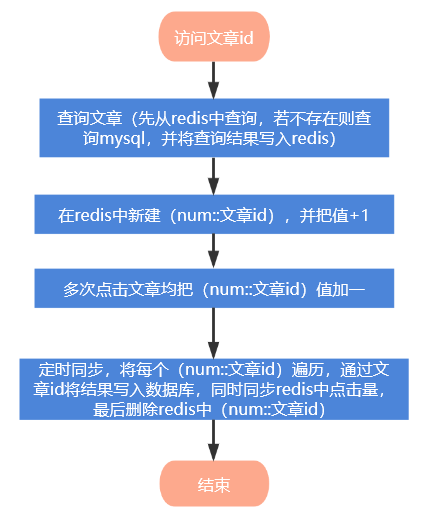
package com.intehel.demo.domain;

import lombok.AllArgsConstructor;
import lombok.Data;
import lombok.NoArgsConstructor;
import java.io.Serializable;

@Data
@NoArgsConstructor
@AllArgsConstructor
public class Article implements Serializable {
    private Integer id;
    private Integer num;
}package com.intehel.demo.mapper;
import com.intehel.demo.domain.Article;
import org.apache.ibatis.annotations.*;
import org.springframework.stereotype.Repository;
@Repository
@Mapper
public interface ArticleMapper {
Article findArticleById(Long id);
Long updateArticle(@Param("lviews") Long lviews, @Param("lid") Long lid);
}<?xml version="1.0" encoding="UTF-8" ?>
<!DOCTYPE mapper PUBLIC "-//mybatis.org//DTD Mapper 3.0//EN" "http://mybatis.org/dtd/mybatis-3-mapper.dtd" >
<mapper namespace="com.intehel.demo.mapper.ArticleMapper" >
<resultMap id="BaseResultMap" type="com.intehel.demo.domain.Article" >
<id column="id" property="id" jdbcType="INTEGER"/>
<result column="num" property="num" jdbcType="BIGINT"/>
</resultMap>
<!--根据参数名称查询参数配置表-->
<select id="findArticleById" resultMap="BaseResultMap" parameterType="java.lang.Long" >
select * from article where id = #{id}
</select>
<!--根据主键,不存在就新增,已存在就修改-->
<update id="updateArticle" parameterType="java.lang.Long">
update article set num = #{lviews} where id = #{lid}
</update>
</mapper>package com.intehel.demo.service;
import com.intehel.demo.domain.Article;
import com.intehel.demo.mapper.ArticleMapper;
import org.apache.ibatis.annotations.Param;
import org.springframework.beans.factory.annotation.Autowired;
import org.springframework.cache.annotation.CacheConfig;
import org.springframework.cache.annotation.CachePut;
import org.springframework.cache.annotation.Cacheable;
import org.springframework.stereotype.Service;
@Service
@CacheConfig(cacheNames = "articleService")
public class ArticleService {
@Autowired
private ArticleMapper articleMapper;
@Cacheable(key = "#id")
public Article findArticleById(Long id) {
return articleMapper.findArticleById(id);
}
@CachePut(key = "#lid")
public Article updateArticle(@Param("lviews") Long lviews, @Param("lid") Long lid) {
articleMapper.updateArticle(lviews,lid);
return articleMapper.findArticleById(lid);
}
}package com.intehel.demo.config;
import com.fasterxml.jackson.annotation.JsonAutoDetect;
import com.fasterxml.jackson.annotation.PropertyAccessor;
import com.fasterxml.jackson.databind.ObjectMapper;
import org.springframework.cache.CacheManager;
import org.springframework.cache.annotation.CachingConfigurerSupport;
import org.springframework.cache.interceptor.KeyGenerator;
import org.springframework.context.annotation.Bean;
import org.springframework.context.annotation.Configuration;
import org.springframework.data.redis.cache.RedisCacheConfiguration;
import org.springframework.data.redis.cache.RedisCacheManager;
import org.springframework.data.redis.connection.RedisConnectionFactory;
import org.springframework.data.redis.core.RedisTemplate;
import org.springframework.data.redis.core.StringRedisTemplate;
import org.springframework.data.redis.serializer.*;
import java.lang.reflect.Method;
import java.time.Duration;
@Configuration
public class RedisConfig extends CachingConfigurerSupport {
//在缓存对象集合中,缓存是以key-value形式保存的
//如果没有指定缓存的key,则Spring Boot 会使用SimpleKeyGenerator生成key
@Override
@Bean
public KeyGenerator keyGenerator() {
return new KeyGenerator() {
@Override
//定义缓存key的生成策略
public Object generate(Object target, Method method, Object... params) {
StringBuilder sb = new StringBuilder();
sb.append(target.getClass().getName());
sb.append(method.getName());
for (Object obj : params) {
sb.append(obj.toString());
}
return sb.toString();
}
};
}
@SuppressWarnings("rawtypes")
@Bean
//缓存管理器 2.X版本
public CacheManager cacheManager(RedisConnectionFactory connectionFactory) {
RedisSerializer<String> strSerializer = new StringRedisSerializer();
Jackson2JsonRedisSerializer jacksonSeial =
new Jackson2JsonRedisSerializer(Object.class);
// 解决查询缓存转换异常的问题
ObjectMapper om = new ObjectMapper();
om.setVisibility(PropertyAccessor.ALL, JsonAutoDetect.Visibility.ANY);
om.enableDefaultTyping(ObjectMapper.DefaultTyping.NON_FINAL);
jacksonSeial.setObjectMapper(om);
// 定制缓存数据序列化方式及时效
RedisCacheConfiguration config = RedisCacheConfiguration.defaultCacheConfig()
.entryTtl(Duration.ofDays(1))
.serializeKeysWith(RedisSerializationContext.SerializationPair
.fromSerializer(strSerializer))
.serializeValuesWith(RedisSerializationContext.SerializationPair
.fromSerializer(jacksonSeial))
.disableCachingNullValues();
RedisCacheManager cacheManager = RedisCacheManager
.builder(connectionFactory).cacheDefaults(config).build();
return cacheManager;
}
//缓存管理器 1.X版本
/* public CacheManager cacheManager(@SuppressWarnings("rawtypes")RedisTemplate redisTemplate){
return new RedisCacheManager(redisTemplate);
}*/
@Bean
//注册成Bean被Spring管理,如果没有这个Bean,则Redis可视化工具中的中文内容都会以二进制存储,不易检查
public RedisTemplate<String,Object> redisTemplate(RedisConnectionFactory factory){
RedisTemplate<String, Object> template = new RedisTemplate<>();
template.setConnectionFactory(factory);
// 创建JSON格式序列化对象,对缓存数据的key和value进行转换
Jackson2JsonRedisSerializer jackson2JsonRedisSerializer = new Jackson2JsonRedisSerializer(Object.class);
// 解决查询缓存转换异常的问题
ObjectMapper om = new ObjectMapper();
om.setVisibility(PropertyAccessor.ALL, JsonAutoDetect.Visibility.ANY);
om.enableDefaultTyping(ObjectMapper.DefaultTyping.NON_FINAL);
jackson2JsonRedisSerializer.setObjectMapper(om);
//设置redisTemplate模板API的序列化方式为json
template.setDefaultSerializer(jackson2JsonRedisSerializer);
return template;
}
@Bean
public StringRedisTemplate stringRedisTemplate(RedisConnectionFactory factory){
StringRedisTemplate stringRedisTemplate = new StringRedisTemplate();
stringRedisTemplate.setConnectionFactory(factory);
return stringRedisTemplate;
}
private RedisSerializer<?> keySerializer() {
return new StringRedisSerializer();
}
// 值使用jackson进行序列化
private RedisSerializer<?> valueSerializer() {
return new GenericJackson2JsonRedisSerializer();
// return new JdkSerializationRedisSerializer();
}
}package com.intehel.demo.controller;
import com.intehel.demo.domain.Article;
import com.intehel.demo.service.ArticleService;
import org.springframework.beans.factory.annotation.Autowired;
import org.springframework.data.redis.core.RedisTemplate;
import org.springframework.web.bind.annotation.PathVariable;
import org.springframework.web.bind.annotation.RequestMapping;
import org.springframework.web.bind.annotation.RestController;
@RestController
@RequestMapping("/article")
public class ArticleController {
@Autowired
private ArticleService articleService;
@Autowired
private RedisTemplate<String,Object> redisTemplate;
@RequestMapping("/{id}")
public Article testPathVariable(@PathVariable("id") Integer id){
Article article = articleService.findArticleById(Long.valueOf(id));
System.out.println(article);
if (article.getNum()>0){
if (redisTemplate.opsForValue().get("num::"+id)!=null){
redisTemplate.opsForValue().increment("num::"+id, 1);
}else {
redisTemplate.boundValueOps("num::"+id).increment(article.getNum()+1);
}
}else {
redisTemplate.boundValueOps("num::"+id).increment(1);
}
return article;
}
}package com.intehel.demo.config;
import com.intehel.demo.service.ArticleService;
import org.springframework.beans.factory.annotation.Autowired;
import org.springframework.data.redis.core.RedisTemplate;
import org.springframework.scheduling.annotation.Scheduled;
import org.springframework.stereotype.Component;
import javax.annotation.Resource;
import java.util.ArrayList;
import java.util.List;
import java.util.Set;
@Component
public class CountScheduledTasks {
@Autowired
private ArticleService articleService;
@Resource
private RedisTemplate<String,Object> redisTemplate;
@Scheduled(cron = "0/10 * * * * ?" )
public void syncPostViews(){
Long StartTime = System.nanoTime();
List dtolist = new ArrayList();
Set<String> keySet = redisTemplate.keys("num::*");
System.out.println(keySet);
for (String key : keySet) {
String view = redisTemplate.opsForValue().get(key).toString();
String sid = key.replaceAll("num::", "");
Long lid = Long.valueOf(sid);
Long lviews = Long.valueOf(view);
articleService.updateArticle(lviews,lid);
redisTemplate.delete(key);
}
}
}同时要在启动类中添加注解,开启redis缓存和定时任务:
@SpringBootApplication
@EnableCaching
@EnableScheduling
@MapperScan("com.intehel.demo")我有一个用户工厂。我希望默认情况下确认用户。但是鉴于unconfirmed特征,我不希望它们被确认。虽然我有一个基于实现细节而不是抽象的工作实现,但我想知道如何正确地做到这一点。factory:userdoafter(:create)do|user,evaluator|#unwantedimplementationdetailshereunlessFactoryGirl.factories[:user].defined_traits.map(&:name).include?(:unconfirmed)user.confirm!endendtrait:unconfirmeddoenden
我试过重新启动apache,缓存的页面仍然出现,所以一定有一个文件夹在某个地方。我没有“公共(public)/缓存”,那么我还应该查看哪些其他地方?是否有一个URL标志也可以触发此效果? 最佳答案 您需要触摸一个文件才能清除phusion,例如:touch/webapps/mycook/tmp/restart.txt参见docs 关于ruby-如何在Ubuntu中清除RubyPhusionPassenger的缓存?,我们在StackOverflow上找到一个类似的问题:
尝试在我的RoR应用程序中实现计数器缓存列时出现错误Unknownkey(s):counter_cache。我在这个问题中实现了模型关联:Modelassociationquestion这是我的迁移:classAddVideoVotesCountToVideos0Video.reset_column_informationVideo.find(:all).eachdo|p|p.update_attributes:videos_votes_count,p.video_votes.lengthendenddefself.downremove_column:videos,:video_vot
华为OD机试题本篇题目:明明的随机数题目输入描述输出描述:示例1输入输出说明代码编写思路最近更新的博客华为od2023|什么是华为od,od薪资待遇,od机试题清单华为OD机试真题大全,用Python解华为机试题|机试宝典【华为OD机试】全流程解析+经验分享,题型分享,防作弊指南华为o
C#实现简易绘图工具一.引言实验目的:通过制作窗体应用程序(C#画图软件),熟悉基本的窗体设计过程以及控件设计,事件处理等,熟悉使用C#的winform窗体进行绘图的基本步骤,对于面向对象编程有更加深刻的体会.Tutorial任务设计一个具有基本功能的画图软件**·包括简单的新建文件,保存,重新绘图等功能**·实现一些基本图形的绘制,包括铅笔和基本形状等,学习橡皮工具的创建**·设计一个合理舒适的UI界面**注明:你可能需要先了解一些关于winform窗体应用程序绘图的基本知识,以及关于GDI+类和结构的知识二.实验环境Windows系统下的visualstudio2017C#窗体应用程序三.
MIMO技术的优缺点优点通过下面三个增益来总体概括:阵列增益。阵列增益是指由于接收机通过对接收信号的相干合并而活得的平均SNR的提高。在发射机不知道信道信息的情况下,MIMO系统可以获得的阵列增益与接收天线数成正比复用增益。在采用空间复用方案的MIMO系统中,可以获得复用增益,即信道容量成倍增加。信道容量的增加与min(Nt,Nr)成正比分集增益。在采用空间分集方案的MIMO系统中,可以获得分集增益,即可靠性性能的改善。分集增益用独立衰落支路数来描述,即分集指数。在使用了空时编码的MIMO系统中,由于接收天线或发射天线之间的间距较远,可认为它们各自的大尺度衰落是相互独立的,因此分布式MIMO
遍历文件夹我们通常是使用递归进行操作,这种方式比较简单,也比较容易理解。本文为大家介绍另一种不使用递归的方式,由于没有使用递归,只用到了循环和集合,所以效率更高一些!一、使用递归遍历文件夹整体思路1、使用File封装初始目录,2、打印这个目录3、获取这个目录下所有的子文件和子目录的数组。4、遍历这个数组,取出每个File对象4-1、如果File是否是一个文件,打印4-2、否则就是一个目录,递归调用代码实现publicclassSearchFile{publicstaticvoidmain(String[]args){//初始目录Filedir=newFile("d:/Dev");Datebeg
通常,数组被实现为内存块,集合被实现为HashMap,有序集合被实现为跳跃列表。在Ruby中也是如此吗?我正在尝试从性能和内存占用方面评估Ruby中不同容器的使用情况 最佳答案 数组是Ruby核心库的一部分。每个Ruby实现都有自己的数组实现。Ruby语言规范只规定了Ruby数组的行为,并没有规定任何特定的实现策略。它甚至没有指定任何会强制或至少建议特定实现策略的性能约束。然而,大多数Rubyist对数组的性能特征有一些期望,这会迫使不符合它们的实现变得默默无闻,因为实际上没有人会使用它:插入、前置或追加以及删除元素的最坏情况步骤复
在ruby中,你可以这样做:classThingpublicdeff1puts"f1"endprivatedeff2puts"f2"endpublicdeff3puts"f3"endprivatedeff4puts"f4"endend现在f1和f3是公共(public)的,f2和f4是私有(private)的。内部发生了什么,允许您调用一个类方法,然后更改方法定义?我怎样才能实现相同的功能(表面上是创建我自己的java之类的注释)例如...classThingfundeff1puts"hey"endnotfundeff2puts"hey"endendfun和notfun将更改以下函数定
我目前有一个reddit克隆类型的网站。我正在尝试根据我的用户之前喜欢的帖子推荐帖子。看起来K最近邻或k均值是执行此操作的最佳方法。我似乎无法理解如何实际实现它。我看过一些数学公式(例如k表示维基百科页面),但它们对我来说并没有真正意义。有人可以推荐一些伪代码,或者可以查看的地方,以便我更好地了解如何执行此操作吗? 最佳答案 K最近邻(又名KNN)是一种分类算法。基本上,您采用包含N个项目的训练组并对它们进行分类。如何对它们进行分类完全取决于您的数据,以及您认为该数据的重要分类特征是什么。在您的示例中,这可能是帖子类别、谁发布了该项
