需要源码和数据集请点赞关注收藏后评论区留言私信~~~
下面用到的数据集基于IAM数据集的英文手写字体自动识别应用,IAM数据库主要包含手写的英文文本,可用于训练和测试手写文本识别以及执行作者的识别和验证,该数据库在ICDAR1999首次发布,并据此开发了基于隐马尔可夫模型的手写句子识别系统,并于ICPR2000发布,IAM包含不受约束的手写文本,以300dpi的分辨率扫描并保存为具有256级灰度的PNG图像,IAM手写数据库目前最新的版本为3.0,其主要结构如下
约700位作家贡献笔迹样本
超过1500页扫描文本
约6000个独立标记的句子
超过一万行独立标记的文本
超过十万个独立标记的空间
展示如下 有许多张手写照片

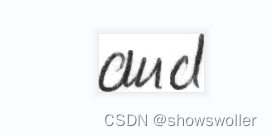
删除文件中备注说明以及错误结果,统计正确笔迹图形的数量,最后将整理后的数据进行随机无序化处理
接下来对数据进行分类 按照8:1:1的比例将样本数据集分为三类数据集,分别是训练数据集 验证数据集和测试数据集,针对训练数据集进行训练可以获得模型,而测试数据集主要用于测试模型的有效性
利用Tensorflow库的Keras包的StringLookup函数实现从字符到数字的映射 主要参数说明如下
max_tokens:单词大小的最大值
num_oov_indices:out of vocabulary的大小
mask_token:表示屏蔽输入的大小
oov_token:仅当invert为True时使用 OOV索引的返回值 默认为UNK
通过Conv2D函数实现二维卷积变换 主要参数说明如下
filters:整数值 代表输出空间的维度
kernel_size:一个整数或元组列表 指定卷积窗口的高度和宽度
strides:一个整数或元组列表 指定卷积沿高度和宽度的步幅
padding:输出图像的填充方式
activation:激活函数
读取部分手写样本的真实文本信息如下

训练结束后 得到训练模型 导入测试手写文本数据 进行手写笔迹预测 部分结果如下

观察预测结果可知,基于均值池化以及训练过程预警极值,大部分的英文字符能够得到准确的预测判定,训练的精度持续得到改善,损失值控制在比较合理的区间内,没有发生预测准确度连续多次无法改进的场景,模型稳定性较好
部分代码如下 需要全部代码请点赞关注收藏后评论区留言私信~~~
from tensorflow.keras.layers.experimental.preprocessing import StringLookup
from tensorflow import keras


import matplotlib.pyplot as plt
import tensorflow as tf
import numpy as np
import os
plt.rcParams['font.family'] = ['Microsoft YaHei']

np.random.seed(0)
tf.random.set_seed(0)


# ## 切分数据

# In[ ]:


corpus_read = open("data/words.txt", "r").readlines()
corpus = []
length_corpus=0
for word in corpus_read:
    if lit(" ")[1] == "ok"):
        corpus.append(word)
np.random.shuffle(corpus)
length_corpus=len(corpus)
print(length_corpus)
corpus[400:405]


# 划分数据,按照 80:10:10 比例分配给训练:有效:测试   数据

# In[ ]:


train_flag = int(0.8 * len(corpus))
test_flag = int(0.9 * len(corpus))

train_data = corpus[:train_flag]
validation_data = corpus[train_flag:test_flag]
test_data = corpus[test_flag:]

train_data_len=len(train_data)
validation_data_len=len(validation_data)
test_data_len=len(test_data)

print("训练样本大小:", train_data_len)
print("验证样本大小:", validation_data_len)
print("测试样本大小:",test_data_len )


# In[ ]:


image_direct = "data\images"


def retrieve_image_info(data):
    image_location = []
    sample = []
    for (i, corpus_row) in enumerate(data):
        corpus_strip = corpus_row.strip()
        corpus_strip = corpus_strip.split(" ")
        image_name = corpus_strip[0]
        leve1 = image_name.split("-")[0]
        leve2 = image_name.split("-")[1]
        image_location_detail = os.path.join(
            image_direct, leve1, leve1 + "-" + leve2, image_name + ".png"
        )
        if os.path.getsize(image_location_detail) >0 :
            image_location.append(image_location_detail)
            sample.append(corpus_row.split("\n")[0])
    print("手写图像路径:",image_location[0],"手写文本信息:",sample[0])

    return image_location, sample


train_image, train_tag = retrieve_image_info(train_data)
validation_image, validation_tag = retrieve_image_info(validation_data)
test_image, test_tag = retrieve_image_info(test_data)


# In[ ]:


# 查找训练数据词汇最大长度
train_tag_extract = []
vocab = set()
max_len = 0

for tag in train_tag:
    tag = tag.split(" ")[-1].strip()
    for i in tag:
        vocab.add(i)

    max_len = max(max_len, len(tag))
    train_tag_extract.append(tag)

print("最大长度: ", max_len)
print("单词大小: ", len(vocab))
print("单词内容: ", vocab)


train_tag_extract[40:45]


# In[ ]:


print(train_tag[50:54])
print(validation_tag[10:14])
print(test_tag[80:84])

def extract_tag_info(tags):
    extract_tag = []
    for tag in tags:
        tag = tag.split(" ")[-1].strip()
        extract_tag.append(tag)
    return extract_tag


train_tag_tune = extract_tag_info(train_tag)
validation_tag_tune = extract_tag_info(validation_tag)
test_tag_tune = extract_tag_info(test_tag)

print(train_tag_tune[50:54])
print(validation_tag_tune[10:14])
print(test_tag_tune[80:84])


# In[ ]:


AUTOTUNE = tf.data.AUTOTUNE

# 映射单词到数字
string_to_no = StringLookup(vocabulary=list(vocab),  invert=False)

# 映射数字到单词
no_map_string = StringLookup(
    vocabulary=string_to_no.get_vocabulary(),  invert=True)


# In[ ]:


def distortion_free_resize(image, img_size):
    w, h = img_size
    image = tf.image.resize(image, size=(h, w), preserve_aspect_ratio=True, antialias=False, name=None)

    # 计算填充区域大小
    pad_height = h - tf.shape(image)[0]
    pad_width = w - tf.shape(image)[1]


    if pad_height % 2 != 0:
        height = pad_height // 2
        pad_height_top = height + 1
        pad_height_bottom = height
    else:
        pad_height_top = pad_height_bottom = pad_height // 2

    if pad_width % 2 != 0:
        width = pad_width // 2
        pad_width_left = width + 1
        pad_width_right = width
    else:
        pad_width_left = pad_width_right = pad_width // 2

    image = tf.pad(
        image,
        paddings=[
            [pad_height_top, pad_height_bottom],
            [pad_width_left, pad_width_right],
            [0, 0],
        ],
    )

    image = tf.transpose(image, perm=[1, 0, 2])
    image = tf.image.flip_left_right(image)
    return image


# In[ ]:


batch_size = 64
padding_token = 99
image_width = 128
image_height = 32


def preprocess_image(image_path, img_size=(image_width, image_height)):
    image = tf.io.read_file(image_path)
    image = tf.image.decode_png(image, 1)
    image = distortion_free_resize(image, img_size)
    image = tf.cast(image, tf.float32) / 255.0
    return image


def vectorize_tag(tag):
    tag = string_to_no(tf.strings.unicode_split(tag, input_encoding="UTF-8"))
    length = tf.shape(tag)[0]
    pad_amount = max_len - length
    tag = tf.pad(tag, paddings=[[0, pad_amount]], constant_values=padding_token)
    return tag


def process_images_tags(image_path, tag):
    image = preprocess_image(image_path)
    tag = vectorize_tag(tag)
    return {"image": image, "tag": tag}


def prepare_dataset(image_paths, tags):
    dataset = tf.data.Dataset.from_tensor_slices((image_paths, tags)).map(
        process_images_tags, num_parallel_calls=AUTOTUNE
    )
    return dataset.batch(batch_size).cache().prefetch(AUTOTUNE)


# In[ ]:


train_final = prepare_dataset(train_image, train_tag_extract )
validation_final = prepare_dataset(validation_image, validation_tag_tune )
test_final = prepare_dataset(test_image, test_tag_tune )
print(train_final.take(1))
print(train_final)


# In[ ]:


plt.rcParams['font.family'] = ['Microsoft YaHei']

for data in train_final.take(1):
    images, tags = data["image"], data["tag"]

    _, ax = plt.subplots(4, 4, figsize=(15, 8))

    for i in range(16):
        img = images[i]
        img = tf.image.flip_left_right(img)
        img = tf.transpose(img, perm=[1, 0, 2])
        img = (img * 255.0).numpy().clip(0, 255).astype(np.uint8)
        img = img[:, :, 0]


        tag = tags[i]
        indices = tf.gather(tag, tf.where(tf.math.not_equal(tag, padding_token)))

        tag = tf.strings.reduce_join(no_map_string(indices))
        tag = tag.numpy().decode("utf-8")

        ax[i // 4, i % 4].imshow(img)
        ax[i // 4, i % 4].set_title(u"真实文本:%s"%tag)
        ax[i // 4, i % 4].axis("on")


plt.show()


# In[ ]:


class CTCLoss(keras.layers.Layer):

    def call(self, y_true, y_pred):
        batch_len = tf.cast(tf.shape(y_true)[0], dtype="int64")
        input_length = tf.cast(tf.shape(y_pred)[1], dtype="int64")
        tag_length = tf.cast(tf.shape(y_true)[1], dtype="int64")

        input_length = input_length * tf.ones(shape=(batch_len, 1), dtype="int64")
        tag_length = tag_length * tf.ones(shape=(batch_len, 1), dtype="int64")

        loss = keras.backend.ctc_batch_cost(y_true, y_pred, input_length, tag_length)
        self.add_loss(loss)

        return loss


def generate_model():
    # Inputs to the model
    input_img = keras.Input(shape=(image_width, image_height, 1), name="image")
    tags = keras.layers.Input(name="tag", shape=(None,))

    # First conv block.
    t = keras.layers.Conv2D(
        filters=32,
        kernel_size=(3, 3),
        activation="relu",
        kernel_initializer="he_normal",
        padding="same",
        name="ConvolutionLayer1")(input_img)
    t = keras.layers.AveragePooling2D((2, 2), name="AveragePooling_one")(t)

    # Second conv block.
    t = keras.layers.Conv2D(
        filters=64,
        kernel_size=(3, 3),
        activation="relu",
        kernel_initializer="he_normal",
        padding="same",
        name="ConvolutionLayer2")(t)
    t = keras.layers.AveragePooling2D((2, 2), name="AveragePooling_two")(t)


    #re_shape = (t,[(image_width // 4), -1])
    #tf.dtypes.cast(t, tf.int32)
    re_shape = ((image_width // 4), (image_height // 4) * 64)
    t = keras.layers.Reshape(target_shape=re_shape, name="reshape")(t)
    t = keras.layers.Dense(64, activation="relu", name="denseone",use_bias=False,
    kernel_initializer='glorot_uniform',
    bias_initializer='zeros')(t)
    t = keras.layers.Dropout(0.4)(t)

    # RNNs.
    t = keras.layers.Bidirectional(
        keras.layers.LSTM(128, return_sequences=True, dropout=0.4)
    )(t)

    t = keras.layers.Bidirectional(
        keras.layers.LSTM(64, return_sequences=True, dropout=0.4)
    )(t)


    t = keras.layers.Dense(
        len(string_to_no.get_vocabulary())+2, activation="softmax", name="densetwo"
    )(t)

    # Add CTC layer for calculating CTC loss at each step.
    output = CTCLoss(name="ctc_loss")(tags, t)

    # Define the model.
    model = keras.models.Model(
        inputs=[input_img, tags], outputs=output, name="handwriting"
    )
    # Optimizer.

    # Compile the model and return.
    model.compile(optimizer=keras.optimizers.Adam())


    return model


# Get the model.
model = generate_model()
model.summary()


# In[ ]:


validation_images = []
validation_tags = []

for batch in validation_final:
    validation_images.append(batch["image"])
    validation_tags.append(batch["tag"])


# In[ ]:


#epochs = 20

model = generate_model()

prediction_model = keras.models.Model(
    model.get_layer(name="image").input, model.get_layer(name="densetwo").output)
#edit_distance_callback = EarlyStoppingAtLoss()


epochs = 60
early_stopping_patience = 10
# Add early stopping
early_stopping = keras.callbacks.EarlyStopping(
    monitor="val_loss", patience=early_stopping_patience, restore_best_weights=True
)

# Train the model.
history = model.fit(
    train_final,
    validation_data=validation_final,
    epochs=60,callbacks=[early_stopping]
)


# ## Inference

# In[ ]:


plt.rcParams['font.family'] = ['Microsoft YaHei']
# A utility function to decode the output of the network.
def handwriting_prediction(pred):
    input_len = np.ones(pred.shape[0]) * pred.shape[1]
  = []
    for j in results:
        j = tf.gather(j, tf.where(tf.math.not_equal(j, -1)))
        j = tf.strings.reduce_join(no_map_string(j)).numpy().decode("utf-8")
        output_text.append(j)
    return output_text


#  Let's check results on some test samples.
for test in test_final.take(1):
    test_images = test["image"]
    _, ax = plt.subplots(4, 4, figsize=(15, 8))

    predit = prediction_model.predict(test_images)
    predit_text = handwriting_prediction(predit)

    for k in range(16):
        img = test_images[k]
        img = tf.image.flip_left_right(img)
        img = tf.transpose(img, perm=[1, 0, 2])
        img = (img * 255.0).numpy().clip(0, 255).astype(np.uint8)
        img = img[:, :, 0]

        title = f"预测结果: {predit_text[k]}"


# In[ ]:
创作不易 觉得有帮助请点赞关注收藏~~~
我主要使用Ruby来执行此操作,但到目前为止我的攻击计划如下:使用gemsrdf、rdf-rdfa和rdf-microdata或mida来解析给定任何URI的数据。我认为最好映射到像schema.org这样的统一模式,例如使用这个yaml文件,它试图描述数据词汇表和opengraph到schema.org之间的转换:#SchemaXtoschema.orgconversion#data-vocabularyDV:name:namestreet-address:streetAddressregion:addressRegionlocality:addressLocalityphoto:i
我有一个用户工厂。我希望默认情况下确认用户。但是鉴于unconfirmed特征,我不希望它们被确认。虽然我有一个基于实现细节而不是抽象的工作实现,但我想知道如何正确地做到这一点。factory:userdoafter(:create)do|user,evaluator|#unwantedimplementationdetailshereunlessFactoryGirl.factories[:user].defined_traits.map(&:name).include?(:unconfirmed)user.confirm!endendtrait:unconfirmeddoenden
有时我需要处理键/值数据。我不喜欢使用数组,因为它们在大小上没有限制(很容易不小心添加超过2个项目,而且您最终需要稍后验证大小)。此外,0和1的索引变成了魔数(MagicNumber),并且在传达含义方面做得很差(“当我说0时,我的意思是head...”)。散列也不合适,因为可能会不小心添加额外的条目。我写了下面的类来解决这个问题:classPairattr_accessor:head,:taildefinitialize(h,t)@head,@tail=h,tendend它工作得很好并且解决了问题,但我很想知道:Ruby标准库是否已经带有这样一个类? 最佳
我正在尝试使用Curbgem执行以下POST以解析云curl-XPOST\-H"X-Parse-Application-Id:PARSE_APP_ID"\-H"X-Parse-REST-API-Key:PARSE_API_KEY"\-H"Content-Type:image/jpeg"\--data-binary'@myPicture.jpg'\https://api.parse.com/1/files/pic.jpg用这个:curl=Curl::Easy.new("https://api.parse.com/1/files/lion.jpg")curl.multipart_form_
无论您是想搭建桌面端、WEB端或者移动端APP应用,HOOPSPlatform组件都可以为您提供弹性的3D集成架构,同时,由工业领域3D技术专家组成的HOOPS技术团队也能为您提供技术支持服务。如果您的客户期望有一种在多个平台(桌面/WEB/APP,而且某些客户端是“瘦”客户端)快速、方便地将数据接入到3D应用系统的解决方案,并且当访问数据时,在各个平台上的性能和用户体验保持一致,HOOPSPlatform将帮助您完成。利用HOOPSPlatform,您可以开发在任何环境下的3D基础应用架构。HOOPSPlatform可以帮您打造3D创新型产品,HOOPSSDK包含的技术有:快速且准确的CAD
华为OD机试题本篇题目:明明的随机数题目输入描述输出描述:示例1输入输出说明代码编写思路最近更新的博客华为od2023|什么是华为od,od薪资待遇,od机试题清单华为OD机试真题大全,用Python解华为机试题|机试宝典【华为OD机试】全流程解析+经验分享,题型分享,防作弊指南华为o
本教程将在Unity3D中混合Optitrack与数据手套的数据流,在人体运动的基础上,添加双手手指部分的运动。双手手背的角度仍由Optitrack提供,数据手套提供双手手指的角度。 01 客户端软件分别安装MotiveBody与MotionVenus并校准人体与数据手套。MotiveBodyMotionVenus数据手套使用、校准流程参照:https://gitee.com/foheart_1/foheart-h1-data-summary.git02 数据转发打开MotiveBody软件的Streaming,开始向Unity3D广播数据;MotionVenus中设置->选项选择Unit
文章目录一、概述简介原理模块二、配置Mysql使用版本环境要求1.操作系统2.mysql要求三、配置canal-server离线下载在线下载上传解压修改配置单机配置集群配置分库分表配置1.修改全局配置2.实例配置垂直分库水平分库3.修改group-instance.xml4.启动监听四、配置canal-adapter1修改启动配置2配置映射文件3启动ES数据同步查询所有订阅同步数据同步开关启动4.验证五、配置canal-admin一、概述简介canal是Alibaba旗下的一款开源项目,Java开发。基于数据库增量日志解析,提供增量数据订阅&消费。Git地址:https://github.co
C#实现简易绘图工具一.引言实验目的:通过制作窗体应用程序(C#画图软件),熟悉基本的窗体设计过程以及控件设计,事件处理等,熟悉使用C#的winform窗体进行绘图的基本步骤,对于面向对象编程有更加深刻的体会.Tutorial任务设计一个具有基本功能的画图软件**·包括简单的新建文件,保存,重新绘图等功能**·实现一些基本图形的绘制,包括铅笔和基本形状等,学习橡皮工具的创建**·设计一个合理舒适的UI界面**注明:你可能需要先了解一些关于winform窗体应用程序绘图的基本知识,以及关于GDI+类和结构的知识二.实验环境Windows系统下的visualstudio2017C#窗体应用程序三.
我正在尝试在Rails上安装ruby,到目前为止一切都已安装,但是当我尝试使用rakedb:create创建数据库时,我收到一个奇怪的错误:dyld:lazysymbolbindingfailed:Symbolnotfound:_mysql_get_client_infoReferencedfrom:/Library/Ruby/Gems/1.8/gems/mysql2-0.3.11/lib/mysql2/mysql2.bundleExpectedin:flatnamespacedyld:Symbolnotfound:_mysql_get_client_infoReferencedf
