目录
日常生活中,咱们注册某一个平台或者找回密码甚至是登录到系统的时候,一般都需要注册手机号,经过手机号来接收验证码,然后完成这些需求。但是对于程序员来说,或许我们更加感兴趣的是如何来实现它,但是一般这种经过三大运营商的操作,都是需要付费的,所以咱们今天来讲一种它的平替——使用QQ邮箱来发送和接收验证码。qq邮箱是咱们日常使用到的既方便又免费的通讯工具之一(方便是因为日常使用微信,一般会和QQ邮箱关联)。现在咱们来介绍一下它在SpringBoot项目中的具体应用。
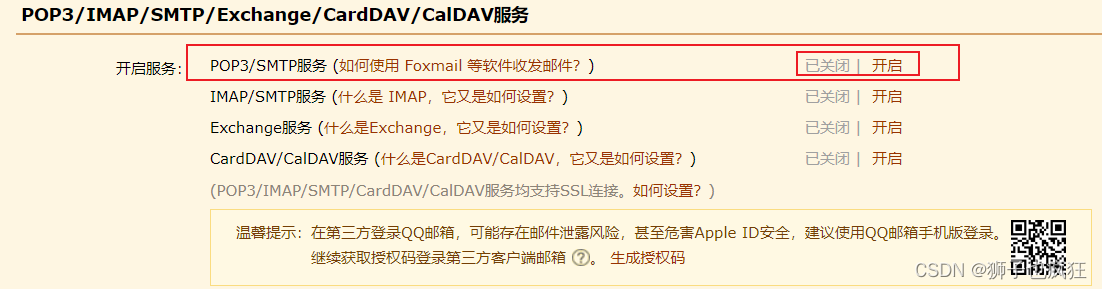
在系统中使用到的邮箱发送邮件属于第三方登录,需要登录QQ邮箱配置第三方登录。
登录QQ邮箱,点击设置,跳转后找到账户。


在账户那个页面,找到下面这一栏,点击开始就好啦。
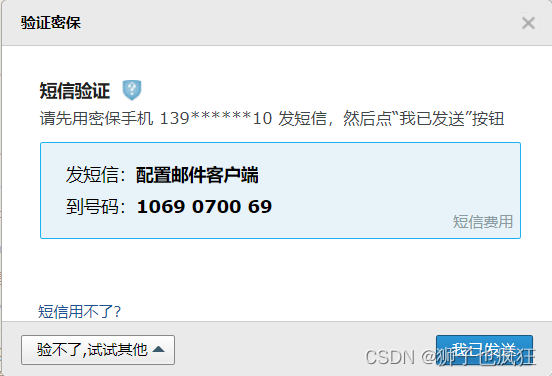
然后会让你绑定邮箱的手机验证一下:
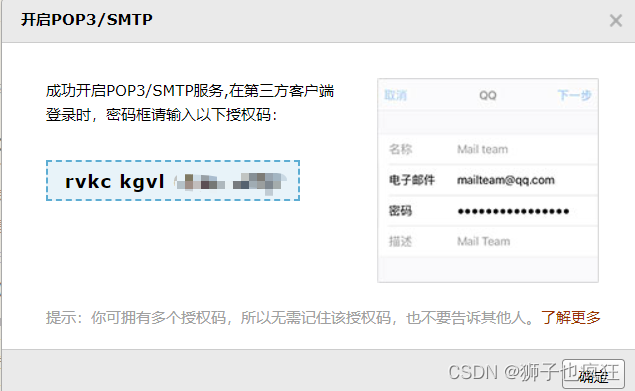
发送完信息,就会显示下面的授权码(一定要保存好,很重要),复制授权码备用。
回到项目,添加相关依赖,如下:
<!-- 发邮件 -->
<dependency>
  <groupId>org.springframework.boot</groupId>
  <artifactId>spring-boot-starter-mail</artifactId>
</dependency>
tips:
Spring提供了非常好用的JavaMailSender接口实现邮件发送。由于SpringBoot的Starter模块也为此提供了自动化配置,所以在引入了spring-boot-starter-mail依赖之后,会根据配置文件中的内容去创建JavaMailSender实例,因此我们可以直接在需要使用的地方直接@Autowired来引入邮件发送对象。
在这里配置好自己的邮箱和授权码,当然这里是自定义的,后面需要使用**@Value**获取。
# 发送邮件配置
mail:
  # 发件人地址
  user: 23734xxxxxx@qq.com
  # 发件人授权码
  password: pfemtwstpvkdabcd
完成前面的步骤后,我们正式写一个发送邮件的工具类(建议直接复制)。
import org.springframework.beans.factory.annotation.Value;
import org.springframework.stereotype.Component;

import javax.mail.*;
import javax.mail.internet.InternetAddress;
import javax.mail.internet.MimeMessage;
import java.util.Properties;

/**
 * 发邮件工具类
 */
@Component
public final class MailUtils {
    @Value("${mail.user}")
    private String USER; // 发件人邮箱地址
    @Value("${mail.password}")
    private String PASSWORD; // 如果是qq邮箱可以使户端授权码

    /**
     * 发送邮件
     * @param to 收件人邮箱
     * @param text 邮件正文
     * @param title 标题
     */
    public boolean sendMail(String to, String text, String title){
        try {
            final Properties props = new Properties();
            props.put("mail.smtp.auth", "true");
            props.put("mail.smtp.host", "smtp.qq.com");

            // 发件人的账号
            props.put("mail.user", USER);
            //发件人的密码
            props.put("mail.password", PASSWORD);

            // 构建授权信息,用于进行SMTP进行身份验证
            Authenticator authenticator = new Authenticator() {
                @Override
                protected PasswordAuthentication getPasswordAuthentication() {
                    // 用户名、密码
                    String userName = props.getProperty("mail.user");
                    String password = props.getProperty("mail.password");
                    return new PasswordAuthentication(userName, password);
                }
            };
            // 使用环境属性和授权信息,创建邮件会话
            Session mailSession = Session.getInstance(props, authenticator);
            // 创建邮件消息
            MimeMessage message = new MimeMessage(mailSession);
            // 设置发件人
            String username = props.getProperty("mail.user");
            InternetAddress form = new InternetAddress(username);
            message.setFrom(form);

            // 设置收件人
            InternetAddress toAddress = new InternetAddress(to);
            message.setRecipient(Message.RecipientType.TO, toAddress);

            // 设置邮件标题
            message.setSubject(title);

            // 设置邮件的内容体
            message.setContent(text, "text/html;charset=UTF-8");
            // 发送邮件
            Transport.send(message);
            return true;
        }catch (Exception e){
            e.printStackTrace();
        }
        return false;
    }

}
这个工具类使用了**@Component**注解将这个工具类放入IOC容器中,需要使用的时候方便取。这个工具类只有一个方法——sendMail(String to, String text, String title),就是用来发邮件的方法,一共三个参数,参数解释如上有很详细的解释,这里就不多言。
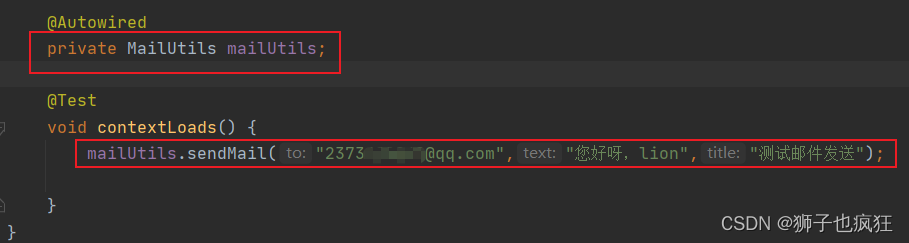
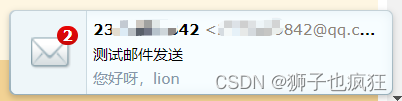
现在我们使用它来测试一下好不好使。
1.
2.
<dependency>
			<groupId>com.github.penggle</groupId>
			<artifactId>kaptcha</artifactId>
			<version>2.3.2</version>
		</dependency>
验证码的形式可以在下面改,这里是生成四位数字+字母的形式。
import com.google.code.kaptcha.Producer;
import com.google.code.kaptcha.impl.DefaultKaptcha;
import com.google.code.kaptcha.util.Config;
import org.springframework.context.annotation.Bean;
import org.springframework.context.annotation.Configuration;

import java.util.Properties;

/**
 * 生成验证码的配置
 */
@Configuration
public class KaptchaConfig {
    @Bean
    public Producer kaptchaProducer() {
        Properties properties = new Properties();
        //设置验证码的宽度
        properties.setProperty("kaptcha.image.width", "100");
        //设置宽度
        properties.setProperty("kaptcha.image.height", "40");
        //设置字体大小
        properties.setProperty("kaptcha.textproducer.font.size", "32");
        //设置字体颜色
        properties.setProperty("kaptcha.textproducer.font.color", "0,0,0");
        //限定验证码中的字符
        properties.setProperty("kaptcha.textproducer.char.string", "0123456789ABCDEFGHIJKLMNOPQRSTUVWXYZ");
        //设置验证码的长度
        properties.setProperty("kaptcha.textproducer.char.length", "4");
        //设置添加噪声与否
        properties.setProperty("kaptcha.noise.impl", "com.google.code.kaptcha.impl.NoNoise");
        //将配置装载到一个实例中
        DefaultKaptcha defaultKaptcha = new DefaultKaptcha();
        //将配置传入实例
        defaultKaptcha.setConfig(new Config(properties));
        return defaultKaptcha;
    }
}
	@Autowired
	private Producer checkCode;
	@Test
	void contextLoads() {
		String text = checkCode.createText();
		System.out.println(true);
	}

好了,今天的分享结束,咱们下期见。
给定这段代码defcreate@upgrades=User.update_all(["role=?","upgraded"],:id=>params[:upgrade])redirect_toadmin_upgrades_path,:notice=>"Successfullyupgradeduser."end我如何在该操作中实际验证它们是否已保存或未重定向到适当的页面和消息? 最佳答案 在Rails3中,update_all不返回任何有意义的信息,除了已更新的记录数(这可能取决于您的DBMS是否返回该信息)。http://ar.ru
我想安装一个带有一些身份验证的私有(private)Rubygem服务器。我希望能够使用公共(public)Ubuntu服务器托管内部gem。我读到了http://docs.rubygems.org/read/chapter/18.但是那个没有身份验证-如我所见。然后我读到了https://github.com/cwninja/geminabox.但是当我使用基本身份验证(他们在他们的Wiki中有)时,它会提示从我的服务器获取源。所以。如何制作带有身份验证的私有(private)Rubygem服务器?这是不可能的吗?谢谢。编辑:Geminabox问题。我尝试“捆绑”以安装新的gem..
我希望我的UserPrice模型的属性在它们为空或不验证数值时默认为0。这些属性是tax_rate、shipping_cost和price。classCreateUserPrices8,:scale=>2t.decimal:tax_rate,:precision=>8,:scale=>2t.decimal:shipping_cost,:precision=>8,:scale=>2endendend起初,我将所有3列的:default=>0放在表格中,但我不想要这样,因为它已经填充了字段,我想使用占位符。这是我的UserPrice模型:classUserPrice回答before_val
我有一个表单,其中有很多字段取自数组(而不是模型或对象)。我如何验证这些字段的存在?solve_problem_pathdo|f|%>... 最佳答案 创建一个简单的类来包装请求参数并使用ActiveModel::Validations。#definedsomewhere,atthesimplest:require'ostruct'classSolvetrue#youcouldevencheckthesolutionwithavalidatorvalidatedoerrors.add(:base,"WRONG!!!")unlesss
我有一些非常大的模型,我必须将它们迁移到最新版本的Rails。这些模型有相当多的验证(User有大约50个验证)。是否可以将所有这些验证移动到另一个文件中?说app/models/validations/user_validations.rb。如果可以,有人可以提供示例吗? 最佳答案 您可以为此使用关注点:#app/models/validations/user_validations.rbrequire'active_support/concern'moduleUserValidationsextendActiveSupport:
当我的预订模型通过rake任务在状态机上转换时,我试图找出如何跳过对ActiveRecord对象的特定实例的验证。我想在reservation.close时跳过所有验证!叫做。希望调用reservation.close!(:validate=>false)之类的东西。仅供引用,我们正在使用https://github.com/pluginaweek/state_machine用于状态机。这是我的预订模型的示例。classReservation["requested","negotiating","approved"])}state_machine:initial=>'requested
我有一个服务模型/表及其注册表。在表单中,我几乎拥有服务的所有字段,但我想在验证服务对象之前自动设置其中一些值。示例:--服务Controller#创建Action:defcreate@service=Service.new@service_form=ServiceFormObject.new(@service)@service_form.validate(params[:service_form_object])and@service_form.saverespond_with(@service_form,location:admin_services_path)end在验证@ser
这里有一个很好的答案解释了如何在Ruby中下载文件而不将其加载到内存中:https://stackoverflow.com/a/29743394/4852737require'open-uri'download=open('http://example.com/image.png')IO.copy_stream(download,'~/image.png')我如何验证下载文件的IO.copy_stream调用是否真的成功——这意味着下载的文件与我打算下载的文件完全相同,而不是下载一半的损坏文件?documentation说IO.copy_stream返回它复制的字节数,但是当我还没有下
rails中是否有任何规定允许站点的所有AJAXPOST请求在没有authenticity_token的情况下通过?我有一个调用Controller方法的JqueryPOSTajax调用,但我没有在其中放置任何真实性代码,但调用成功。我的ApplicationController确实有'request_forgery_protection'并且我已经改变了config.action_controller.consider_all_requests_local在我的environments/development.rb中为false我还搜索了我的代码以确保我没有重载ajaxSend来发送
我的工作要求我为某些测试自动生成电子邮件。我一直在四处寻找,但未能找到可以快速实现的合理解决方案。它需要在outlook而不是其他邮件服务器中,因为我们有一些奇怪的身份验证规则,我们需要保存草稿而不是仅仅发送邮件的选项。显然win32ole可以做到这一点,但我找不到任何相当简单的例子。 最佳答案 假设存储了Outlook凭据并且您设置为自动登录到Outlook,WIN32OLE可以很好地完成此操作:require'win32ole'outlook=WIN32OLE.new('Outlook.Application')message=
