spring(七):事务操作
本博主将用CSDN记录软件开发求学之路上亲身所得与所学的心得与知识,有兴趣的小伙伴可以关注博主!也许一个人独行,可以走的很快,但是一群人结伴而行,才能走的更远!
⭕ 事务是数据库操作最基本单元,逻辑上一组操作,要么都成功,如果有一个失败所有操作都失败
⭕ 典型场景:银行转账
- lucy 转账 100 元 给 mary
- lucy 少 100,mary 多 100
⭕原子性
⭕一致性
⭕隔离性
⭕持久性
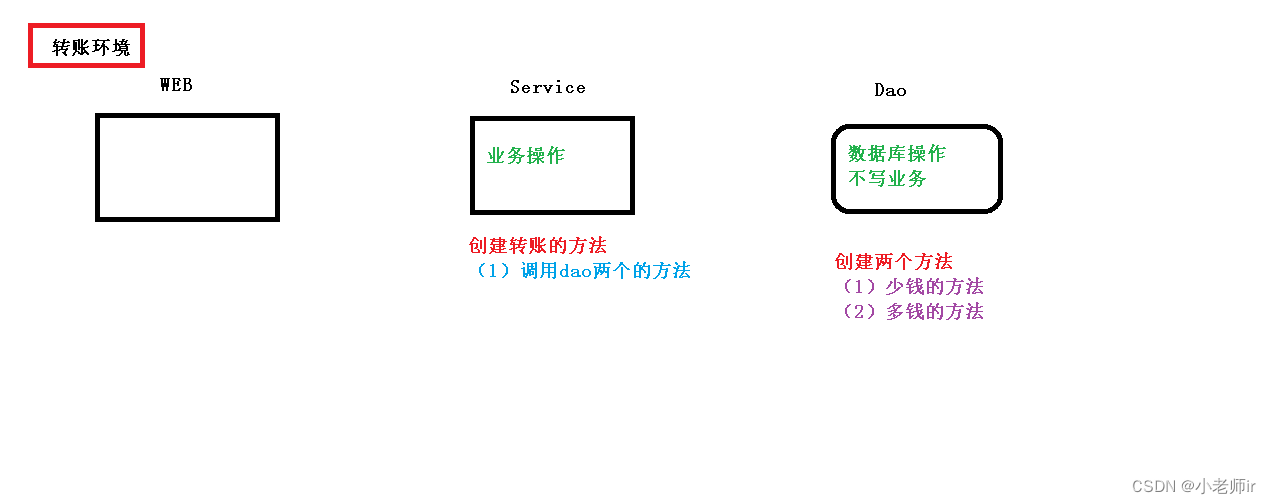
① 创建数据库表,添加记录
② 创建 service,搭建 dao,完成对象创建和注入关系
service 注入 dao,在 dao 注入 JdbcTemplate,在 JdbcTemplate 注入 DataSource
@Service
public class UserService {
 //注入 dao
 @Autowired
 private UserDao userDao; }
@Repository
public class UserDaoImpl implements UserDao {
 @Autowired
 private JdbcTemplate jdbcTemplate; }
③ 在 dao 创建两个方法:多钱和少钱的方法,在 service 创建方法(转账的方法)
@Repository
public class UserDaoImpl implements UserDao {
 @Autowired
 private JdbcTemplate jdbcTemplate;
 //lucy 转账 100 给 mary
 //少钱
 @Override
 public void reduceMoney() {
 String sql = "update t_account set money=money-? where username=?";
 jdbcTemplate.update(sql,100,"lucy");
 }
 //多钱
 @Override
 public void addMoney() {
 String sql = "update t_account set money=money+? where username=?";
 jdbcTemplate.update(sql,100,"mary");
 } }
@Service
public class UserService {
 //注入 dao
 @Autowired
 private UserDao userDao;
 //转账的方法
 public void accountMoney() {
 //lucy 少 100
 userDao.reduceMoney();
 //mary 多 100
 userDao.addMoney();
 } }
④ 上面代码,如果正常执行没有问题的,但是如果代码执行过程中出现异常,有问题
  public void accountMoney(int money){
        userDao.reduceMoney(money);
        int number = 10 / 0;
        userDao.addMoney(money);
    }
上面问题如何解决呢?
使用事务进行解决
⑤ 事务操作过程
//转账的方法
    public void accountMoney() {
//        try {
            //第一步 开启事务

            //第二步 进行业务操作
            //lucy少100
            userDao.reduceMoney();

            //模拟异常
            int i = 10/0;

            //mary多100
            userDao.addMoney();

            //第三步 没有发生异常,提交事务
//        }catch(Exception e) {
            //第四步 出现异常,事务回滚
//        }
    }
⭕ 事务添加到 JavaEE 三层结构里面 Service 层(业务逻辑层)
⭕ 在 Spring 进行事务管理操作 有两种方式:
编程式事务管理和声明式事务管理(使用)
⭕ 声明式事务管理
(1)基于注解方式(使用)
(2)基于 xml 配置文件方式
⭕ 在 Spring 进行声明式事务管理,底层使用 AOP 原理
⭕ Spring 事务管理 API
(1)提供一个接口,代表事务管理器,这个接口针对不同的框架提供不同的实现类
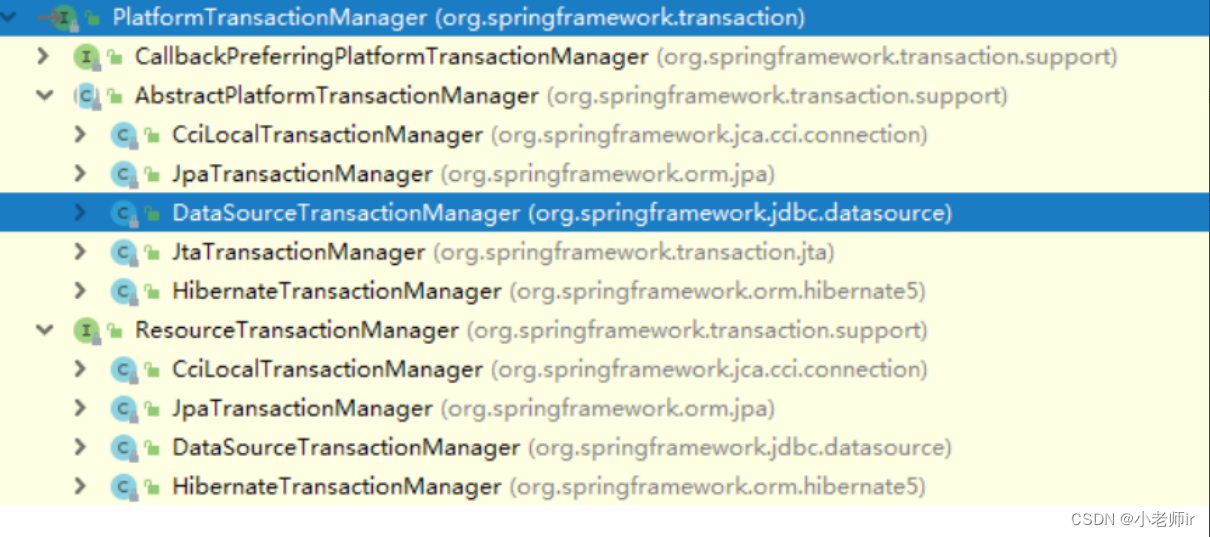
1、在 spring 配置文件配置事务管理器
<!--创建事务管理器-->
<bean id="transactionManager"
class="org.springframework.jdbc.datasource.DataSourceTransactionManager">
 <!--注入数据源-->
 <property name="dataSource" ref="dataSource"></property>
</bean>
2、在 spring 配置文件,开启事务注解
(1)在 spring 配置文件引入名称空间 tx
<beans xmlns="http://www.springframework.org/schema/beans"
 xmlns:xsi="http://www.w3.org/2001/XMLSchema-instance"
 xmlns:context="http://www.springframework.org/schema/context"
 xmlns:aop="http://www.springframework.org/schema/aop"
 xmlns:tx="http://www.springframework.org/schema/tx"
 xsi:schemaLocation="http://www.springframework.org/schema/beans
http://www.springframework.org/schema/beans/spring-beans.xsd
 http://www.springframework.org/schema/context
http://www.springframework.org/schema/context/spring-context.xsd
 http://www.springframework.org/schema/aop
http://www.springframework.org/schema/aop/spring-aop.xsd
 http://www.springframework.org/schema/tx
http://www.springframework.org/schema/tx/spring-tx.xsd">
(2)开启事务注解
<!--开启事务注解-->
<tx:annotation-driven transactionmanager="transactionManager"></tx:annotation-driven>
3、在 service 类上面(或者 service 类里面方法上面)添加事务注解
(1)@Transactional,这个注解添加到类上面,也可以添加方法上面
(2)如果把这个注解添加类上面,这个类里面所有的方法都添加事务
(3)如果把这个注解添加方法上面,为这个方法添加事务
@Service
@Transactional
public class UserService {
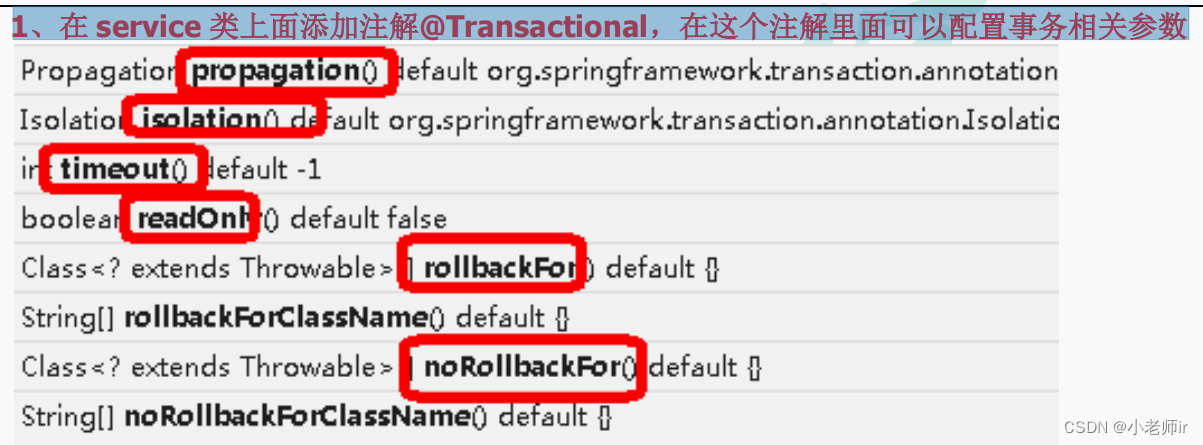
在 service 类上面添加注解@Transactional,在这个注解里面可以配置事务相关参数
(1)多事务方法直接进行调用,这个过程中事务 是如何进行管理的
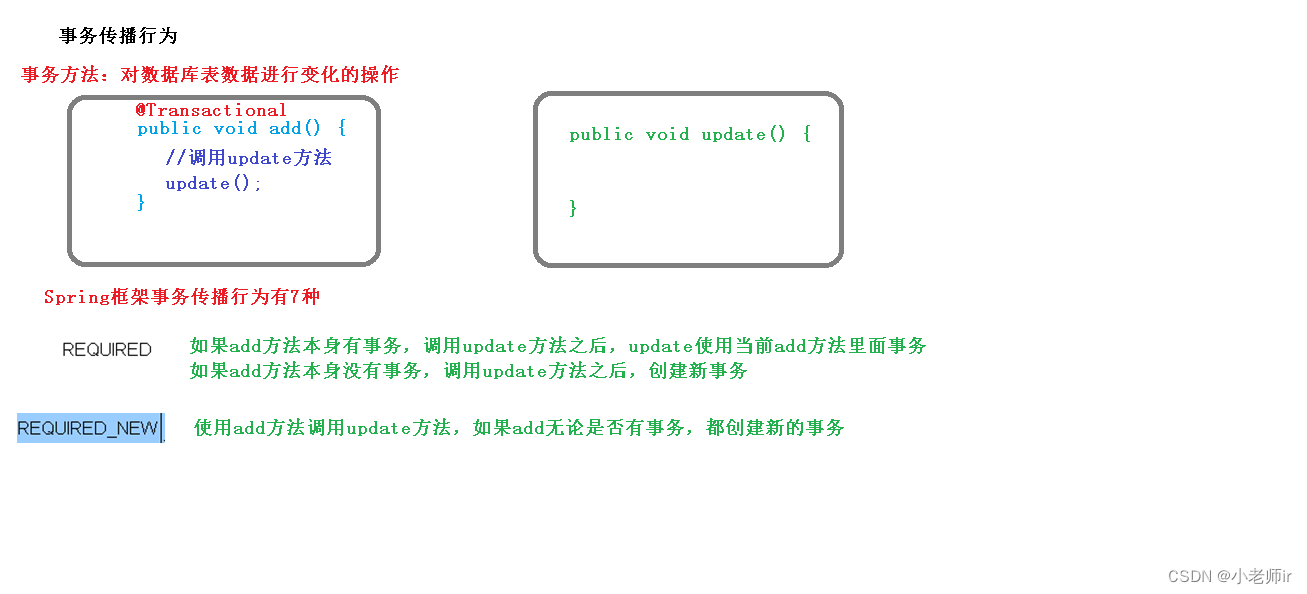
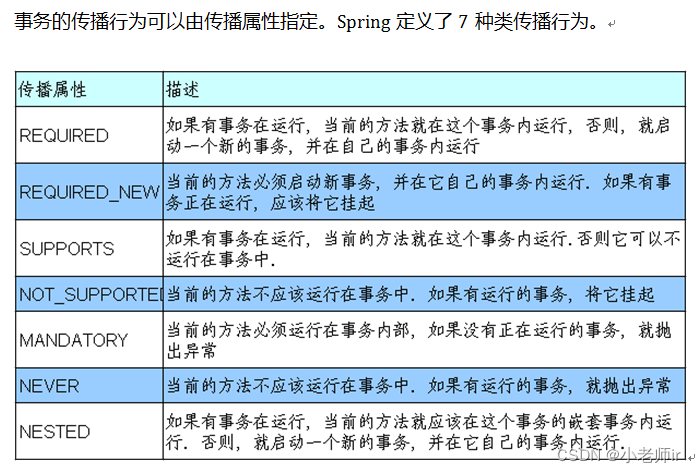
@Service
@Transactional(propagation = Propagation.REQUIRED)//默认也是Propagation.REQUIRED
public class UserService {
(1)事务有特性成为隔离性,多事务操作之间不会产生影响。不考虑隔离性产生很多问题
(2)有三个读问题:脏读、不可重复读、虚(幻)读
(3)脏读:一个未提交事务读取到另一个未提交事务的数据
(4)不可重复读:一个未提交事务读取到另一提交事务修改数据
(5)虚读:一个未提交事务读取到另一提交事务添加数据
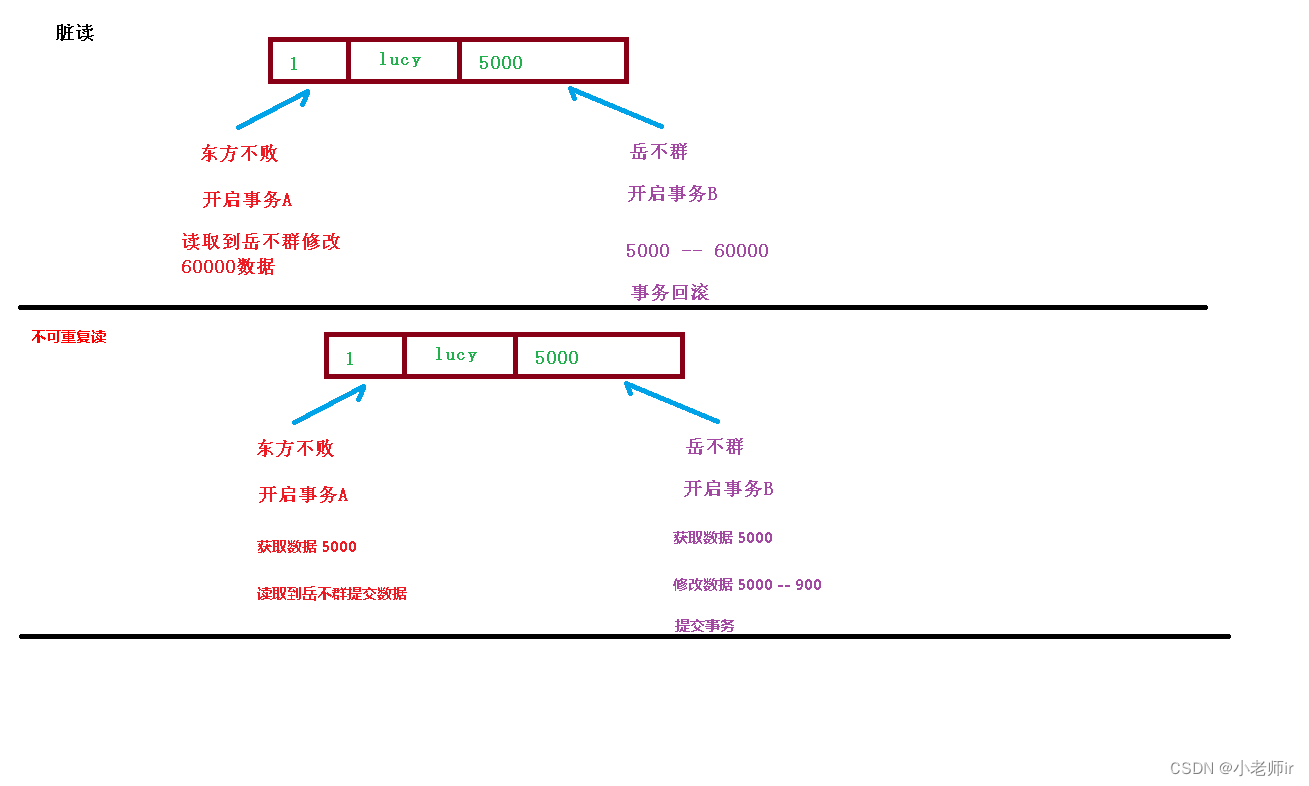
解决:通过设置事务隔离级别,解决读问题
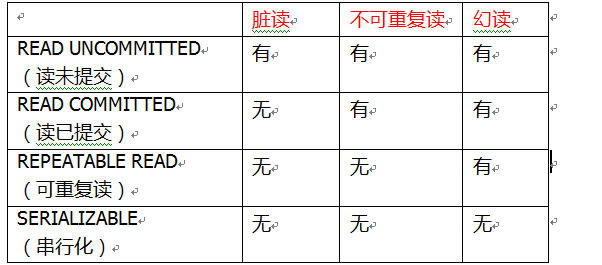
@Transactional(propagation = Propagation.REQUIRED,isolation = Isolation.REPEATABLE_READ)
public class UserService {
(1)事务需要在一定时间内进行提交,如果不提交进行回滚
(2)默认值是 -1 ,设置时间以秒单位进行计算
(1)读:查询操作,写:添加修改删除操作
(2)readOnly 默认值 false,表示可以查询,可以添加修改删除操作 (3)设置readOnly 值是 true,设置成 true 之后,只能查询
(1)设置出现哪些异常进行事务回滚
(1)设置出现哪些异常不进行事务回滚
@Transactional(readOnly = false,timeout = -1,propagation = Propagation.REQUIRED,isolation = Isolation.REPEATABLE_READ)
public class UserService {}
1、在 spring 配置文件中进行配置
第一步 配置事务管理器
第二步 配置通知
第三步 配置切入点和切面
<?xml version="1.0" encoding="UTF-8"?>
<beans xmlns="http://www.springframework.org/schema/beans"
       xmlns:xsi="http://www.w3.org/2001/XMLSchema-instance"
       xmlns:context="http://www.springframework.org/schema/context"
       xmlns:aop="http://www.springframework.org/schema/aop"
       xmlns:tx="http://www.springframework.org/schema/tx"
       xsi:schemaLocation="http://www.springframework.org/schema/beans http://www.springframework.org/schema/beans/spring-beans.xsd
                        http://www.springframework.org/schema/context http://www.springframework.org/schema/context/spring-context.xsd
                        http://www.springframework.org/schema/aop http://www.springframework.org/schema/aop/spring-aop.xsd
                        http://www.springframework.org/schema/tx http://www.springframework.org/schema/tx/spring-tx.xsd">

    <!-- 组件扫描 -->
    <context:component-scan base-package="com.atguigu"></context:component-scan>

    <!-- 数据库连接池 -->
    <bean id="dataSource" class="com.alibaba.druid.pool.DruidDataSource"
          destroy-method="close">
        <property name="url" value="jdbc:mysql:///user_db" />
        <property name="username" value="root" />
        <property name="password" value="root" />
        <property name="driverClassName" value="com.mysql.jdbc.Driver" />
    </bean>

    <!-- JdbcTemplate对象 -->
    <bean id="jdbcTemplate" class="org.springframework.jdbc.core.JdbcTemplate">
        <!--注入dataSource-->
        <property name="dataSource" ref="dataSource"></property>
    </bean>

    <!--1 创建事务管理器-->
    <bean id="transactionManager" class="org.springframework.jdbc.datasource.DataSourceTransactionManager">
        <!--注入数据源-->
        <property name="dataSource" ref="dataSource"></property>
    </bean>

    <!--2 配置通知-->
    <tx:advice id="txadvice">
        <!--配置事务参数-->
        <tx:attributes>
            <!--指定哪种规则的方法上面添加事务-->
            <tx:method name="accountMoney" propagation="REQUIRED"/>
            <!--<tx:method name="account*"/>-->
        </tx:attributes>
    </tx:advice>

    <!--3 配置切入点和切面-->
    <aop:config>
        <!--配置切入点-->
        <aop:pointcut id="pt" expression="execution(* com.atguigu.spring5.service.UserService.*(..))"/>
        <!--配置切面-->
        <aop:advisor advice-ref="txadvice" pointcut-ref="pt"/>
    </aop:config>
</beans>
1、创建配置类,使用配置类替代 xml 配置文件
@Configuration //配置类
@ComponentScan(basePackages = "com.atguigu") //组件扫描
@EnableTransactionManagement //开启事务
public class TxConfig {

    //创建数据库连接池
    @Bean
    public DruidDataSource getDruidDataSource() {
        DruidDataSource dataSource = new DruidDataSource();
        dataSource.setDriverClassName("com.mysql.jdbc.Driver");
        dataSource.setUrl("jdbc:mysql:///user_db");
        dataSource.setUsername("root");
        dataSource.setPassword("root");
        return dataSource;
    }

    //创建JdbcTemplate对象
    @Bean
    public JdbcTemplate getJdbcTemplate(DataSource dataSource) {
        //到ioc容器中根据类型找到dataSource
        JdbcTemplate jdbcTemplate = new JdbcTemplate();
        //注入dataSource
        jdbcTemplate.setDataSource(dataSource);
        return jdbcTemplate;
    }

    //创建事务管理器
    @Bean
    public DataSourceTransactionManager getDataSourceTransactionManager(DataSource dataSource) {
        DataSourceTransactionManager transactionManager = new DataSourceTransactionManager();
        transactionManager.setDataSource(dataSource);
        return transactionManager;
    }
}
测试:
    public void testAccount() {

        ApplicationContext context =
                new AnnotationConfigApplicationContext(TxConfig.class);
        UserService userService = context.getBean("userService", UserService.class);
        userService.accountMoney();
    }
我发现ActiveRecord::Base.transaction在复杂方法中非常有效。我想知道是否可以在如下事务中从AWSS3上传/删除文件:S3Object.transactiondo#writeintofiles#raiseanexceptionend引发异常后,每个操作都应在S3上回滚。S3Object这可能吗?? 最佳答案 虽然S3API具有批量删除功能,但它不支持事务,因为每个删除操作都可以独立于其他操作成功/失败。该API不提供任何批量上传功能(通过PUT或POST),因此每个上传操作都是通过一个独立的API调用完成的
我正在使用Ruby2.1.1和Rails4.1.0.rc1。当执行railsc时,它被锁定了。使用Ctrl-C停止,我得到以下错误日志:~/.rvm/gems/ruby-2.1.1/gems/spring-1.1.2/lib/spring/client/run.rb:47:in`gets':Interruptfrom~/.rvm/gems/ruby-2.1.1/gems/spring-1.1.2/lib/spring/client/run.rb:47:in`verify_server_version'from~/.rvm/gems/ruby-2.1.1/gems/spring-1.1.
我有一个涉及多台机器、消息队列和事务的问题。因此,例如用户点击网页,点击将消息发送到另一台机器,该机器将付款添加到用户的帐户。每秒可能有数千次点击。事务的所有方面都应该是容错的。我以前从未遇到过这样的事情,但一些阅读表明这是一个众所周知的问题。所以我的问题。我假设安全的方法是使用两阶段提交,但协议(protocol)是阻塞的,所以我不会获得所需的性能,我是否正确?我通常写Ruby,但似乎Redis之类的数据库和Rescue、RabbitMQ等消息队列系统对我的帮助不大——即使我实现某种两阶段提交,如果Redis崩溃,数据也会丢失,因为它本质上只是内存。所有这些让我开始关注erlang和
转自:spring.profiles.active和spring.profiles.include的使用及区别说明下文笔者讲述spring.profiles.active和spring.profiles.include的区别简介说明,如下所示我们都知道,在日常开发中,开发|测试|生产环境都拥有不同的配置信息如:jdbc地址、ip、端口等此时为了避免每次都修改全部信息,我们则可以采用以上的属性处理此类异常spring.profiles.active属性例:配置文件,可使用以下方式定义application-${profile}.properties开发环境配置文件:application-dev
我有一个使用SeleniumWebdriver和Nokogiri的Ruby应用程序。我想选择一个类,然后对于那个类对应的每个div,我想根据div的内容执行一个Action。例如,我正在解析以下页面:https://www.google.com/webhp?sourceid=chrome-instant&ion=1&espv=2&ie=UTF-8#q=puppies这是一个搜索结果页面,我正在寻找描述中包含“Adoption”一词的第一个结果。因此机器人应该寻找带有className:"result"的div,对于每个检查它的.descriptiondiv是否包含单词“adoption
我正在我的Rails项目中安装Grape以构建RESTfulAPI。现在一些端点的操作需要身份验证,而另一些则不需要身份验证。例如,我有users端点,看起来像这样:moduleBackendmoduleV1classUsers现在如您所见,除了password/forget之外的所有操作都需要用户登录/验证。创建一个新的端点也没有意义,比如passwords并且只是删除password/forget从逻辑上讲,这个端点应该与用户资源。问题是Grapebefore过滤器没有像except,only这样的选项,我可以在其中说对某些操作应用过滤器。您通常如何干净利落地处理这种情况?
在我做的一些网络开发中,我有多个操作开始,比如对外部API的GET请求,我希望它们同时开始,因为一个不依赖另一个的结果。我希望事情能够在后台运行。我找到了concurrent-rubylibrary这似乎运作良好。通过将其混合到您创建的类中,该类的方法具有在后台线程上运行的异步版本。这导致我编写如下代码,其中FirstAsyncWorker和SecondAsyncWorker是我编写的类,我在其中混合了Concurrent::Async模块,并编写了一个名为“work”的方法来发送HTTP请求:defindexop1_result=FirstAsyncWorker.new.async.
a=[3,4,7,8,3]b=[5,3,6,8,3]假设数组长度相同,是否有办法使用each或其他一些惯用方法从两个数组的每个元素中获取结果?不使用计数器?例如获取每个元素的乘积:[15,12,42,64,9](0..a.count-1).eachdo|i|太丑了...ruby1.9.3 最佳答案 使用Array.zip怎么样?:>>a=[3,4,7,8,3]=>[3,4,7,8,3]>>b=[5,3,6,8,3]=>[5,3,6,8,3]>>c=[]=>[]>>a.zip(b)do|i,j|c[[3,5],[4,3],[7,6],
我有一个非常简单的Controller来管理我的Rails应用程序中的静态页面:classPagesController我怎样才能让View模板返回它自己的名字,这样我就可以做这样的事情:#pricing.html.erb#-->"Pricing"感谢您的帮助。 最佳答案 4.3RoutingParametersTheparamshashwillalwayscontainthe:controllerand:actionkeys,butyoushouldusethemethodscontroller_nameandaction_nam
我已经开始使用mysql2gem。我试图弄清楚一些基本的事情——其中之一是如何明确地执行事务(对于批处理操作,比如多个INSERT/UPDATE查询)。在旧的ruby-mysql中,这是我的方法:client=Mysql.real_connect(...)inserts=["INSERTINTO...","UPDATE..WHEREid=..",#etc]client.autocommit(false)inserts.eachdo|ins|beginclient.query(ins)rescue#handleerrorsorabortentirelyendendclient.commi
