Elasticsearch的索引可以无限创建吗?
Elasticsearch 7.9.1
Elasticsearch启动采用默认配置
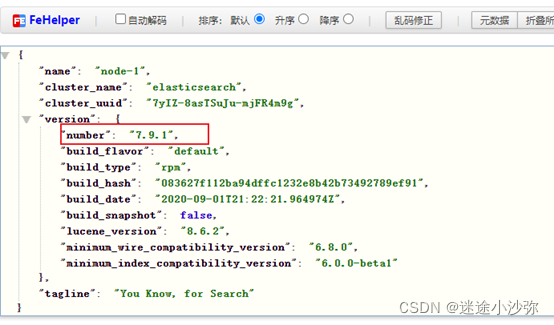
使用SpringBoot编写测试代码,对ES进行索引创建测试。
es:
  host: 127.0.0.1
  port: 9200
  scheme: http
单机测试,设置每个索引占用4个分片,0个副本,先创建1000个索引进行测试,是否能创建成功。
@SpringBootTest
@Slf4j
class ElasticsearchApplicationTests {

    @Autowired
    RestHighLevelClient restHighLevelClient;

    @Test
    public void test() {
        for (int i = 1; i <= 1000; i++) {
            createIndex("data_" + i);
            log.info("创建索引:data_" + i + ", 完成。");
        }
    }

    /**
     * 创建索引
     * @param idxName
     */
    public void createIndex(String idxName){
        try {
            if (!this.indexExist(idxName)) {
                log.error(" idxName={} 已经存在",idxName);
                return;
            }
            CreateIndexRequest request = new CreateIndexRequest(idxName);
            buildSetting(request);
//            request.mapping(idxSQL, XContentType.JSON);
//            request.settings() 手工指定Setting
            CreateIndexResponse res = restHighLevelClient.indices().create(request, RequestOptions.DEFAULT);
            if (!res.isAcknowledged()) {
                throw new RuntimeException("初始化失败");
            }
        } catch (Exception e) {
            e.printStackTrace();
            System.exit(0);
        }
    }

    /**
     * 判断索引是否存在
     * @param idxName
     * @return
     * @throws Exception
     */
    public boolean indexExist(String idxName) throws Exception {
        GetIndexRequest request = new GetIndexRequest(idxName);
        request.local(false);
        request.humanReadable(true);
        request.includeDefaults(false);
        request.indicesOptions(IndicesOptions.lenientExpandOpen());
        return restHighLevelClient.indices().exists(request, RequestOptions.DEFAULT);
    }

    /**
     * 索引设置4个分片,0个副本
     * @param request
     */
    public void buildSetting(CreateIndexRequest request){
        request.settings(Settings.builder().put("index.number_of_shards",4)
                .put("index.number_of_replicas",0));
    }

}
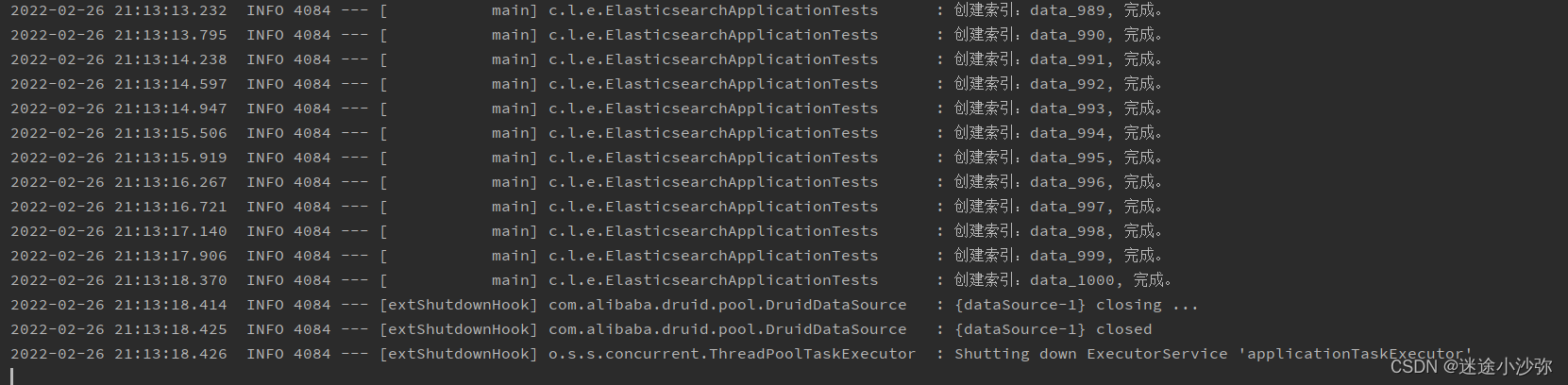
直接运行测试类,运行结果:

当创建至250个索引后报错,创建失败,也就是在创建第251个索引时失败,具体报错内容如下:
ElasticsearchStatusException[Elasticsearch exception [type=validation_exception, reason=Validation Failed: 1: this action would add [4] total shards, but this cluster currently has [1000]/[1000] maximum shards open;]]
	at org.elasticsearch.rest.BytesRestResponse.errorFromXContent(BytesRestResponse.java:177)
	at org.elasticsearch.client.RestHighLevelClient.parseEntity(RestHighLevelClient.java:1793)
	...
报错信息提示:创建新索引时,分片数不够用,导致创建失败。
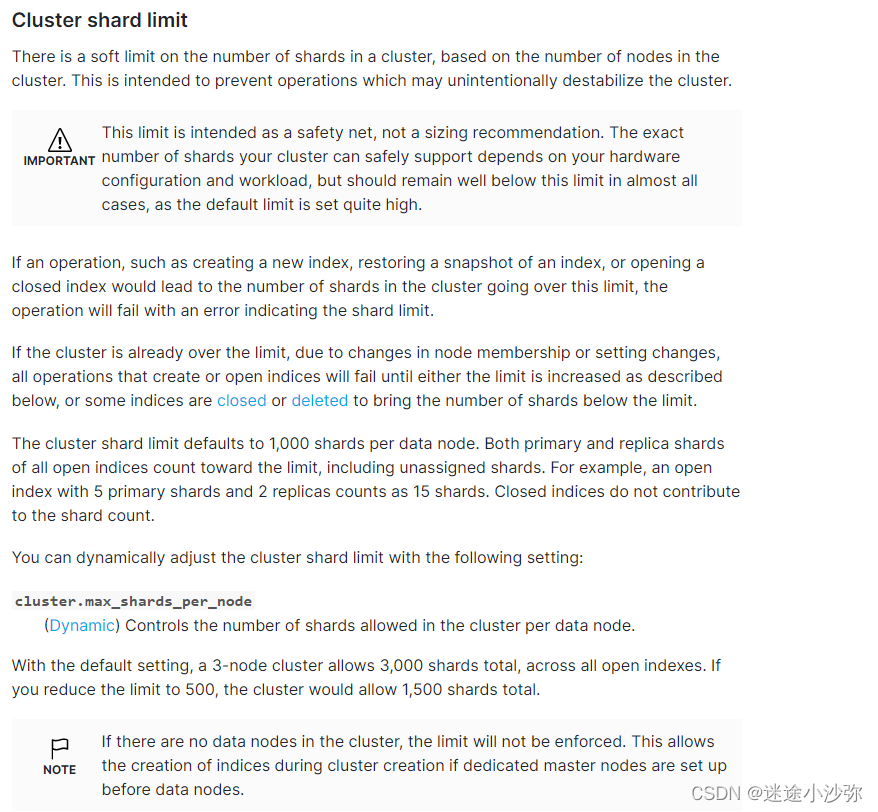
ES7官方默认设置的索引分片数是1000,当分片被占满后,创建新索引失败,示例中在创建完250个索引后1000个分片已经占用完(250*4=1000)。
修改elasticsearch.yml修改默认配置,根据实际需求修改分片限制数,cluster.max_shards_per_node: 10000,修改后重启ES。

再次运行测试类,从251开始创建索引,创建成功。

Region是HBase数据管理的基本单位,region有一点像关系型数据的分区。region中存储这用户的真实数据,而为了管理这些数据,HBase使用了RegionSever来管理region。Region的结构hbaseregion的大小设置默认情况下,每个Table起初只有一个Region,随着数据的不断写入,Region会自动进行拆分。刚拆分时,两个子Region都位于当前的RegionServer,但处于负载均衡的考虑,HMaster有可能会将某个Region转移给其他的RegionServer。RegionSplit时机:当1个region中的某个Store下所有StoreFile
我发现自己需要这个。假设cart是一个包含用户列表的模型。defindex_of_itemcart.users.each_with_indexdo|u,i|ifu==current_userreturniendend获取此类关联索引的更简单方法是什么? 最佳答案 indexArray上的方法与您的index_of_item方法相同,例如cart.users.index(current_user)返回数组中第一个对象的索引==给obj。如果未找到匹配项,则返回nil。 关于ruby-on-
因此,当我遵循MichaelHartl的RubyonRails教程时,我注意到在用户表中,我们为:email属性添加了一个唯一索引,以提高find的效率方法,因此它不会逐行搜索。到目前为止,我们一直在根据情况使用find_by_email和find_by_id进行搜索。然而,我们从未为:id属性设置索引。:id是否自动索引,因为它在默认情况下是唯一的并且本质上是顺序的?或者情况并非如此,我应该为:id搜索添加索引吗? 最佳答案 大多数数据库(包括sqlite,这是RoR中的默认数据库)会自动索引主键,对于RailsMigration
假设我有一个可枚举对象enum,现在我想获取第三个项目。我知道一种通用方法是转换成数组,然后使用索引访问,如:enum.to_a[2]但这种方式会创建一个临时数组,效率可能很低。现在我使用:enum.each_with_index{|v,i|breakvifi==2}但这非常丑陋和多余。执行此操作最有效的方法是什么? 最佳答案 你可以使用take剥离前三个元素,然后剥离last从take给你的数组中获取第三个元素:third=enum.take(3).last如果您根本不想生成任何数组,那么也许:#Ifenumisn'tanEnum
我在关注RyanbatesRailsCast的devise和omniauth(第235集-devise-and-omniauth-revised)。当我尝试使用Twitter登录时,标题中不断出现错误。defself.new_with_session(params,session)ifsession["devise.user_attributes"]new(session["devise.user_attributes"],without_protection:true)do|user|user.attributes=paramsuser.valid?end完整跟踪:C:/Ruby20
在我的场景中,Logstash收到的系统日志行的“时间戳”是UTC,我们在Elasticsearch输出中使用事件“时间戳”:output{elasticsearch{embedded=>falsehost=>localhostport=>9200protocol=>httpcluster=>'elasticsearch'index=>"syslog-%{+YYYY.MM.dd}"}}我的问题是,在UTC午夜,Logstash在外时区(GMT-4=>America/Montreal)结束前将日志发送到不同的索引,并且索引在20小时(晚上8点)之后没有日志,因为“时间戳”是UTC。我们已
不知何故,我似乎无法获得包含我的聚合的响应...使用curl它按预期工作:HBZUMB01$curl-XPOST"http://localhost:9200/contents/_search"-d'{"size":0,"aggs":{"sport_count":{"value_count":{"field":"dwid"}}}}'我收到回复:{"took":4,"timed_out":false,"_shards":{"total":5,"successful":5,"failed":0},"hits":{"total":90,"max_score":0.0,"hits":[]},"a
Ruby中如何“一般地”计算以下格式(有根、无根)的JSON对象的数量?一般来说,我的意思是元素可能不同(例如“标题”被称为其他东西)。没有根:{[{"title":"Post1","body":"Hello!"},{"title":"Post2","body":"Goodbye!"}]}根包裹:{"posts":[{"title":"Post1","body":"Hello!"},{"title":"Post2","body":"Goodbye!"}]} 最佳答案 首先,withoutroot代码不是有效的json格式。它将没有包
因此,在使用Sphinx时,搜索限制为1000个结果。但是,如果will_paginate生成的结果分页链接超过1000个,请不要考虑这一点,并提供指向超过1000/per_page的页面的链接。设置最大页数或类似内容的明显方法是什么?干杯。 最佳答案 我认为最好将参数:total_entries提交给方法paginate:@posts=Post.paginate(:page=>params[:page],:per_page=>30,:total_entries=>1000)will_paginate将仅为显示1000个结果所需的页
我想从特定索引开始遍历数组。我该怎么做?myj.eachdo|temp|...end 最佳答案 执行以下操作:your_array[your_index..-1].eachdo|temp|###end 关于ruby-从特定索引开始迭代数组,我们在StackOverflow上找到一个类似的问题: https://stackoverflow.com/questions/44151758/
