关系映射
在关系型数据库中,多表之间存在着三种关联关系,分别为一对一,一对多和多对多,如图
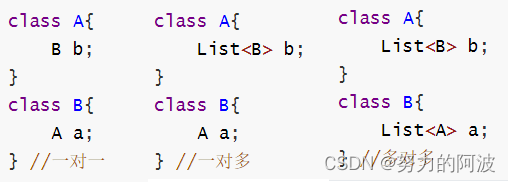
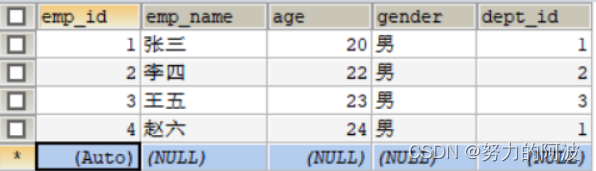
创建t_emp表
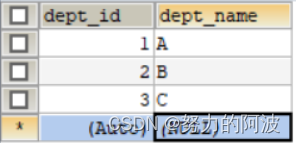
t_dept表
实体类Dept
package com.atguigu.mybatis.pojo;

import java.util.List;

public class Dept {

    private Integer deptId;

    private String deptName;

    private List<Emp> emps;

    public Dept() {
    }

    public Dept(Integer deptId, String deptName) {
        this.deptId = deptId;
        this.deptName = deptName;
    }

    public Integer getDeptId() {
        return deptId;
    }

    public void setDeptId(Integer deptId) {
        this.deptId = deptId;
    }

    public String getDeptName() {
        return deptName;
    }

    public void setDeptName(String deptName) {
        this.deptName = deptName;
    }

    public List<Emp> getEmps() {
        return emps;
    }

    public void setEmps(List<Emp> emps) {
        this.emps = emps;
    }

    @Override
    public String toString() {
        return "Dept{" +
                "deptId=" + deptId +
                ", deptName='" + deptName + '\'' +
                ", emps=" + emps +
                '}';
    }
}
实体类Emp
package com.atguigu.mybatis.pojo;

public class Emp {

    private Integer empId;

    private String empName;

    private Integer age;

    private String gender;

    private Dept dept;

    public Emp() {
    }

    public Emp(Integer empId, String empName, Integer age, String gender) {
        this.empId = empId;
        this.empName = empName;
        this.age = age;
        this.gender = gender;
    }

    public Integer getEmpId() {
        return empId;
    }

    public void setEmpId(Integer empId) {
        this.empId = empId;
    }

    public String getEmpName() {
        return empName;
    }

    public void setEmpName(String empName) {
        this.empName = empName;
    }

    public Integer getAge() {
        return age;
    }

    public void setAge(Integer age) {
        this.age = age;
    }

    public String getGender() {
        return gender;
    }

    public void setGender(String gender) {
        this.gender = gender;
    }

    @Override
    public String toString() {
        return "Emp{" +
                "empId=" + empId +
                ", empName='" + empName + '\'' +
                ", age=" + age +
                ", gender='" + gender + '\'' +
                ", dept=" + dept +
                '}';
    }

    public Dept getDept() {
        return dept;
    }

    public void setDept(Dept dept) {
        this.dept = dept;
    }

}
SQL语句

接口:
public interface EmpMapper {
    Emp getEmpById(@Param("empId") Integer empId);
}
测试方法:
   public void test(){
        SqlSessionUtils sqlSessionUtils = new SqlSessionUtils();
        SqlSession sqlSession = sqlSessionUtils.getSqlSession();
        EmpMapper mapper = sqlSession.getMapper(EmpMapper.class);
        Emp empById = mapper.getEmpById(1);
        System.out.println(empById.toString());

    }
执行测试方法后会得到如下结果:

可以看到,我们的SQl语句并没有问题,但为什么查询出的结果会有NUll出现呢,这就是因为我们的数据库中的字段名于Emp实体类的属性名不一致,因此出现了无法对应的情况。
解决办法:
1.可以通过为字段起别名的方式,保证和实体类中的属性名保持一致
select emp_id empId,emp_name empName,age,gender from t_emp where emp_id = #{empId};
再次执行尝试:

2.可以在MyBatis的核心配置文件中设置一个全局配置信息mapUnderscoreToCamelCase,
此属性可以在查询表中数据时,自动将_类型的字段名,即下划线转换为驼峰
举个栗子:
例如:字段名user_id,设置了mapUnderscoreToCamelCase,此时字段名就会转换为userId
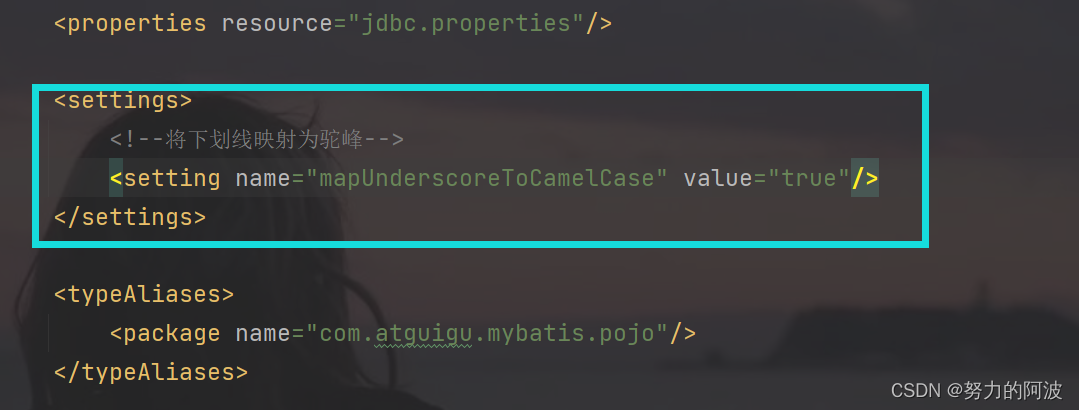
  <settings>
        <setting name="mapUnderscoreToCamelCase" value="true"/>
  </settings>
调节数据库字段与实体类的属性对应需要标签resultMap,如上文那个简单的查询例子就可以这样写:
<resultMap id="empResultMap" type="Emp">
    <id property="empId" column="emp_id"></id>
    <result property="empName" column="emp_name"></result>
    <result property="age" column="age"></result>
    <result property="gender" column="gender"></result>
</resultMap>

    <select id="getEmpById" resultMap="empResultMap">
        select * from t_emp where emp_id = #{empId};
    </select>
属性:
id:表示自定义映射的唯一标识
type:查询的数据要映射的实体类的类型
子标签:
id:设置主键的映射关系
result:设置普通字段的映射关系
association :设置多对一的映射关系
collection:设置一对多的映射关系
属性:
property:设置映射关系中实体类中的属性名
column:设置映射关系中表中的字段名
  <resultMap id="empAndDeptResultMap" type="Emp">
            <id column="emp_id" property="empId"></id>
            <result column="emp_name" property="empName"></result>
            <result column="age" property="age"></result>
            <result column="gender" property="gender"></result>

            <!--部门中的字段dept_id与Emp实体类中的属性dept中的deptId相对应 -->
            <!--部门中的字段dept_name与Emp实体类中的属性dept中的deptName相对应 -->
            <result column="dept_id" property="dept.deptId"></result>
            <result column="dept_name" property="dept.deptName"></result>
 </resultMap>


    <select id="getEmpAndDeptById" resultMap="empAndDeptResultMap">
      SELECT t_emp.*,t_dept.* FROM t_emp
      LEFT JOIN t_dept
      ON t_emp.dept_id=t_dept.dept_id
      where t_emp.emp_id=#{empId}
    </select>
接口:
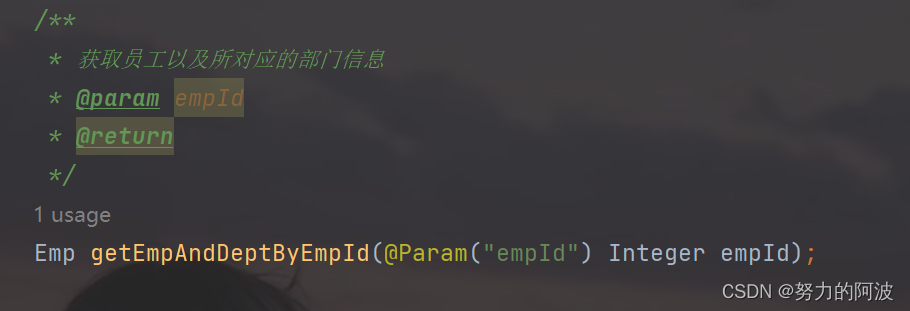
测试方法:
    public void test(){
        SqlSessionUtils sqlSessionUtils = new SqlSessionUtils();
        SqlSession sqlSession = sqlSessionUtils.getSqlSession();
        EmpMapper mapper = sqlSession.getMapper(EmpMapper.class);
        Emp empAndDeptById = mapper.getEmpAndDeptById(1);
        System.out.println(empAndDeptById);
    }
查询结果:

  <resultMap id="empAndDeptResultMap" type="Emp">
            <id column="emp_id" property="empId"></id>
            <result column="emp_name" property="empName"></result>
            <result column="age" property="age"></result>
            <result column="gender" property="gender"></result>
      <association property="dept" javaType="Dept">
          <id column="dept_id" property="deptId"></id>
          <result column="dept_name" property="deptName"></result>
      </association>

 </resultMap>
第一步:查询员工信息
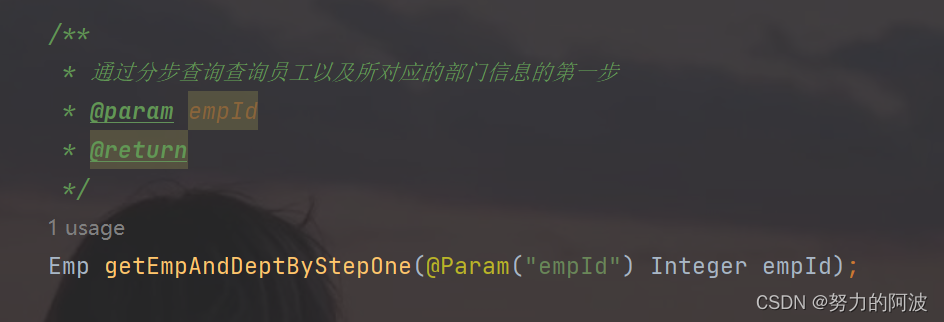
    <resultMap id="empAndDeptByStepResultMap" type="Emp">
        <id column="emp_id" property="empId"></id>
        <result column="emp_name" property="empName"></result>
        <result column="age" property="age"></result>
        <result column="gender" property="gender"></result>
        <association property="dept"
                     select="com.atguigu.mybatis.mapper.DeptMapper.getDeptByStep" column="dept_id">
        </association>

    </resultMap>

    <select id="getEmpAndDeptByStep" resultMap="empAndDeptByStepResultMap">
     select * from t_emp where emp_id=#{empId};
    </select>
注意:
select:设置分步查询,查询某个属性的值的sql的标识(namespace.sqlid)
column:将sql以及查询结果中的某个字段设置为分步查询的条件
第二步:根据员工所对应的部门 id 查询部门信息
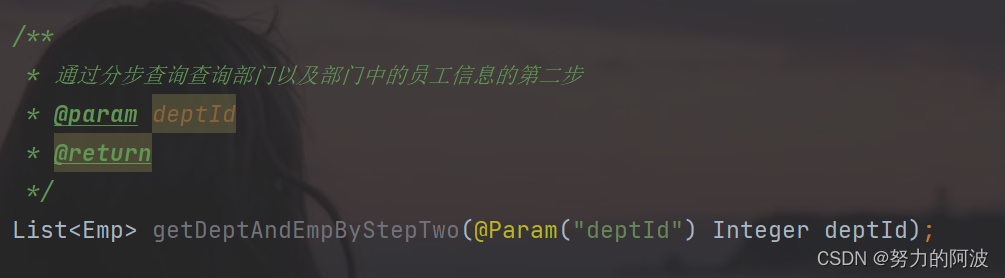
    <select id="getDeptByStep" resultType="com.atguigu.mybatis.pojo.Dept">
        select * from t_dept where dept_id=#{deptId};
    </select>
测试方法:
public void test(){
    SqlSessionUtils sqlSessionUtils = new SqlSessionUtils();
    SqlSession sqlSession = sqlSessionUtils.getSqlSession();
    EmpMapper mapper = sqlSession.getMapper(EmpMapper.class);
    Emp empAndDeptByStep = mapper.getEmpAndDeptByStep(1);
    System.out.println(empAndDeptByStep);

}
执行结果:

分步查询的优点:可以实现延迟加载
但是必须在核心配置文件中设置全局配置信息:
lazyLoadingEnabled:延迟加载的全局开关。当开启时,所有关联对象都会延迟加载aggressiveLazyLoading:当开启时,任何方法的调用都会加载该对象的所有属性。否则,每个属性会按需加载fetchType 属性设置当前的分步查询是否使用延迟加载, fetchType=“lazy(延迟加载) | eager(立即加载)”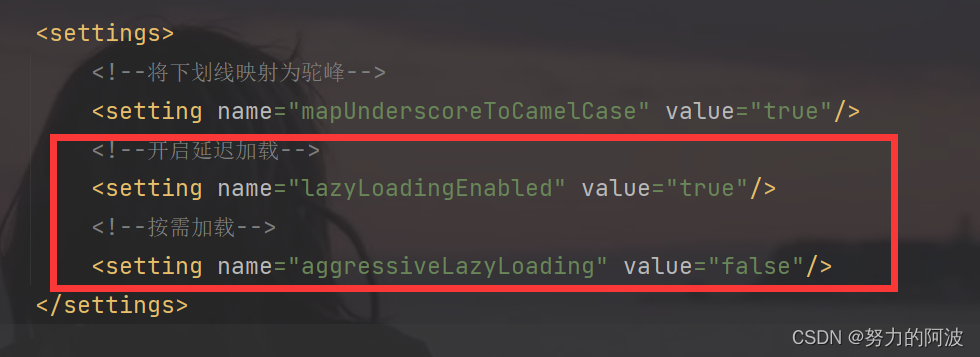
接口:
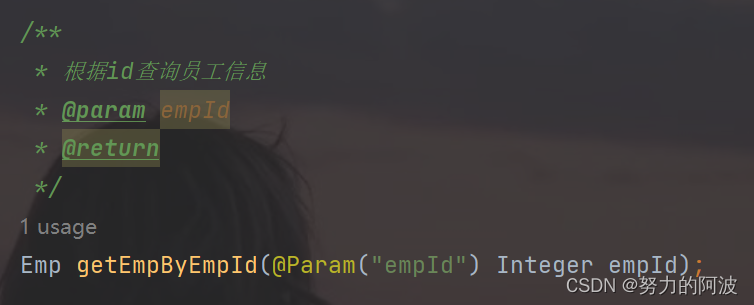
使用collection处理
collection :设置一对多的映射关系
ofType :设置 collection 标签所处理的集合属性中存储数据的类型
    <resultMap id="DeptAndEmpByDeptIdResultMap" type="Dept">
        <id column="dept_id" property="deptId"></id>
        <result column="dept_name" property="deptName"></result>
        <collection property="emps"  ofType="Emp">
            <id column="emp_id" property="empId"></id>
            <result column="emp_name" property="empName"></result>
            <result column="age" property="age"></result>
            <result column="gender" property="gender"></result>

        </collection>


    </resultMap>


    <select id="getDeptAndEmpByDeptId" resultMap="DeptAndEmpByDeptIdResultMap">
      SELECT t_emp.*,t_dept.* FROM t_dept
      LEFT JOIN t_emp
      ON t_emp.dept_id=t_dept.dept_id
      WHERE t_dept.dept_id=#{deptId}
    </select>
测试:
    public void test4(){
        SqlSessionUtils sqlSessionUtils = new SqlSessionUtils();
        SqlSession sqlSession = sqlSessionUtils.getSqlSession();
        DeptMapper mapper = sqlSession.getMapper(DeptMapper.class);
        Dept deptAndEmpByDeptId = mapper.getDeptAndEmpByDeptId(1);
        System.out.println(deptAndEmpByDeptId);
    }
执行结果:

关系映射主要处理复杂的SQl查询,如子查询,多表联查等复杂查询,应用此种需求时可以考虑使用。
我正在使用Sequel构建一个愿望list系统。我有一个wishlists和itemstable和一个items_wishlists连接表(该名称是续集选择的名称)。items_wishlists表还有一个用于facebookid的额外列(因此我可以存储opengraph操作),这是一个NOTNULL列。我还有Wishlist和Item具有续集many_to_many关联的模型已建立。Wishlist类也有:selectmany_to_many关联的选项设置为select:[:items.*,:items_wishlists__facebook_action_id].有没有一种方法可以
我的问题的一个例子是体育游戏。一场体育比赛有两支球队,一支主队和一支客队。我的事件记录模型如下:classTeam"Team"has_one:away_team,:class_name=>"Team"end我希望能够通过游戏访问一个团队,例如:Game.find(1).home_team但我收到一个单元化常量错误:Game::team。谁能告诉我我做错了什么?谢谢, 最佳答案 如果Gamehas_one:team那么Rails假设您的teams表有一个game_id列。不过,您想要的是games表有一个team_id列,在这种情况下
目前,Itembelongs_toCompany和has_manyItemVariants。我正在尝试使用嵌套的fields_for通过Item表单添加ItemVariant字段,但是使用:item_variants不显示该表单。只有当我使用单数时才会显示。我检查了我的关联,它们似乎是正确的,这可能与嵌套在公司下的项目有关,还是我遗漏了其他东西?提前致谢。注意:下面的代码片段中省略了不相关的代码。编辑:不知道这是否相关,但我正在使用CanCan进行身份验证。routes.rbresources:companiesdoresources:itemsenditem.rbclassItemi
Transformers开始在视频识别领域的“猪突猛进”,各种改进和魔改层出不穷。由此作者将开启VideoTransformer系列的讲解,本篇主要介绍了FBAI团队的TimeSformer,这也是第一篇使用纯Transformer结构在视频识别上的文章。如果觉得有用,就请点赞、收藏、关注!paper:https://arxiv.org/abs/2102.05095code(offical):https://github.com/facebookresearch/TimeSformeraccept:ICML2021author:FacebookAI一、前言Transformers(VIT)在图
我认为我的问题最好用一个例子来描述。假设我有一个名为“Thing”的简单模型,它有一些简单数据类型的属性。像...Thing-foo:string-goo:string-bar:int这并不难。数据库表将包含具有这三个属性的三列,我可以使用@thing.foo或@thing.bar之类的东西访问它们。但我要解决的问题是当“foo”或“goo”不再包含在简单数据类型中时会发生什么?假设foo和goo代表相同类型的对象。也就是说,它们都是“Whazit”的实例,只是数据不同。所以现在事情可能看起来像这样......Thing-bar:int但是现在有一个新的模型叫做“Whazit”,看起来
我想获取主题名称与搜索关键字匹配的所有配置文件。现在我正在加载所有配置文件。我需要知道如何实现它。非常感谢任何帮助。配置文件.rbhas_many:categorizationshas_many:subjects,through::categorizations主题.rbhas_many:categorizationshas_many:profiles,through::categorizations分类.rbbelongs_to:profilebelongs_to:subjectviews/search/index.html.erb#searchform'get'do%>nil%>#
如果names为nil,则以下中断。我怎样才能让这个map只有在它不是nil时才执行?self.topics=names.split(",").mapdo|n|Topic.where(name:n.strip).first_or_create!end 最佳答案 其他几个选项:选项1(在其上执行map时检查split的结果):names_list=names.try(:split,",")self.topics=names_list.mapdo|n|Topic.where(name:n.strip).first_or_create!e
我有一个非常简单的Controller来管理我的Rails应用程序中的静态页面:classPagesController我怎样才能让View模板返回它自己的名字,这样我就可以做这样的事情:#pricing.html.erb#-->"Pricing"感谢您的帮助。 最佳答案 4.3RoutingParametersTheparamshashwillalwayscontainthe:controllerand:actionkeys,butyoushouldusethemethodscontroller_nameandaction_nam
我使用的是遗留数据库,所以我无法控制数据模型。他们使用了很多多态链接/连接表,就像这样createtableperson(per_ident,name,...)createtableperson_links(per_ident,obj_name,obj_r_ident)createtablereport(rep_ident,name,...)其中obj_name是表名,obj_r_ident是标识符。因此链接的报告将按如下方式插入:insertintoperson(1,...)insertintoreport(1,...)insertintoreport(2,...)insertint
我遇到了RVM的问题,所以我卸载并重新安装了它。事实是我实际上尝试过rbenv,但这对我来说没有用,所以我试图让rvm重新启动并运行-而不必安装重复版本的Ruby。我至少安装了1个现有版本的Ruby:ruby--versionruby1.8.7(2011-12-28patchlevel357)[universal-darwin11.0]但是当我执行rvmlist时,我得到一个空白列表:bash-3.2$rvmlistrvmrubies#Defaultrubynotset.Try'rvmaliascreatedefault'.#=>-current#=*-current&&default
