有一天,qq收到一个好友申请,验证消息上写的是:哥哥加我,我是妹妹
我以为是性骚扰,就没加,直接回了一句:我喜欢少妇
过了一会儿,姑姑就给我打了个电话:你妹妹qq加你,你怎么不同意,她想问你几道数学题,你说你喜欢少妇
我:姑姑,你听我狡辩一下......

祝大家除夕快乐!
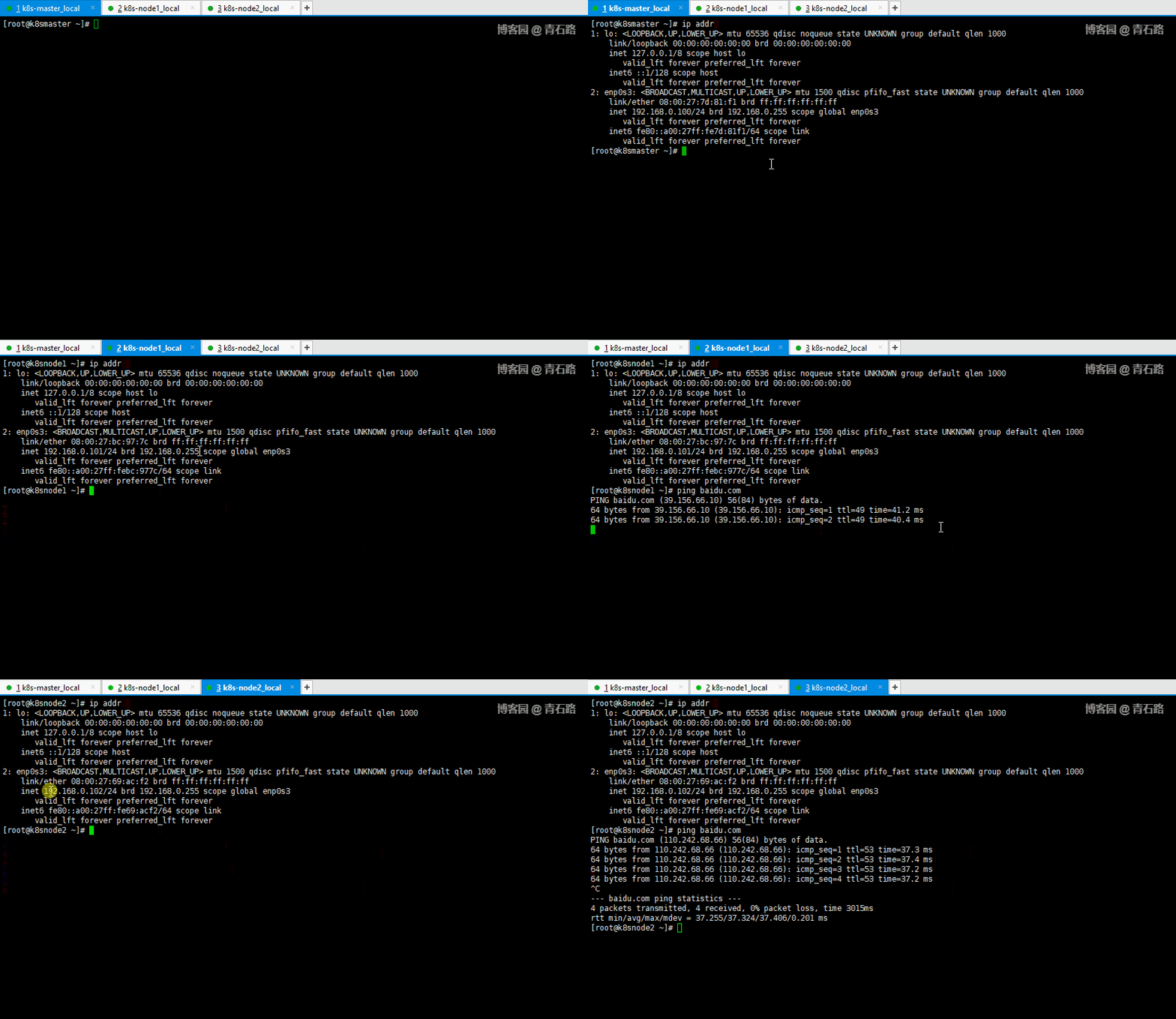
基于 CentOS7 准备 3 个节点: master:192.168.0.100 、 node1:192.168.0.101 、 192.168.0.102
VirtualBox 搭建虚拟机的过程就不演示了,具体可参考如下两篇
VirtualBox 下 CentOS7 静态 IP 的配置 → 多次踩坑总结,蚌埠住了!
搭建好之后 IP 分配如下
每个节点都需要安装 Docker 环境

yum -y install yum-utils
yum-config-manager --add-repo http://mirrors.aliyun.com/docker-ce/linux/centos/docker-ce.repo
yum makecache fast
# 适配k8s版本
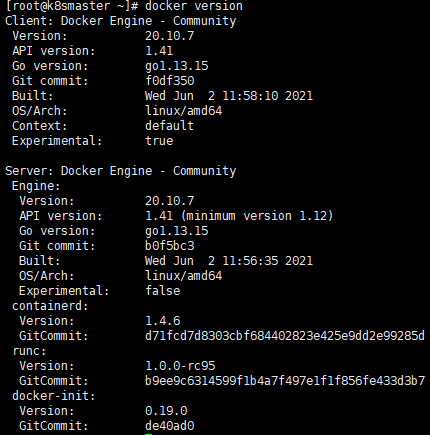
yum install -y docker-ce-20.10.7 docker-ce-cli-20.10.7  containerd.io-1.4.6
# 启动 Docker
systemctl start docker
# 开机启动 Docker
systemctl enable docker查看 Docker 版本
因为有 一面墙 ,国内访问国外资源速度太慢,很有可能下载资源失败,需要配置国内镜像地址
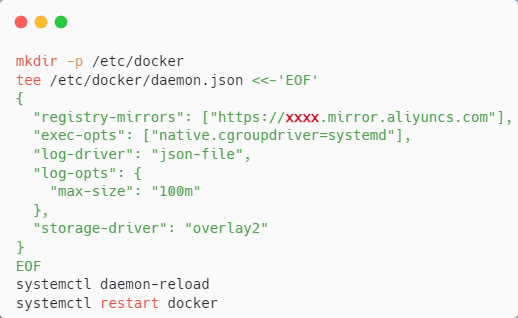
sudo mkdir -p /etc/docker
sudo tee /etc/docker/daemon.json <<-'EOF'
{
  "registry-mirrors": ["https://xxxx.mirror.aliyuncs.com"],
  "exec-opts": ["native.cgroupdriver=systemd"],
  "log-driver": "json-file",
  "log-opts": {
    "max-size": "100m"
  },
  "storage-driver": "overlay2"
}
EOF
sudo systemctl daemon-reload
sudo systemctl restart docker其中 xxxx 需要改成你们自己的
注意,是每个节点都需要配置 Docker ,而非某个节点
所有节点都需要进行如下设置
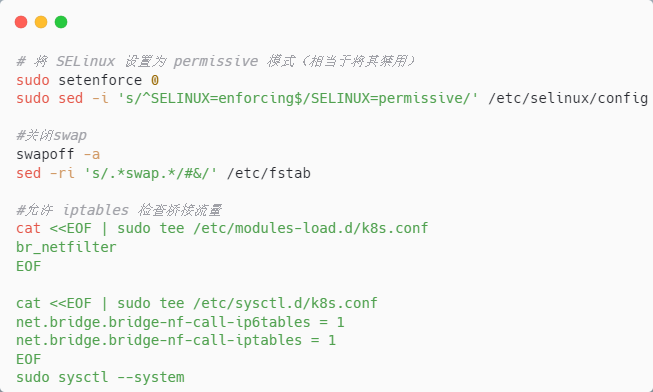
# 将 SELinux 设置为 permissive 模式(相当于禁用)
setenforce 0
sed -i 's/^SELINUX=enforcing$/SELINUX=permissive/' /etc/selinux/config

# 关闭swap
swapoff -a
sed -ri 's/.*swap.*/#&/' /etc/fstab

# 允许 iptables 检查桥接流量
cat <<EOF | sudo tee /etc/modules-load.d/k8s.conf
br_netfilter
EOF

cat <<EOF | sudo tee /etc/sysctl.d/k8s.conf
net.bridge.bridge-nf-call-ip6tables = 1
net.bridge.bridge-nf-call-iptables = 1
EOF

sudo sysctl --system在创建虚拟机的时候,楼主已经把 hostname 设置好了,如果你们没设置,可以通过如下指令进行域名设置
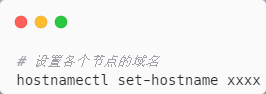
每个节点都需要进行安装
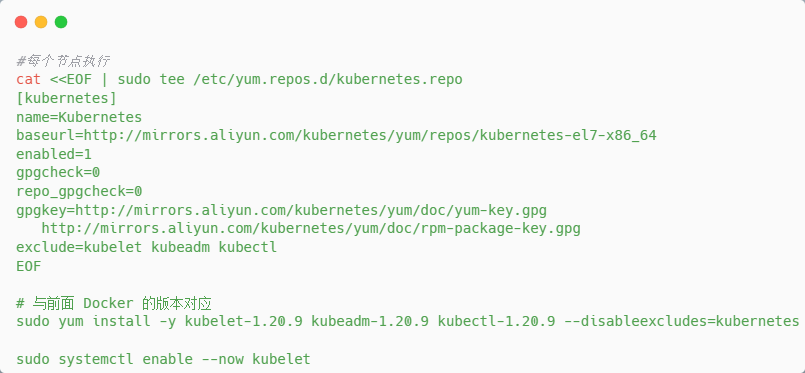
#每个节点执行
cat <<EOF | sudo tee /etc/yum.repos.d/kubernetes.repo
[kubernetes]
name=Kubernetes
baseurl=http://mirrors.aliyun.com/kubernetes/yum/repos/kubernetes-el7-x86_64
enabled=1
gpgcheck=0
repo_gpgcheck=0
gpgkey=http://mirrors.aliyun.com/kubernetes/yum/doc/yum-key.gpg
   http://mirrors.aliyun.com/kubernetes/yum/doc/rpm-package-key.gpg
exclude=kubelet kubeadm kubectl
EOF

# 与前面 Docker 的版本对应
sudo yum install -y kubelet-1.20.9 kubeadm-1.20.9 kubectl-1.20.9 --disableexcludes=kubernetes

sudo systemctl enable --now kubelet每个节点下载镜像
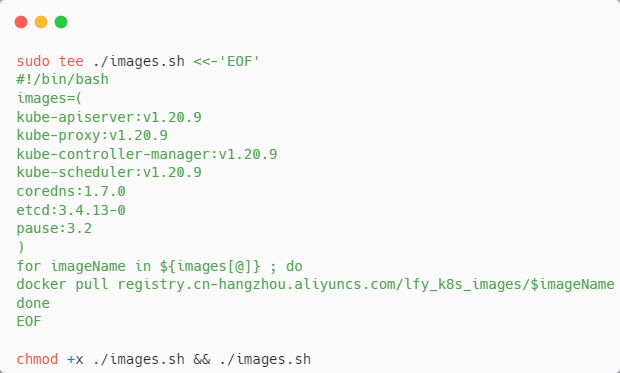
sudo tee ./images.sh <<-'EOF'
#!/bin/bash
images=(
kube-apiserver:v1.20.9
kube-proxy:v1.20.9
kube-controller-manager:v1.20.9
kube-scheduler:v1.20.9
coredns:1.7.0
etcd:3.4.13-0
pause:3.2
)
for imageName in ${images[@]} ; do
docker pull registry.cn-hangzhou.aliyuncs.com/lfy_k8s_images/$imageName
done
EOF

chmod +x ./images.sh && ./images.sh每个节点添加 master 域名映射
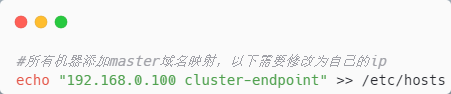
#所有机器添加master域名映射,以下需要修改为自己的
echo "192.168.1.119 cluster-endpoint" >> /etc/hosts只在 master 节点执行如下命令进行初始化

#主节点初始化
kubeadm init \
--apiserver-advertise-address=192.168.1.119 \
--control-plane-endpoint=cluster-endpoint \
--image-repository registry.cn-hangzhou.aliyuncs.com/lfy_k8s_images \
--kubernetes-version v1.20.9 \
--service-cidr=10.96.0.0/16 \
--pod-network-cidr=192.168.0.0/16

#所有网络范围不重叠当出现如下信息,则说明初始化成功
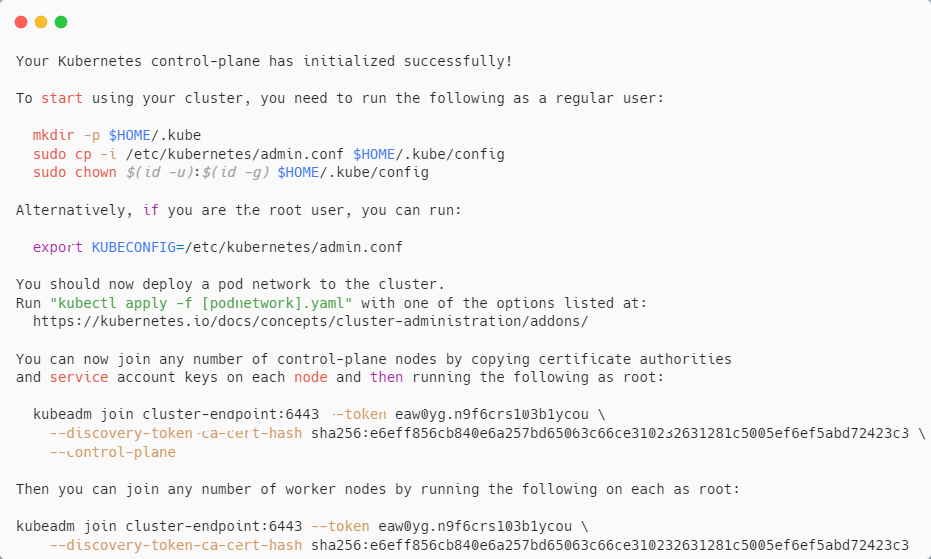
如上信息中提到了几个点
1、如果是常规用户,需要在主节点执行

如果是 root 用户,则在主节点执行

我们在主节点执行常规用户的命令
2、需要部署网络组件
3、其他节点如果执行如下命令,则作为 master 节点加入到集群中

4、其他节点如果执行如下命令,则作为 worker 节点加入到集群中

我们采用 calico 作为网络组件,在 master 执行如下命令

curl https://docs.projectcalico.org/v3.10/manifests/calico.yaml -O

kubectl apply -f calico.yaml因为是国外资源, calico.yaml 可能下载失败,那么可以直接创建 calico.yaml 文件,然后将如下内容拷贝到文件中
---
# Source: calico/templates/calico-config.yaml
# This ConfigMap is used to configure a self-hosted Calico installation.
kind: ConfigMap
apiVersion: v1
metadata:
  name: calico-config
  namespace: kube-system
data:
  # Typha is disabled.
  typha_service_name: "none"
  # Configure the backend to use.
  calico_backend: "bird"

  # Configure the MTU to use
  veth_mtu: "1440"

  # The CNI network configuration to install on each node.  The special
  # values in this config will be automatically populated.
  cni_network_config: |-
    {
      "name": "k8s-pod-network",
      "cniVersion": "0.3.1",
      "plugins": [
        {
          "type": "calico",
          "log_level": "info",
          "datastore_type": "kubernetes",
          "nodename": "__KUBERNETES_NODE_NAME__",
          "mtu": __CNI_MTU__,
          "ipam": {
              "type": "calico-ipam"
          },
          "policy": {
              "type": "k8s"
          },
          "kubernetes": {
              "kubeconfig": "__KUBECONFIG_FILEPATH__"
          }
        },
        {
          "type": "portmap",
          "snat": true,
          "capabilities": {"portMappings": true}
        }
      ]
    }

---
# Source: calico/templates/kdd-crds.yaml
apiVersion: apiextensions.k8s.io/v1beta1
kind: CustomResourceDefinition
metadata:
  name: felixconfigurations.crd.projectcalico.org
spec:
  scope: Cluster
  group: crd.projectcalico.org
  version: v1
  names:
    kind: FelixConfiguration
    plural: felixconfigurations
    singular: felixconfiguration
---

apiVersion: apiextensions.k8s.io/v1beta1
kind: CustomResourceDefinition
metadata:
  name: ipamblocks.crd.projectcalico.org
spec:
  scope: Cluster
  group: crd.projectcalico.org
  version: v1
  names:
    kind: IPAMBlock
    plural: ipamblocks
    singular: ipamblock

---

apiVersion: apiextensions.k8s.io/v1beta1
kind: CustomResourceDefinition
metadata:
  name: blockaffinities.crd.projectcalico.org
spec:
  scope: Cluster
  group: crd.projectcalico.org
  version: v1
  names:
    kind: BlockAffinity
    plural: blockaffinities
    singular: blockaffinity

---

apiVersion: apiextensions.k8s.io/v1beta1
kind: CustomResourceDefinition
metadata:
  name: ipamhandles.crd.projectcalico.org
spec:
  scope: Cluster
  group: crd.projectcalico.org
  version: v1
  names:
    kind: IPAMHandle
    plural: ipamhandles
    singular: ipamhandle

---

apiVersion: apiextensions.k8s.io/v1beta1
kind: CustomResourceDefinition
metadata:
  name: ipamconfigs.crd.projectcalico.org
spec:
  scope: Cluster
  group: crd.projectcalico.org
  version: v1
  names:
    kind: IPAMConfig
    plural: ipamconfigs
    singular: ipamconfig

---

apiVersion: apiextensions.k8s.io/v1beta1
kind: CustomResourceDefinition
metadata:
  name: bgppeers.crd.projectcalico.org
spec:
  scope: Cluster
  group: crd.projectcalico.org
  version: v1
  names:
    kind: BGPPeer
    plural: bgppeers
    singular: bgppeer

---

apiVersion: apiextensions.k8s.io/v1beta1
kind: CustomResourceDefinition
metadata:
  name: bgpconfigurations.crd.projectcalico.org
spec:
  scope: Cluster
  group: crd.projectcalico.org
  version: v1
  names:
    kind: BGPConfiguration
    plural: bgpconfigurations
    singular: bgpconfiguration

---

apiVersion: apiextensions.k8s.io/v1beta1
kind: CustomResourceDefinition
metadata:
  name: ippools.crd.projectcalico.org
spec:
  scope: Cluster
  group: crd.projectcalico.org
  version: v1
  names:
    kind: IPPool
    plural: ippools
    singular: ippool

---

apiVersion: apiextensions.k8s.io/v1beta1
kind: CustomResourceDefinition
metadata:
  name: hostendpoints.crd.projectcalico.org
spec:
  scope: Cluster
  group: crd.projectcalico.org
  version: v1
  names:
    kind: HostEndpoint
    plural: hostendpoints
    singular: hostendpoint

---

apiVersion: apiextensions.k8s.io/v1beta1
kind: CustomResourceDefinition
metadata:
  name: clusterinformations.crd.projectcalico.org
spec:
  scope: Cluster
  group: crd.projectcalico.org
  version: v1
  names:
    kind: ClusterInformation
    plural: clusterinformations
    singular: clusterinformation

---

apiVersion: apiextensions.k8s.io/v1beta1
kind: CustomResourceDefinition
metadata:
  name: globalnetworkpolicies.crd.projectcalico.org
spec:
  scope: Cluster
  group: crd.projectcalico.org
  version: v1
  names:
    kind: GlobalNetworkPolicy
    plural: globalnetworkpolicies
    singular: globalnetworkpolicy

---

apiVersion: apiextensions.k8s.io/v1beta1
kind: CustomResourceDefinition
metadata:
  name: globalnetworksets.crd.projectcalico.org
spec:
  scope: Cluster
  group: crd.projectcalico.org
  version: v1
  names:
    kind: GlobalNetworkSet
    plural: globalnetworksets
    singular: globalnetworkset

---

apiVersion: apiextensions.k8s.io/v1beta1
kind: CustomResourceDefinition
metadata:
  name: networkpolicies.crd.projectcalico.org
spec:
  scope: Namespaced
  group: crd.projectcalico.org
  version: v1
  names:
    kind: NetworkPolicy
    plural: networkpolicies
    singular: networkpolicy

---

apiVersion: apiextensions.k8s.io/v1beta1
kind: CustomResourceDefinition
metadata:
  name: networksets.crd.projectcalico.org
spec:
  scope: Namespaced
  group: crd.projectcalico.org
  version: v1
  names:
    kind: NetworkSet
    plural: networksets
    singular: networkset
---
# Source: calico/templates/rbac.yaml

# Include a clusterrole for the kube-controllers component,
# and bind it to the calico-kube-controllers serviceaccount.
kind: ClusterRole
apiVersion: rbac.authorization.k8s.io/v1
metadata:
  name: calico-kube-controllers
rules:
  # Nodes are watched to monitor for deletions.
  - apiGroups: [""]
    resources:
      - nodes
    verbs:
      - watch
      - list
      - get
  # Pods are queried to check for existence.
  - apiGroups: [""]
    resources:
      - pods
    verbs:
      - get
  # IPAM resources are manipulated when nodes are deleted.
  - apiGroups: ["crd.projectcalico.org"]
    resources:
      - ippools
    verbs:
      - list
  - apiGroups: ["crd.projectcalico.org"]
    resources:
      - blockaffinities
      - ipamblocks
      - ipamhandles
    verbs:
      - get
      - list
      - create
      - update
      - delete
  # Needs access to update clusterinformations.
  - apiGroups: ["crd.projectcalico.org"]
    resources:
      - clusterinformations
    verbs:
      - get
      - create
      - update
---
kind: ClusterRoleBinding
apiVersion: rbac.authorization.k8s.io/v1
metadata:
  name: calico-kube-controllers
roleRef:
  apiGroup: rbac.authorization.k8s.io
  kind: ClusterRole
  name: calico-kube-controllers
subjects:
- kind: ServiceAccount
  name: calico-kube-controllers
  namespace: kube-system
---
# Include a clusterrole for the calico-node DaemonSet,
# and bind it to the calico-node serviceaccount.
kind: ClusterRole
apiVersion: rbac.authorization.k8s.io/v1
metadata:
  name: calico-node
rules:
  # The CNI plugin needs to get pods, nodes, and namespaces.
  - apiGroups: [""]
    resources:
      - pods
      - nodes
      - namespaces
    verbs:
      - get
  - apiGroups: [""]
    resources:
      - endpoints
      - services
    verbs:
      # Used to discover service IPs for advertisement.
      - watch
      - list
      # Used to discover Typhas.
      - get
  - apiGroups: [""]
    resources:
      - nodes/status
    verbs:
      # Needed for clearing NodeNetworkUnavailable flag.
      - patch
      # Calico stores some configuration information in node annotations.
      - update
  # Watch for changes to Kubernetes NetworkPolicies.
  - apiGroups: ["networking.k8s.io"]
    resources:
      - networkpolicies
    verbs:
      - watch
      - list
  # Used by Calico for policy information.
  - apiGroups: [""]
    resources:
      - pods
      - namespaces
      - serviceaccounts
    verbs:
      - list
      - watch
  # The CNI plugin patches pods/status.
  - apiGroups: [""]
    resources:
      - pods/status
    verbs:
      - patch
  # Calico monitors various CRDs for config.
  - apiGroups: ["crd.projectcalico.org"]
    resources:
      - globalfelixconfigs
      - felixconfigurations
      - bgppeers
      - globalbgpconfigs
      - bgpconfigurations
      - ippools
      - ipamblocks
      - globalnetworkpolicies
      - globalnetworksets
      - networkpolicies
      - networksets
      - clusterinformations
      - hostendpoints
      - blockaffinities
    verbs:
      - get
      - list
      - watch
  # Calico must create and update some CRDs on startup.
  - apiGroups: ["crd.projectcalico.org"]
    resources:
      - ippools
      - felixconfigurations
      - clusterinformations
    verbs:
      - create
      - update
  # Calico stores some configuration information on the node.
  - apiGroups: [""]
    resources:
      - nodes
    verbs:
      - get
      - list
      - watch
  # These permissions are only requried for upgrade from v2.6, and can
  # be removed after upgrade or on fresh installations.
  - apiGroups: ["crd.projectcalico.org"]
    resources:
      - bgpconfigurations
      - bgppeers
    verbs:
      - create
      - update
  # These permissions are required for Calico CNI to perform IPAM allocations.
  - apiGroups: ["crd.projectcalico.org"]
    resources:
      - blockaffinities
      - ipamblocks
      - ipamhandles
    verbs:
      - get
      - list
      - create
      - update
      - delete
  - apiGroups: ["crd.projectcalico.org"]
    resources:
      - ipamconfigs
    verbs:
      - get
  # Block affinities must also be watchable by confd for route aggregation.
  - apiGroups: ["crd.projectcalico.org"]
    resources:
      - blockaffinities
    verbs:
      - watch
  # The Calico IPAM migration needs to get daemonsets. These permissions can be
  # removed if not upgrading from an installation using host-local IPAM.
  - apiGroups: ["apps"]
    resources:
      - daemonsets
    verbs:
      - get
---
apiVersion: rbac.authorization.k8s.io/v1
kind: ClusterRoleBinding
metadata:
  name: calico-node
roleRef:
  apiGroup: rbac.authorization.k8s.io
  kind: ClusterRole
  name: calico-node
subjects:
- kind: ServiceAccount
  name: calico-node
  namespace: kube-system

---
# Source: calico/templates/calico-node.yaml
# This manifest installs the calico-node container, as well
# as the CNI plugins and network config on
# each master and worker node in a Kubernetes cluster.
kind: DaemonSet
apiVersion: apps/v1
metadata:
  name: calico-node
  namespace: kube-system
  labels:
    k8s-app: calico-node
spec:
  selector:
    matchLabels:
      k8s-app: calico-node
  updateStrategy:
    type: RollingUpdate
    rollingUpdate:
      maxUnavailable: 1
  template:
    metadata:
      labels:
        k8s-app: calico-node
      annotations:
        # This, along with the CriticalAddonsOnly toleration below,
        # marks the pod as a critical add-on, ensuring it gets
        # priority scheduling and that its resources are reserved
        # if it ever gets evicted.
        scheduler.alpha.kubernetes.io/critical-pod: ''
    spec:
      nodeSelector:
        beta.kubernetes.io/os: linux
      hostNetwork: true
      tolerations:
        # Make sure calico-node gets scheduled on all nodes.
        - effect: NoSchedule
          operator: Exists
        # Mark the pod as a critical add-on for rescheduling.
        - key: CriticalAddonsOnly
          operator: Exists
        - effect: NoExecute
          operator: Exists
      serviceAccountName: calico-node
      # Minimize downtime during a rolling upgrade or deletion; tell Kubernetes to do a "force
      # deletion": https://kubernetes.io/docs/concepts/workloads/pods/pod/#termination-of-pods.
      terminationGracePeriodSeconds: 0
      priorityClassName: system-node-critical
      initContainers:
        # This container performs upgrade from host-local IPAM to calico-ipam.
        # It can be deleted if this is a fresh installation, or if you have already
        # upgraded to use calico-ipam.
        - name: upgrade-ipam
          image: calico/cni:v3.10.4
          command: ["/opt/cni/bin/calico-ipam", "-upgrade"]
          env:
            - name: KUBERNETES_NODE_NAME
              valueFrom:
                fieldRef:
                  fieldPath: spec.nodeName
            - name: CALICO_NETWORKING_BACKEND
              valueFrom:
                configMapKeyRef:
                  name: calico-config
                  key: calico_backend
          volumeMounts:
            - mountPath: /var/lib/cni/networks
              name: host-local-net-dir
            - mountPath: /host/opt/cni/bin
              name: cni-bin-dir
        # This container installs the CNI binaries
        # and CNI network config file on each node.
        - name: install-cni
          image: calico/cni:v3.10.4
          command: ["/install-cni.sh"]
          env:
            # Name of the CNI config file to create.
            - name: CNI_CONF_NAME
              value: "10-calico.conflist"
            # The CNI network config to install on each node.
            - name: CNI_NETWORK_CONFIG
              valueFrom:
                configMapKeyRef:
                  name: calico-config
                  key: cni_network_config
            # Set the hostname based on the k8s node name.
            - name: KUBERNETES_NODE_NAME
              valueFrom:
                fieldRef:
                  fieldPath: spec.nodeName
            # CNI MTU Config variable
            - name: CNI_MTU
              valueFrom:
                configMapKeyRef:
                  name: calico-config
                  key: veth_mtu
            # Prevents the container from sleeping forever.
            - name: SLEEP
              value: "false"
          volumeMounts:
            - mountPath: /host/opt/cni/bin
              name: cni-bin-dir
            - mountPath: /host/etc/cni/net.d
              name: cni-net-dir
        # Adds a Flex Volume Driver that creates a per-pod Unix Domain Socket to allow Dikastes
        # to communicate with Felix over the Policy Sync API.
        - name: flexvol-driver
          image: calico/pod2daemon-flexvol:v3.10.4
          volumeMounts:
          - name: flexvol-driver-host
            mountPath: /host/driver
      containers:
        # Runs calico-node container on each Kubernetes node.  This
        # container programs network policy and routes on each
        # host.
        - name: calico-node
          image: calico/node:v3.10.4
          env:
            # Use Kubernetes API as the backing datastore.
            - name: DATASTORE_TYPE
              value: "kubernetes"
            # Wait for the datastore.
            - name: WAIT_FOR_DATASTORE
              value: "true"
            # Set based on the k8s node name.
            - name: NODENAME
              valueFrom:
                fieldRef:
                  fieldPath: spec.nodeName
            # Choose the backend to use.
            - name: CALICO_NETWORKING_BACKEND
              valueFrom:
                configMapKeyRef:
                  name: calico-config
                  key: calico_backend
            # Cluster type to identify the deployment type
            - name: CLUSTER_TYPE
              value: "k8s,bgp"
            # Auto-detect the BGP IP address.
            - name: IP
              value: "autodetect"
            # Enable IPIP
            - name: CALICO_IPV4POOL_IPIP
              value: "Always"
            # Set MTU for tunnel device used if ipip is enabled
            - name: FELIX_IPINIPMTU
              valueFrom:
                configMapKeyRef:
                  name: calico-config
                  key: veth_mtu
            # The default IPv4 pool to create on startup if none exists. Pod IPs will be
            # chosen from this range. Changing this value after installation will have
            # no effect. This should fall within `--cluster-cidr`.
            - name: CALICO_IPV4POOL_CIDR
              value: "192.168.0.0/16"
            # Disable file logging so `kubectl logs` works.
            - name: CALICO_DISABLE_FILE_LOGGING
              value: "true"
            # Set Felix endpoint to host default action to ACCEPT.
            - name: FELIX_DEFAULTENDPOINTTOHOSTACTION
              value: "ACCEPT"
            # Disable IPv6 on Kubernetes.
            - name: FELIX_IPV6SUPPORT
              value: "false"
            # Set Felix logging to "info"
            - name: FELIX_LOGSEVERITYSCREEN
              value: "info"
            - name: FELIX_HEALTHENABLED
              value: "true"
          securityContext:
            privileged: true
          resources:
            requests:
              cpu: 250m
          livenessProbe:
            exec:
              command:
              - /bin/calico-node
              - -felix-live
              - -bird-live
            periodSeconds: 10
            initialDelaySeconds: 10
            failureThreshold: 6
          readinessProbe:
            exec:
              command:
              - /bin/calico-node
              - -felix-ready
              - -bird-ready
            periodSeconds: 10
          volumeMounts:
            - mountPath: /lib/modules
              name: lib-modules
              readOnly: true
            - mountPath: /run/xtables.lock
              name: xtables-lock
              readOnly: false
            - mountPath: /var/run/calico
              name: var-run-calico
              readOnly: false
            - mountPath: /var/lib/calico
              name: var-lib-calico
              readOnly: false
            - name: policysync
              mountPath: /var/run/nodeagent
      volumes:
        # Used by calico-node.
        - name: lib-modules
          hostPath:
            path: /lib/modules
        - name: var-run-calico
          hostPath:
            path: /var/run/calico
        - name: var-lib-calico
          hostPath:
            path: /var/lib/calico
        - name: xtables-lock
          hostPath:
            path: /run/xtables.lock
            type: FileOrCreate
        # Used to install CNI.
        - name: cni-bin-dir
          hostPath:
            path: /opt/cni/bin
        - name: cni-net-dir
          hostPath:
            path: /etc/cni/net.d
        # Mount in the directory for host-local IPAM allocations. This is
        # used when upgrading from host-local to calico-ipam, and can be removed
        # if not using the upgrade-ipam init container.
        - name: host-local-net-dir
          hostPath:
            path: /var/lib/cni/networks
        # Used to create per-pod Unix Domain Sockets
        - name: policysync
          hostPath:
            type: DirectoryOrCreate
            path: /var/run/nodeagent
        # Used to install Flex Volume Driver
        - name: flexvol-driver-host
          hostPath:
            type: DirectoryOrCreate
            path: /usr/libexec/kubernetes/kubelet-plugins/volume/exec/nodeagent~uds
---

apiVersion: v1
kind: ServiceAccount
metadata:
  name: calico-node
  namespace: kube-system

---
# Source: calico/templates/calico-kube-controllers.yaml

# See https://github.com/projectcalico/kube-controllers
apiVersion: apps/v1
kind: Deployment
metadata:
  name: calico-kube-controllers
  namespace: kube-system
  labels:
    k8s-app: calico-kube-controllers
spec:
  # The controllers can only have a single active instance.
  replicas: 1
  selector:
    matchLabels:
      k8s-app: calico-kube-controllers
  strategy:
    type: Recreate
  template:
    metadata:
      name: calico-kube-controllers
      namespace: kube-system
      labels:
        k8s-app: calico-kube-controllers
      annotations:
        scheduler.alpha.kubernetes.io/critical-pod: ''
    spec:
      nodeSelector:
        beta.kubernetes.io/os: linux
      tolerations:
        # Mark the pod as a critical add-on for rescheduling.
        - key: CriticalAddonsOnly
          operator: Exists
        - key: node-role.kubernetes.io/master
          effect: NoSchedule
      serviceAccountName: calico-kube-controllers
      priorityClassName: system-cluster-critical
      containers:
        - name: calico-kube-controllers
          image: calico/kube-controllers:v3.10.4
          env:
            # Choose which controllers to run.
            - name: ENABLED_CONTROLLERS
              value: node
            - name: DATASTORE_TYPE
              value: kubernetes
          readinessProbe:
            exec:
              command:
              - /usr/bin/check-status
              - -r

---

apiVersion: v1
kind: ServiceAccount
metadata:
  name: calico-kube-controllers
  namespace: kube-system
---
# Source: calico/templates/calico-etcd-secrets.yaml

---
# Source: calico/templates/calico-typha.yaml

---
# Source: calico/templates/configure-canal.yaml我们看下集群状态

目前只有一个主节点,再看下 pods 状态
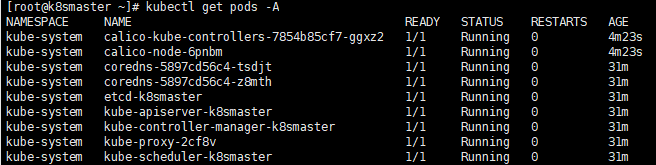
都在运行中,状态都正常
在 k8snode1 、 k8snode2 节点执行

在 master 节点查看集群节点状态: kubectl get nodes

再看下 pods 状态: kubectl get pods -A

1、 Docker 版本和 k8s 的版本最好对应上,否则容易出问题
2、 k8s 网络有点复杂,感兴趣的可以仔细研究下
开门见山|拉取镜像dockerpullelasticsearch:7.16.1|配置存放的目录#存放配置文件的文件夹mkdir-p/opt/docker/elasticsearch/node-1/config#存放数据的文件夹mkdir-p/opt/docker/elasticsearch/node-1/data#存放运行日志的文件夹mkdir-p/opt/docker/elasticsearch/node-1/log#存放IK分词插件的文件夹mkdir-p/opt/docker/elasticsearch/node-1/plugins若你使用了moba,直接右键新建即可如上图所示依次类推创建
文章目录查看ES信息查看节点信息查看分片信息实际场景下ES分片及副本数量应该怎么分关于ES的灵活使用查看ES信息查看版本kibana:GET/查看节点信息GET/_cat/nodes?v解释:ip:集群中节点的ip地址;heap.percent:堆内存的占用百分比;ram.percent:总内存的占用百分比,其实这个不是很准确,因为buff/cache和available也被当作使用内存;cpu:cpu占用百分比;load_1m:1分钟内cpu负载;load_5m:5分钟内cpu负载;load_15m:15分钟内cpu负载;node.role:上图的dilmrt代表全部权限master:*代表
elasticsearch查看当前集群中的master节点是哪个需要使用_cat监控命令,具体如下。查看方法es主节点确定命令,以kibana上查看示例如下:GET_cat/nodesv返回结果示例如下:ipheap.percentram.percentcpuload_1mload_5mload_15mnode.rolemastername172.16.16.188529952.591.701.45mdi-elastic3172.16.16.187329950.990.991.19mdi-elastic2172.16.16.231699940.871.001.03mdi-elastic4172
文章目录一、污点(Taint)1、污点简介2、污点的组成3、污点的设置和去除二、容忍(Tolerations)1、容忍简介2、容忍的基本用法3、示例4、多污点与多容忍配置三、警戒(cordon)和转移(drain)四、Pod启动阶段(相位phase)五、故障排除步骤一、污点(Taint)节点亲和性,是Pod的一种属性(偏好或硬性要求),它使Pod被吸引到一类特定的节点Taint则相反,它使节点能够排斥一类特定的PodTaint和Toleration相互配合,可以用来避免Pod被分配到不合适的节点上。每个节点上都可以应用一个或多个taint,这表示对于那些不能容忍这些taint的Pod,是不会被
(二十二)-框架主入口main.py设计&log日志调用和生成1测试目的2测试需求3需求分析4详细设计4.1新建存放日志目录log4.1.1配置config.py中写入log的目录4.2`baseInfo.py`中加入日志4.3`test_gedit.py`中加入日志4.4主函数入口main.py中调用日志5调用日志主函数main.py源码6`baseInfo.py`源码7`test_gedit.py`源码8运行效果9目前框架结构1测试目的组织运行所有的测试用例,并调用日志模块,便于问题定位。
(1)为什么写这个话题(Why)读万卷书不如行千里路。这次搭建MQTT服务,遇到了一些误解,特此记录备忘。主要包括:(1)服务(Broker)的账户管理与网页管理平台的账户(2)与web应用的集成(Spring系)(2)ActiveMQ版本选择因为JAVA环境是JDK8,所以按兼容性考虑选择了ActiveMQ5.15的最后版本5.15.15。如果你是JDK11则可考虑ActiveMQ的最新版本5.17或5.18。ActiveMQ支持MQTTv3.1.1andv3.1。(3)ActiveMQ与web应用的集成主要介绍与Spring系的webapp集成(SpringBoot和SpringMVC)。
Kubernetes(K8s)是一个用于管理容器化应用程序的开源平台,可以帮助开发人员更轻松地部署、管理和扩展应用程序。在Kubernetes中,集群划分是一种重要的概念,可以帮助我们更好地组织和管理集群中的节点和资源。本文将介绍如何使用Kubernetes对集群进行划分,并提供详细的操作示例,希望能够帮助读者更好地了解和使用Kubernetes平台。Node划分Node划分是将集群中的节点按照一定的规则进行划分。在Kubernetes中,可以使用NodeSelector和Affinity机制来实现Node划分。NodeSelectorNodeSelector是一种将Pod调度到符合特定节点标
这篇文章,主要介绍如何使用SpringCloud微服务组件从0到1搭建一个微服务工程。目录一、从0到1搭建微服务工程1.1、基础环境说明(1)使用组件(2)微服务依赖1.2、搭建注册中心(1)引入依赖(2)配置文件(3)启动类1.3、搭建配置中心(1)引入依赖(2)配置文件(3)启动类1.4、搭建API网关(1)引入依赖(2)配置文件(3)启动类1.5、搭建服务提供者(1)引入依赖(2)配置文件(3)启动类1.6、搭建服务消费者(1)引入依赖(2)配置文件(3)启动类1.7、运行测试一、从0到1搭建微服务工程1.1、基础环境说明(1)使用组件这里主要是使用的SpringCloudNetflix
文章目录Kubernetes(k8s)工作负载一、Workloads二、Pod三、Deployment四、RC、RS、DaemonSet、StatefulSet五、Job、CronJob1、Job2、CronJob六、GCKubernetes(k8s)工作负载一、Workloads什么是工作负载(Workloads)工作负载是运行在Kubernetes上的一个应用程序。一个应用很复杂,可能由单个组件或者多个组件共同完成。无论怎样我们可以用一组Pod来表示一个应用,也就是一个工作负载Pod又是一组容器(Containers)所以关系又像是这样工作负载(Workloads)控制一组PodPod控制
前言 前端时间PHP项目部署升级需要,需要把Laravel开发的项目部署K8s上,下面以laravel项目为例,讲解采用yaml文件方式部署项目。一、部署步骤1.创建Dockerfile文件Dockerfile是一个用来构建镜像的文本文件,在容器运行时,需要把项目文件和项目运行所必须的组件安装其中。#基础镜像FROMphp:7.4-fpm#时区ARGTZ=Asia/Shanghai#更换容器时区RUNcp"/usr/share/zoneinfo/$TZ"/etc/localtime&&echo"$TZ">/etc/timezone#替换成阿里apt-get源RUNsed-i"s@http
